Corporate Venture Capital

Mandalore Partners at the 22nd INSEAD PE & VC Conference — Paris, June 3, 2026

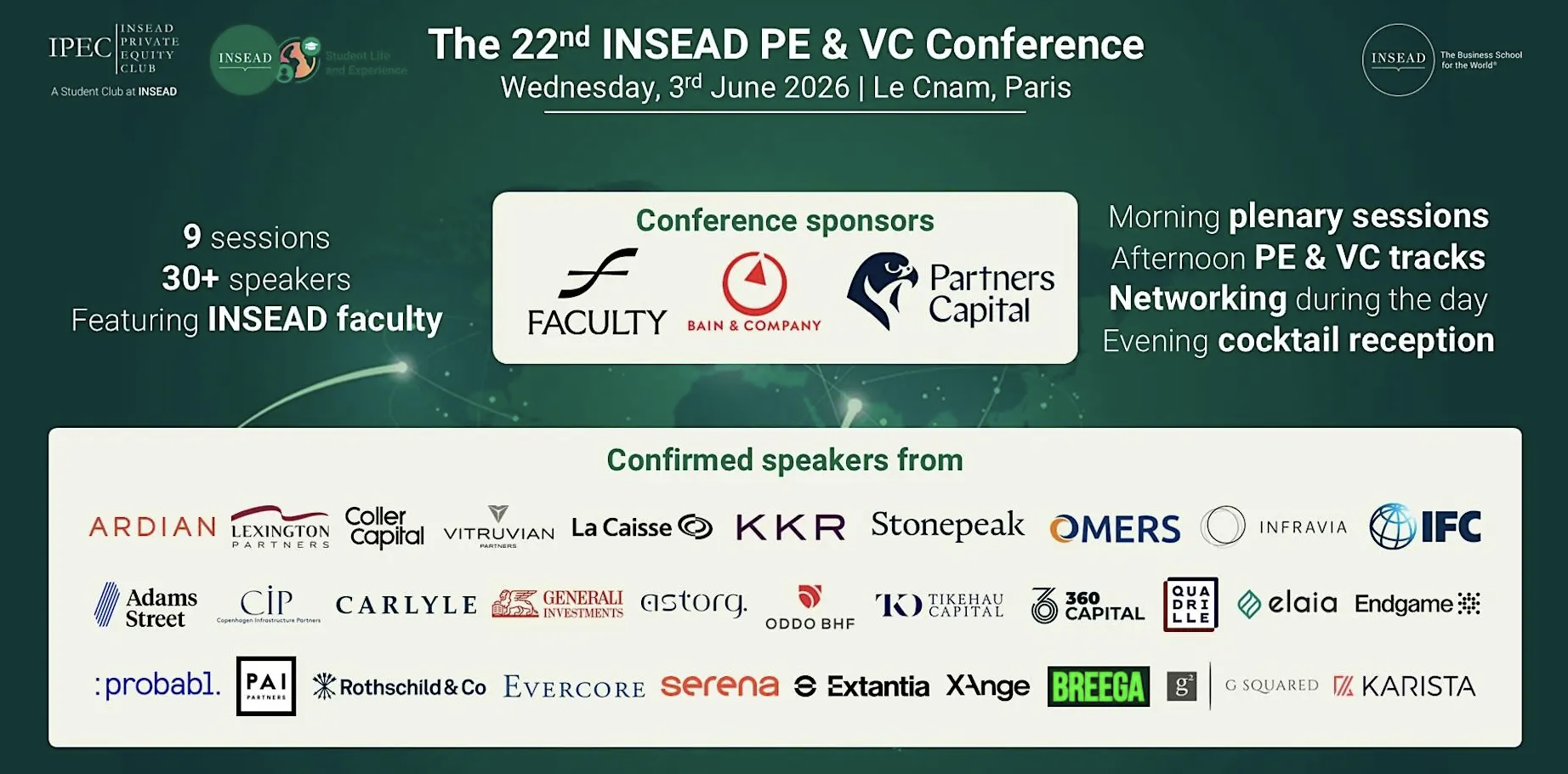
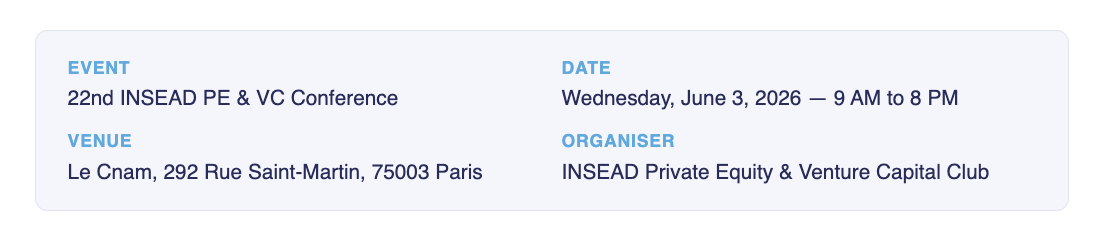
The European private markets calendar has a standout date this summer: the 22nd INSEAD PE & VC Conference, taking place on Wednesday, June 3, 2026 at Le Cnam (National Conservatory of Arts and Crafts) in Paris. Mandalore Partners will be attending, and we look forward to connecting with investors, fund managers, and private capital professionals throughout the day.
About the Conference

The INSEAD PE & VC Conference is one of Europe's most established gatherings for private capital professionals. Now in its 22nd edition, the event brings together leading voices from across the private markets ecosystem for a full day of structured panels, audience-led Q&A sessions, and meaningful networking opportunities.

This year's edition comes with a refreshed format and a sharper thematic focus, designed specifically for practitioners — whether they are managing capital, deploying it, or building the companies that attract it. The conference takes place at the iconic Cnam building in the heart of Paris, a venue that has historically hosted major academic and industry events.

What to Expect: Nine Sessions Across Private Markets

The 2026 programme features nine dedicated panels covering the full breadth of the private capital landscape. The day is structured to move from macro allocation questions to asset-class-specific conversations, ending with a cocktail reception for informal networking:

  • Capital Allocation — Earning the re-up in a more selective market

  • Secondaries — Governance, conflicts, and the price of liquidity at scale

  • Institutional Investing — Perspectives from major allocators

  • Private Equity — Deal dynamics and value creation in the current cycle

  • Private Credit — The evolving role of direct lending and alternative credit

  • Infrastructure — Long-duration assets in a higher-rate environment

  • AI & Tech — Investment theses and value creation in the technology sector

  • Sustainability — Impact integration and the state of ESG in private markets

  • Venture Outcomes — Paths to liquidity, portfolio construction, and lessons from recent vintages

Each panel includes an open Q&A segment, giving attendees direct access to the speakers and the ability to shape the conversation. Between the morning coffee, the lunch networking session, the inter-panel breaks, and the evening cocktail reception, the conference is intentionally designed to maximise professional interaction throughout the day.

Why This Conference Matters in 2026

The private markets industry is navigating one of its most complex periods: a recalibration of valuations, slower exit activity, mounting LP scrutiny on DPI, and the emergence of AI as both an investment theme and an operational tool across the asset class. The INSEAD PE & VC Conference creates a forum where these tensions — and the opportunities they generate — can be discussed candidly by the practitioners closest to them.

For a firm like Mandalore Partners, which operates at the intersection of venture capital and corporate innovation, events like this are not merely networking occasions. They are an opportunity to stay close to how allocators are thinking, how emerging managers are positioning themselves, and where the most interesting convergences between technology and institutional capital are taking place.

Mandalore Partners Will Be There

Mandalore Partners is a Venture Capital-as-a-Service firm with a dual mandate: deploying capital into high-potential early-stage companies, and helping corporations build and invest in new ventures alongside us. Our focus areas span Fintech, InsurTech, IndustryTech, and ImpactTech — sectors where we believe the most durable value creation opportunities remain underexplored.

We will be attending the 22nd INSEAD PE & VC Conference across the full programme day. Whether you are a fund manager, an LP, a founder, or a fellow attendee curious about our model, we welcome the opportunity to connect in person.

About Mandalore Partners

Mandalore Partners is a Venture Capital-as-a-Service firm operating across Europe and Southeast Asia. We provide institutional-grade VC capabilities — from deal sourcing and investment committee support to portfolio monitoring — to corporations seeking to engage with the innovation ecosystem without building an in-house VC team. We also invest directly from our own vehicle, alongside our LP base.

Our approach combines a proprietary deal flow network, cross-border sourcing between Europe and Asia, and a hands-on venture studio model that allows us to co-build companies with corporate partners from day one. Sectors of focus include Fintech, InsurTech, IndustryTech, and ImpactTech.

Connect With Us at the Event

If you are attending the 22nd INSEAD PE & VC Conference and would like to connect with the Mandalore Partners team, we would be glad to meet. Whether during the lunch break, between sessions, or at the evening cocktail reception, we are open to conversations — no formal agenda required.

You can reach us in advance via our website or connect with us on LinkedIn. We look forward to seeing you on June 3rd at Le Cnam.
Retour sur INSEAD ETA Conference 2026 : Ce que le monde des Search Funds révèle aux investisseurs corporate

We attended the INSEAD Entrepreneurship Through Acquisition & Search Funds Hub (ETA) Conference 2026 in Fontainebleau as an outsider — a corporate venture capital investor, not a searcher. I left with five sharp takeaways that matter well beyond the search fund community, and a clear conviction about the role institutional corporate capital can play in the European SME acquisition landscape.

What is ETA, and why does this conference matter?

Entrepreneurship Through Acquisition (ETA) refers to the practice of raising capital to fund the search for and acquisition of a single operating company, typically a profitable SME. The searcher becomes CEO post-acquisition, operates the business for 5 to 7 years, and exits to a PE buyer or strategic acquirer.

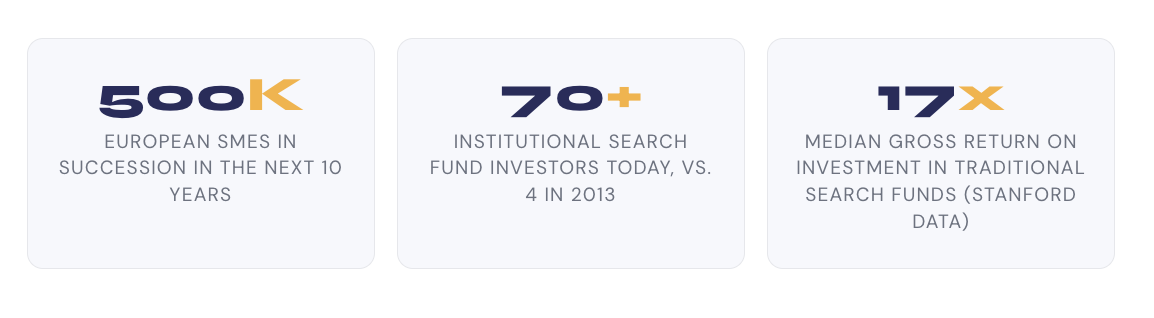
The model was pioneered at Stanford in the 1980s. It took thirty years to cross the Atlantic in any meaningful way. Today, it is one of the fastest-growing alternative investment strategies in Europe — and the INSEAD conference, now in its third year, is its intellectual centre of gravity on this side of the world.

Why does it matter to corporate investors? Because 500,000 European SMEs need new ownership in the next decade. Many of them operate in financial services, insurance distribution, wealth management, and business services — sectors where institutional corporate investors have strategic skin in the game. The succession wave is not just a demographic trend; it is one of the largest structural opportunities in European private markets over the next ten years.

An asset class at an inflection point — and bifurcating fast

The day opened with research from Prof. Ivana Naumovska (INSEAD), whose work on search fund performance signals set the intellectual tone for everything that followed. Her finding is both reassuring and cautionary: the model works extraordinarily well — but only for the right people, backed by the right investors.

The traditional proxies that investors use to select searchers — elite MBA, top-tier investment banking background, partner search — are statistically meaningful, but incomplete. They fail to capture the qualities that actually determine long-term performance: resilience through the 13-month acquisition process, calibrated ambition (neither too low nor too high), genuine humility with sellers and employees, and the kind of empathy that keeps a business owner at the table through difficult negotiations.

📊 Key Research Finding

The return distribution is becoming bimodal. A minority of high-quality searcher-investor partnerships continue to generate outstanding returns. A growing majority — driven by less experienced investors chasing the asset class — are underperforming. This is the pattern of every alternative asset class that transitions from niche to mainstream.

The expansion of the investor base from a tight community of operational veterans (ex-CEOs, serial entrepreneurs, former PE operators) to a broader pool of financial investors has had a measurable impact on outcomes. Experienced investors don't just bring capital — they bring judgment on critical decisions (when to walk away from a deal, how to structure a management team, how to manage a difficult vendor relationship). Diluting that expertise has consequences.

The implication is not that the model is failing. It is that selection — of searchers, of investors, and increasingly of co-investors — matters more than ever.

The European geography: who is winning, who is emerging

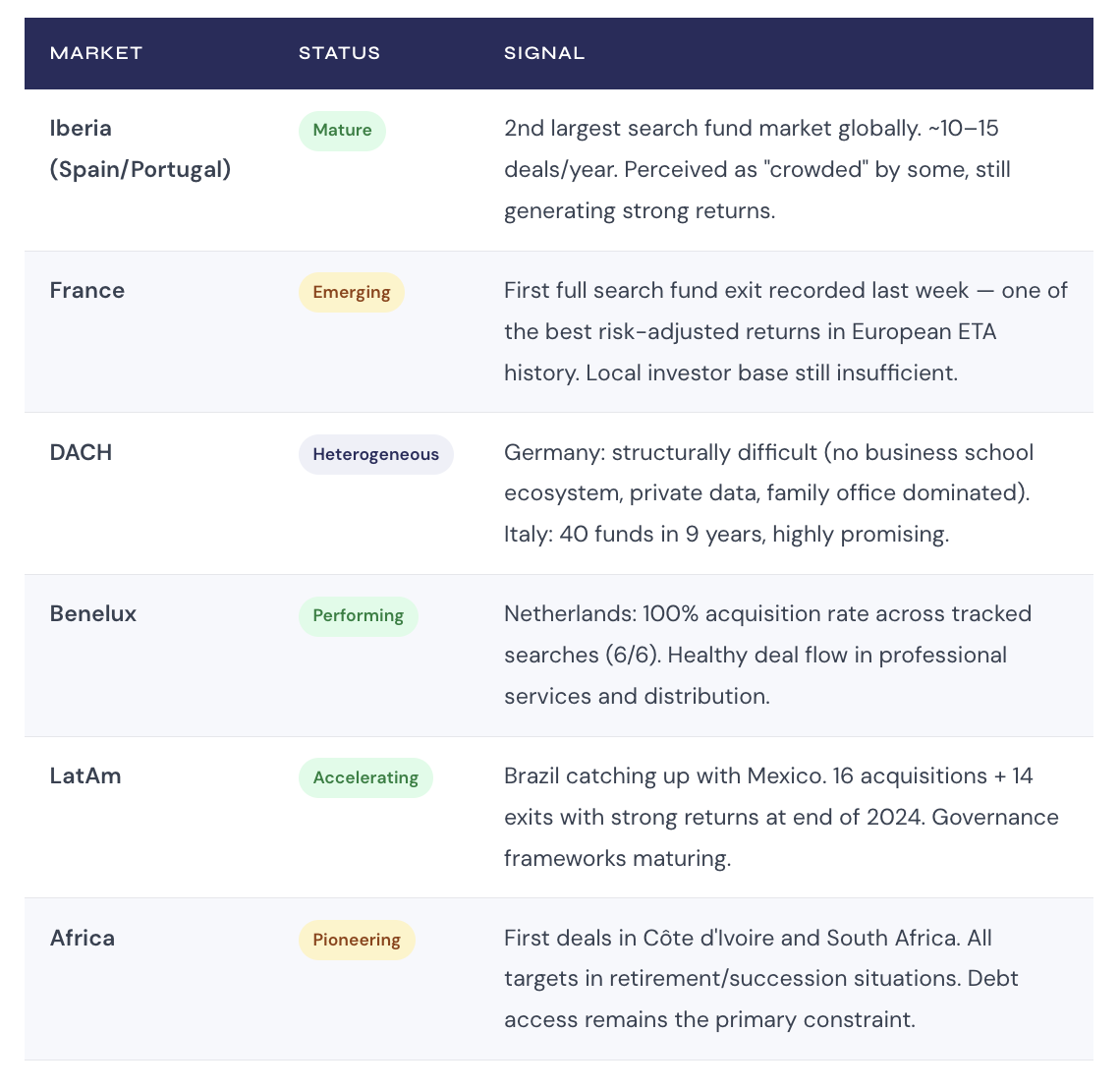
Panel 1 brought together investors from Relay Investments, Ambit Partners, JB46 Partners, Istria Capital, and Inseta Partners to map the global search fund landscape. The European picture is heterogeneous — and more interesting than the headline numbers suggest.

France's first standout search fund exit — confirmed by multiple panelists who had been involved in its structuring — is a significant milestone. It validates the model in a market that has historically been skeptical, and signals the beginning of a local LP ecosystem capable of backing more searchers at scale.

AI and the sourcing paradox: democratisation destroys differentiation

Panel 2a, dedicated to search strategies in the age of AI, featured a fascinating tension. On one hand, new tools like Bantum — a multi-agent AI platform built specifically for searchers — now allow any operator to score, rank, and outreach to thousands of SME targets in days. Bantum combines data from Northdata and multiple proprietary sources, runs AI agents in competitive "debate" to score companies across 15 dimensions, and automates outreach across email, LinkedIn, handwritten letter bots, and fax. Cost: $100–$200 per month for individual searchers.

On the other hand, when every searcher has the same tool, they arrive at the same 100 companies. The sourcing advantage that technology created has been immediately competed away.

What am I doing that's truly proprietary? The answer is never the tool. It's the relationship, the sector knowledge, and the reason the seller picks up the phone for you specifically.

— Composite of multiple panelists, Panel 2a

The operators winning in this environment are returning to fundamentals: in-person attendance at sector trade shows, direct mail campaigns, conversations at industry dinners, referrals from trusted sector networks. In Germany specifically — where company data is largely private, business school ecosystems are thin, and family offices control much of the SME ownership landscape — proprietary sourcing via genuine sector relationships remains the only reliable strategy.

💡 Implication for Corporate LPs

A strategic corporate LP who can open doors to retiring company owners — through sector credibility, personal introductions, or the implicit validation of their brand — is a sourcing advantage no algorithm can replicate. This is one of the strongest structural arguments for a corporate LP anchor in a HoldCo roll-up vehicle.

The four ETA routes: from self-funded to HoldCo roll-up

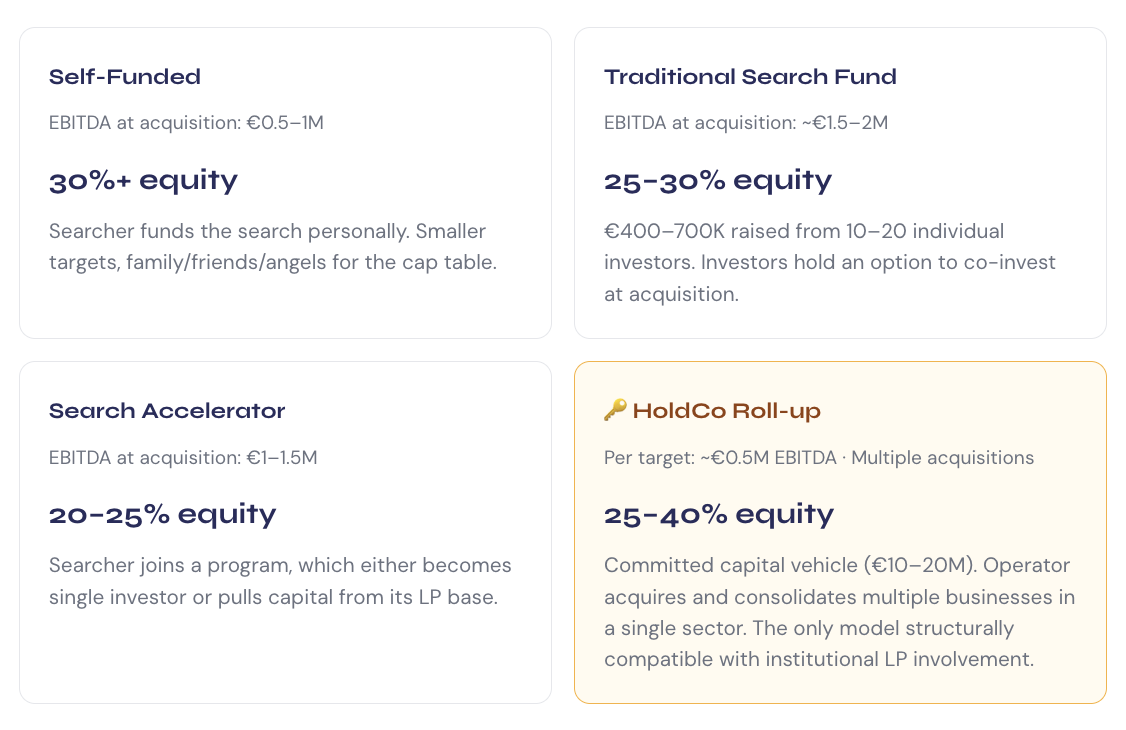
Prof. Naumovska's framework for the four ETA routes clarified a conversation that is often muddled in practice. They are not variations of the same model — they have different capital structures, different investor profiles, different risk distributions, and critically, different suitability for institutional involvement.

The HoldCo roll-up is the model that has attracted the most interest from institutional capital — and the most scrutiny. We address the risks directly in the next section.

From LOI to close: what the deal process really looks like

Panel 3b, focused on the deal process from Letter of Intent to closing, produced the most operationally dense content of the day. The panelists — all experienced searchers and operators — were unambiguous: the transaction process is where most acquisitions are won or lost, and it is overwhelmingly a people process, not a financial one.

The seller relationship is everything

The consensus across all panelists: position yourself as the person who will care for the seller's life's work, not as a financial buyer. Use lawyers to deliver difficult news during negotiations — preserving the personal relationship for the operator. Know the names of the seller's children. Have dinner with their spouse. Understand what they built and why it matters to them.

Timeline reality: searchers typically project 3 months from LOI to close. The average is closer to 6. Some deals take 13 months. After 6 to 7 months in a live process, the searcher has exhausted most of the goodwill they started with — what remains is the human relationship itself. Build it early and protect it throughout.

Investor communication discipline is a deal variable

Post-LOI investor management is not administrative — it is strategic. Send a 2-to-5-page synthesis within days of signing the LOI: what excites you, what you still need to learn, what the timeline looks like. Follow up biweekly with genuine updates. The fatal error is a two-page summary followed by three months of silence, then a 90-page data room that answers none of the original questions.

⚖️ Due Diligence Rule

The one expense you should never cut in a search fund transaction: legal counsel. Structure all other advisors on partial success fees. Work alongside advisors in real time — don't wait for the final report. And the most important principle: the worst outcome is not losing a deal. It's closing the wrong one.

⚠️ The committed capital warning every institutional investor must hear

The sharpest moment of the afternoon came from Lenka Polarova (PT Investment, 63 portfolio companies), whose assessment of the committed capital / HoldCo roll-up model was direct enough to reshape the room's sentiment on the topic.

⚠ Critical Warning — Lenka Polarova, PT Investment

The return distribution of committed capital / HoldCo roll-up vehicles resembles VC, not traditional search. Approximately 80% of operators fail. The common failure pattern: three acquisitions at €200K EBITDA each, momentum slows, the operator runs out of runway before achieving a meaningful exit path. Competing against PE funds with full infrastructure, proven playbooks, and institutional capital at scale is structurally disadvantageous for a first-time consolidator without a proven M&A track record.

This is not an argument against the model. It is an argument for extreme rigor in operator selection and thesis specification. The model works — for the right operator, in the right sector, with the right capital structure. The 20% who succeed generate the returns that make it worthwhile for investors. But 80% of the operators who attempt it do not achieve a meaningful exit.

The panel's recommended alternative for most searchers: a traditional single acquisition — targeting a company with €1.5–2M EBITDA — followed by selective tuck-in acquisitions funded by cash flow and debt after demonstrating value creation in years one through three. This approach maintains the financial leverage, operational focus, and exit clarity that make traditional search funds attractive, while allowing for inorganic growth once the operator has demonstrated capability at scale.

5 takeaways for corporate investors and institutional LPs

  • 1 - The succession wave is structural, not cyclical

    500,000 European SMEs need new ownership in the next decade. For insurance groups, banks, and mutualist institutions, many of these companies sit in their distribution ecosystems — brokers, CGPIs, wealth advisors, MGA platforms. This is not a market to observe from a distance.

  • 2 - The traditional search fund model is not designed for institutional capital

    10–20 individual investors, €0.5–2M checks, high operational engagement — this format is structurally incompatible with institutional LP governance requirements. The HoldCo roll-up vehicle with a dedicated committed capital fund is the right entry point for corporate LPs.

  • 3 - An 80% failure rate demands exceptional operator selection

    The committed capital model only works with a senior operator who has a proven M&A track record and a highly specific sector thesis. Financial sophistication is insufficient. Sourcing and operating experience in the target sector is the non-negotiable criterion.

  • 4 - Corporate LP anchor = structural competitive advantage

    In a sourcing environment where AI has eliminated data differentiation, a corporate LP who can open doors to sellers — through sector credibility, warm introductions, or commercial partnership offers — changes the economics of the roll-up. This is not soft value; it is a genuine sourcing moat.

  • 5 - Keep CVC and ETA narratives strictly separated in client conversations

    Venture capital (early-stage startups) and ETA/acquisition vehicles (mature SMEs) serve different strategic purposes, operate on different timescales, and require different governance structures. Conflating them in the same pitch creates confusion and undermines credibility with both institutional and corporate audiences.

Conclusion: a market worth watching — on the right terms

The INSEAD ETA Conference 2026 confirmed what the data has been suggesting for several years: European search funds are no longer a curiosity. They are a legitimate alternative asset class with a growing track record, an increasingly professional investor base, and a structural tailwind — the succession of half a million companies — that will sustain deal flow for a decade.

For institutional investors in insurance, banking, and asset management, the question is not whether to engage with this market. It is how, and on what terms. The HoldCo roll-up model offers the clearest structural entry point — but it demands the right operator, the right thesis, and an honest accounting of the failure risk. A corporate LP who brings more than capital — sector relationships, commercial partnerships, regulatory credibility — is not just a financial participant. They are a structural advantage embedded in the vehicle's competitive logic.

At Mandalore Partners, we structure venture and acquisition vehicles for large insurance and banking groups navigating exactly this decision. The conversation we started at Fontainebleau is one we intend to continue — with the right partners, on the right terms.

Outlook 2026 – Pourquoi le crypto devient un actif stratégique

En écho à l'atelier de Hashdex

L'atelier animé par Benjamin Ittah de Hashdex, intitulé "Outlook 2026: why Crypto is becoming a strategic allocation", a capté toute l'attention lors du sommet de Luxembourg. Ce qui n'était hier qu'une classe d'actifs spéculative est en train de devenir, pour de nombreux family offices, une composante à part entière de l'allocation stratégique. Derrière cette tendance se cache un écosystème d'entreprises qui construisent les infrastructures de confiance indispensables à cette adoption.

Le portfolio de Mandalore Partners compte en la matière un ambassadeur de choix avec Ledger. Leader mondial incontesté de la sécurisation des actifs numériques, Ledger a joué un rôle clé dans la maturation du secteur. En rendant la conservation des crypto-actifs accessible et ultra-sécurisée (avec plus de 20% des actifs cryptos mondiaux sécurisés via ses dispositifs), l'entreprise a levé un frein majeur pour les investisseurs institutionnels. Le lancement de Ledger Enterprise répond précisément aux besoins de ces family offices en quête de solutions de conservation robustes et conformes.

Au-delà de la conservation, l'innovation financière permise par la blockchain est un autre moteur de cette allocation stratégique, comme l'illustre IZNES. Cette plateforme utilise la blockchain pour simplifier et sécuriser l'achat et la vente d'OPC (fonds d'investissement), un processus traditionnellement lourd et complexe. En tokenisant des parts de fonds, IZNES ouvre la voie à plus de liquidité, de transparence et d'efficacité opérationnelle, des arguments qui résonnent fortement auprès des gérants de patrimoine en quête de performance. L'adoption du crypto comme actif stratégique ne se limite donc pas au bitcoin ou à l'ether, mais englobe toute une nouvelle infrastructure financière où des sociétés comme Ledger et IZNES sont des piliers essentiels.

The Future of Healthcare: How AI, Investment and the QIC–Wellx PartnersIhip Are Redefining Wellbeing

Introduction

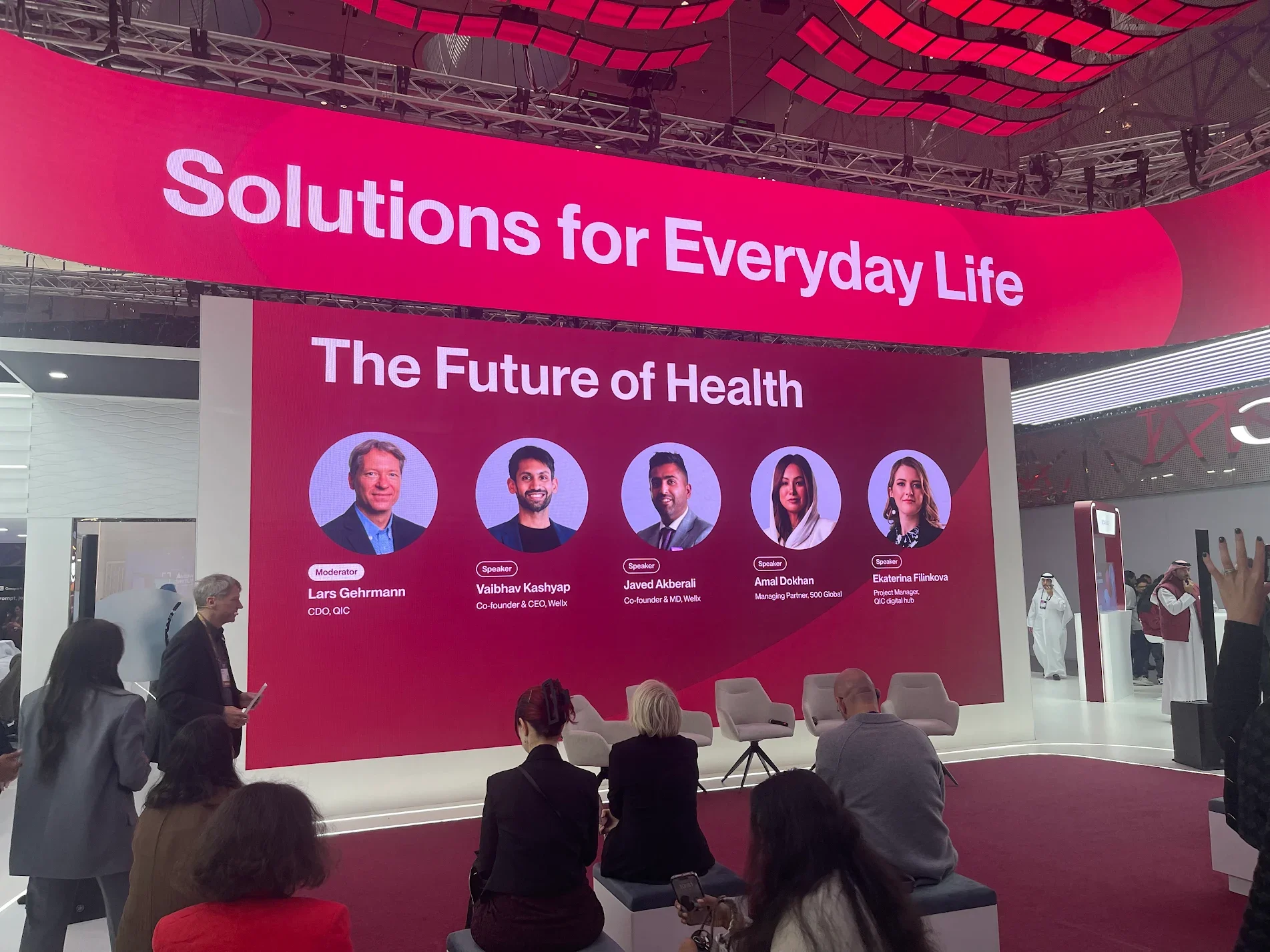
The future of healthcare is undergoing a fundamental shift. Long centered on reactive and curative models, the sector is now moving toward a proactive, personalized, and wellbeing-driven approach. During a strategic panel on the future of healthcare, industry leaders explored how artificial intelligence (AI), investment strategies, and insurer–startup partnerships are reshaping the health ecosystem.

At the heart of the discussion was the collaboration between QIC, a leading regional insurer, and Wellx, a healthtech startup. Their partnership illustrates how technological innovation can deliver both measurable human impact and sustainable economic value.

AI as a Catalyst for Proactive and Personalized Healthcare

From Reactive Care to Guided Wellbeing

Healthcare is no longer just about treating illness. The emerging paradigm focuses on prevention, continuous engagement, and long-term quality of life. The ultimate goal is not simply longevity, but living better today.

In this context, technology should not merely display data or dashboards. Instead, it must act as a guide, helping individuals adopt healthier behaviors without overwhelming them with information.

Generative AI vs. Specialized Healthcare AI

The panel clearly differentiated between two forms of artificial intelligence:

  • General-purpose AI (e.g., ChatGPT): powerful tools for aggregating information and democratizing access to health knowledge, but largely leaving decision-making and action to the user.

  • Specialized, healthcare-trained AI: where real value is created. These systems are designed to deliver secure, personalized, and actionable health journeys.

QIC, for instance, trains its AI engines on more than 61 years of reliable proprietary data, ensuring credibility, safety, and relevance. Wellx goes a step further by using AI not just to inform, but to positively influence user behavior, generating measurable health outcomes and reducing insurance-related costs.

Investing in Healthtech: A Highly Selective Approach

What Investors Truly Look For

According to insights shared by 500 Global, investing in healthtech goes far beyond evaluating cutting-edge technology. Investors prioritize:

  • Founders with a deep understanding of human psychology, particularly fear-driven behaviors related to health.

  • Hands-on experience with complex ecosystems, such as insurance, healthcare delivery, and regulation.

  • Strong resilience, given long adoption cycles, regulatory hurdles, and the need for strategic pivots.

Openness to mergers and acquisitions is also viewed as a realistic and often desirable exit path in a sector heading toward consolidation.

Health as a New Form of Economic Capital

One of the most compelling ideas discussed was the notion of personal health as economic capital. In the future, an individual’s health status could directly influence wealth, employability, and overall economic stability. This perspective reinforces the importance of investing in solutions that sustainably improve quality of life.

Case Study: The Strategic QIC–Wellx Partnership

A Trust-Based Collaboration Model

The QIC–Wellx partnership stands out as a strong example of insurer–startup collaboration in the region. Initiated four years ago after Wellx won an Insurtech event co-organized by QIC, the relationship was built on a clear principle: value creation before financial investment.

Instead of starting with equity funding, QIC provided commercial contracts and access to a real insurance portfolio, enabling Wellx to test and validate its model in real-world conditions.

Tangible Economic Outcomes

This approach delivered concrete results:

  • The creation of a health insurance portfolio valued between USD 30 and 40 million.

  • Significant improvements in claims management performance.

  • Enhanced overall portfolio profitability for QIC.

These outcomes demonstrate that prevention and wellbeing, when properly integrated, can become powerful economic levers for insurers.

Why the Partnership Works

The success of the QIC–Wellx collaboration is rooted in three core pillars:

  1. Credible, high-quality data used to train AI systems.

  2. Mutual trust, built over several years of close collaboration.

  3. A long-term, human-centric vision focused on ecosystem-wide impact.

Building a Human-Centered Healthcare Ecosystem

The Power of an Ecosystem Approach

The panel emphasized that standalone applications rarely deliver lasting impact. True effectiveness comes from a holistic ecosystem that brings together:

  • Insurers

  • Healthtech startups

  • Healthcare providers

  • Public institutions and regulators

This ecosystem approach surrounds users with aligned incentives, reliable guidance, and continuous support.

Turning Technology into Motivation

The key challenge is not technological, but behavioral. The most effective health solutions are those that can subtly motivate users, encourage healthier habits, and transform knowledge into action.

Future Outlook for Healthtech

Geographic Expansion

Following its success in the United Arab Emirates, the QIC–Wellx model is now scaling to new markets. Upcoming launches are planned in:

  • Saudi Arabia

  • Doha, Qatar

Toward a Deeper Strategic Alliance

What began as a traditional client–vendor relationship has evolved into a strategic alliance. Over time, partnerships of this nature may pave the way for merger and acquisition opportunities, setting a new standard for collaboration in the region.

Continuous Innovation and Trusted AI

Innovation remains ongoing. By leveraging increasingly specialized AI and trusted data, QIC and Wellx aim to further enhance the health and wellbeing journey, with a clear objective: combining human impact, trust, and economic performance.

Conclusion

This strategic panel made one thing clear: the future of healthcare lies at the intersection of AI, investment, and trust-based partnerships. When designed with credibility and a human-first mindset, AI becomes a powerful lever to improve quality of life while creating sustainable economic value.

The QIC–Wellx partnership exemplifies this shift—showing how prevention, wellbeing, and ecosystem thinking can redefine healthcare into a model that is not only innovative, but durable, scalable, and deeply human.

SuperReturn Asia – Singapore: Key Highlights

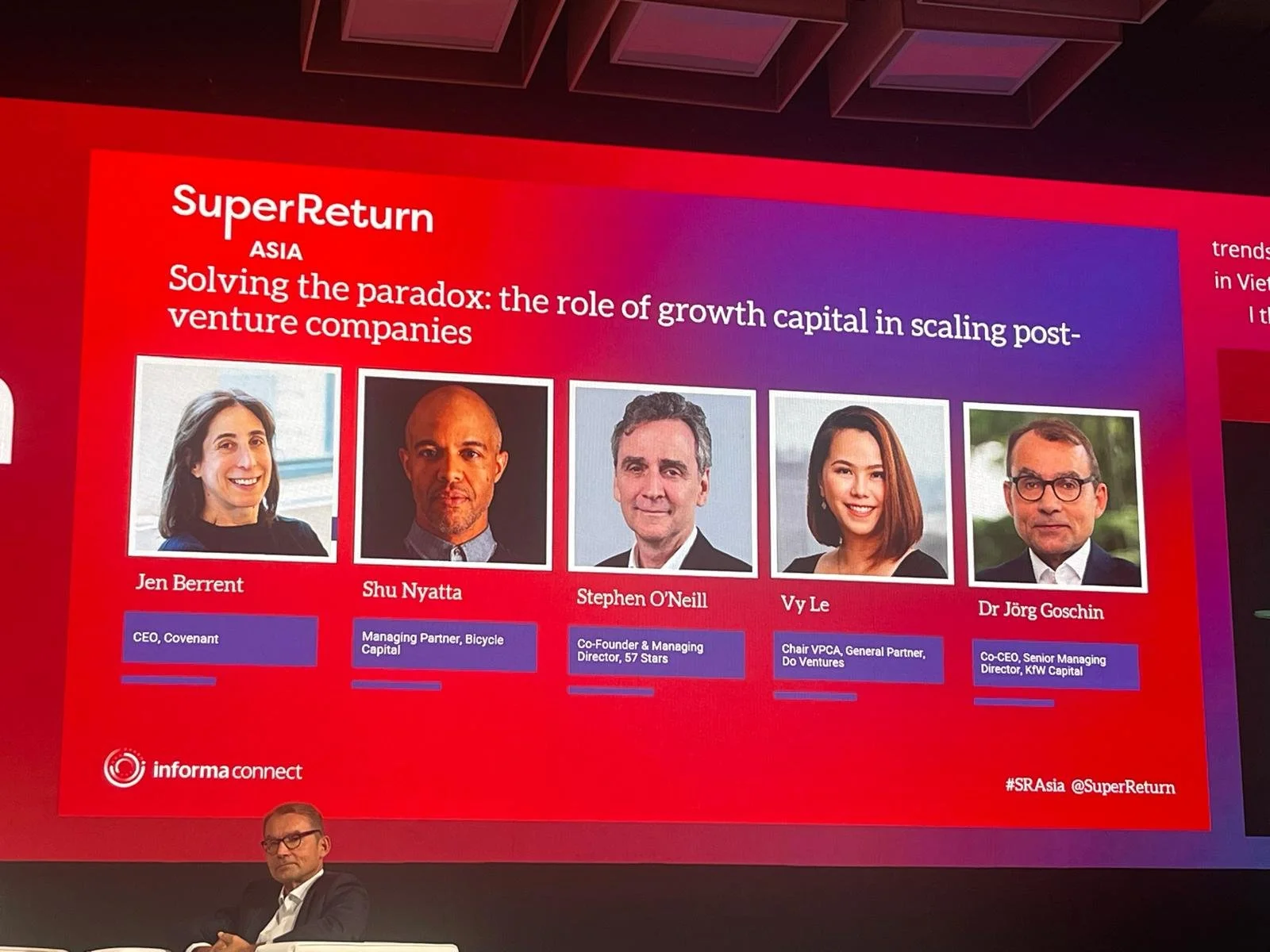
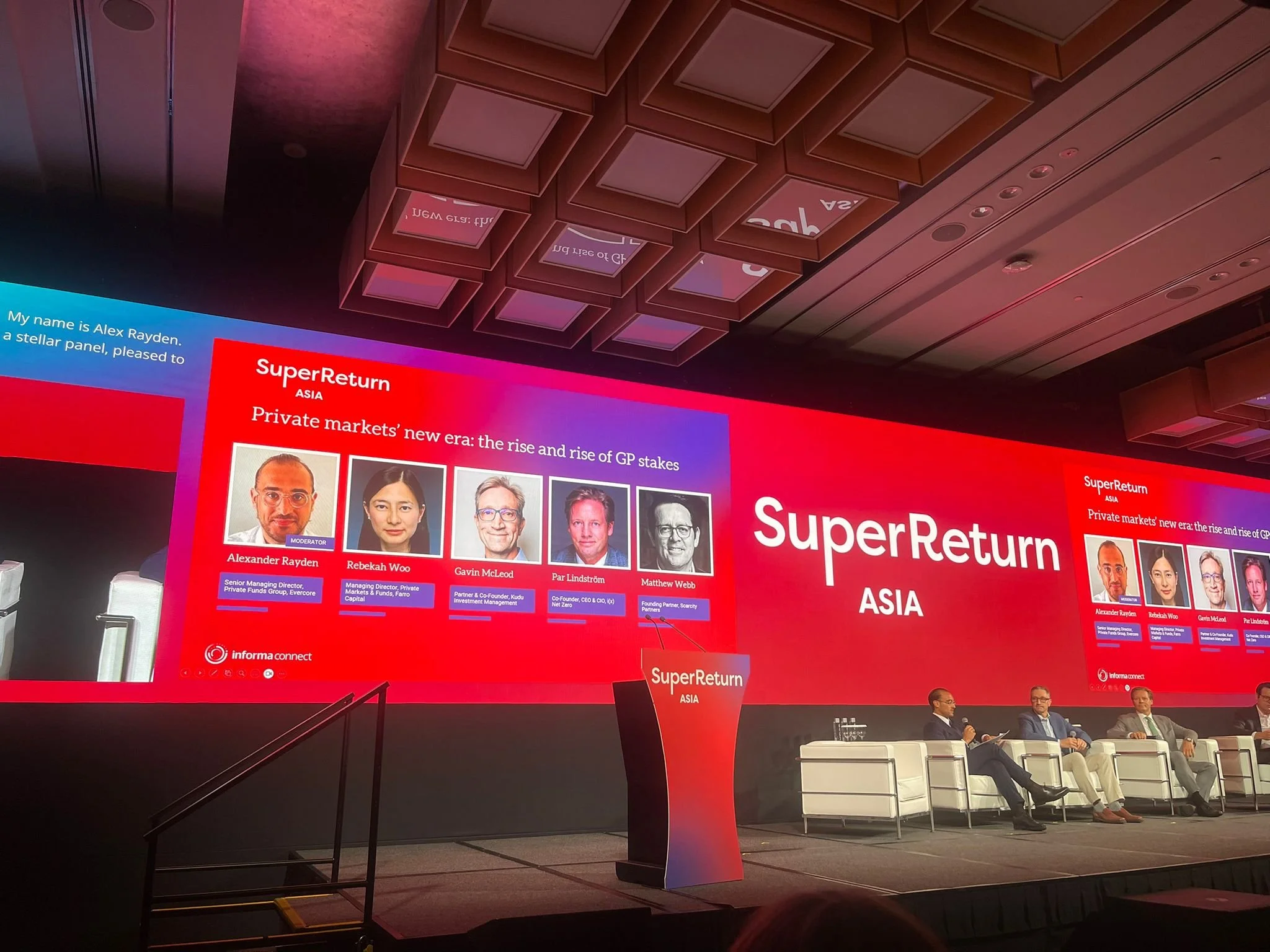
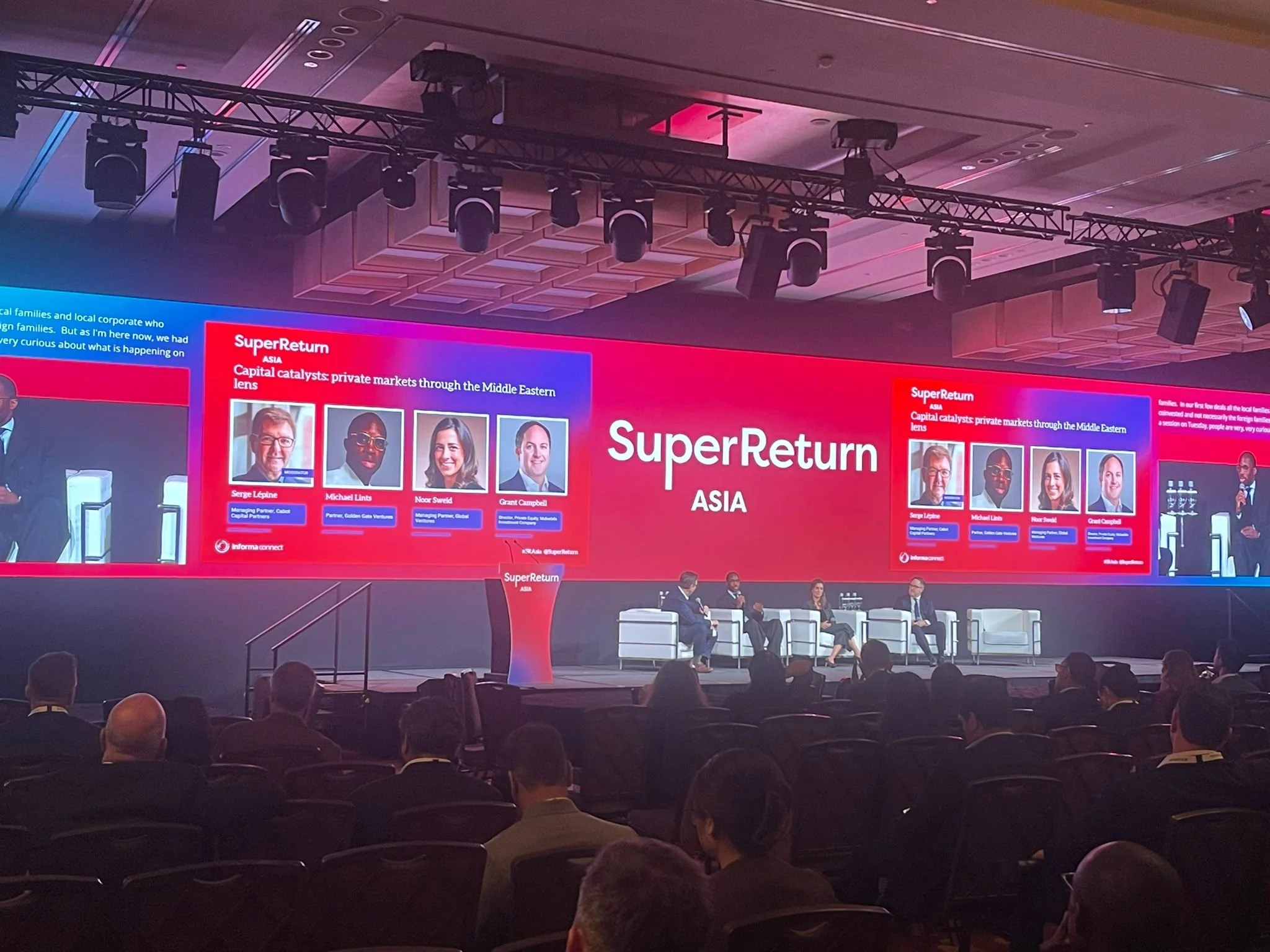
From 16-19 September 2025, the Marina Bay Sands Convention Centre lit up in Singapore for SuperReturn Asia, Asia’s flagship private capital / private markets event.

What It Was About

A gathering of LPs (Limited Partners), GPs (General Partners), fund managers, institutional investors, sovereign wealth funds, family offices — people shaping the direction of private equity, venture capital, private credit, secondaries, thematic investing, deep tech & AI, etc. 

New / highlighted features at the 2025 edition included:

  • AI & Deep Tech Investing Summit — a track focused on what’s coming next in AI, deep tech.

  • SuperReturn Allocate — a data-driven LP/GP meetings programme with fast 1:1 meetings (8 minutes each), guaranteeing a number of meetings, optimized via the event app.

  • Awards Ceremony (“Acknowledgements Ceremony”) to recognise excellence, leadership & innovation among the region’s private capital players.

  • Family Office Asia Summit — bringing together senior decision makers from family offices.

Who Was There

  • Over 2,500+ industry giants from 50+ countries.

  • LPs with $20 trillion+ in assets under management attended. 

  • Names include: BlackRock, Temasek, Goldman Sachs, AllianceBernstein, Asian Development Bank, IFC, Investcorp, PIMCO, Mubadala, Ontario Teachers’ Pension Plan, etc.

What You Could Experience

  • Networking was central: 80,000+ meetings expected through the AI-powered meetings platform. 

  • Scheduled sessions / specialist tracks spanning: private credit, venture capital, AI & deep tech, thematic & country-focused investing, secondaries & liquidity, fundraising & LP/GP relations.

  • Exclusive access for LPs: closed-door sessions; hosted breakfasts / lunches; emerging managers showcase; ability to host AGMs.

  • Social / community dimension: nightly receptions, guided walks around the city, the 20th anniversary party at CÉ LA VI (rooftop of Marina Bay Sands). 

Why It Matters

  • It’s a one-stop, high-density convergence of the “who’s who” in Asia’s private markets.

  • There’s substantial cross-border visibility: global GPs + LPs meet, exchange perspectives, explore opportunities & deal flow across Asia.

  • The growing focus on tech, AI/deep tech, private credit, thematic & country-focused investing signals the shifting priorities & risk/return considerations in the region.

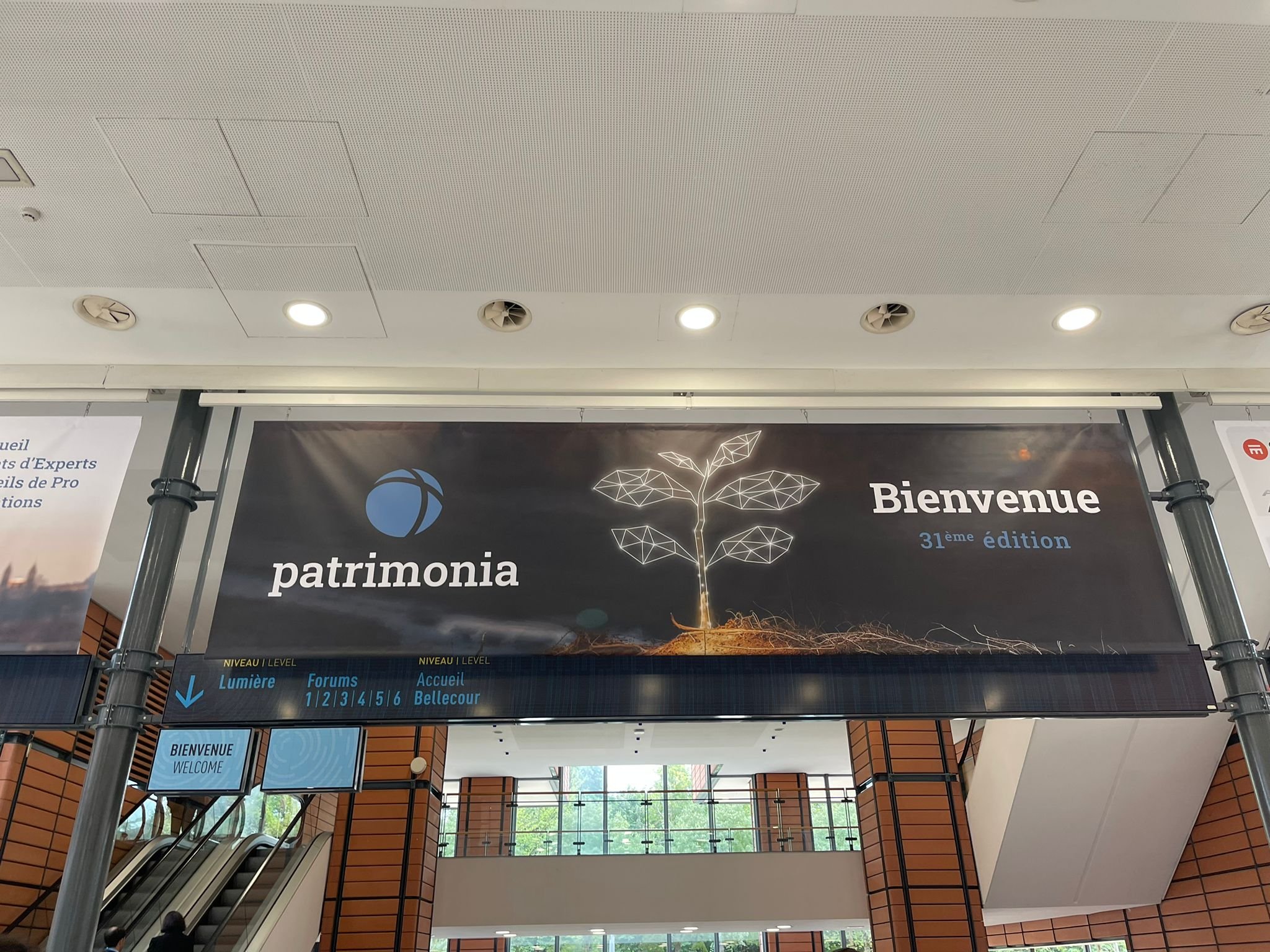
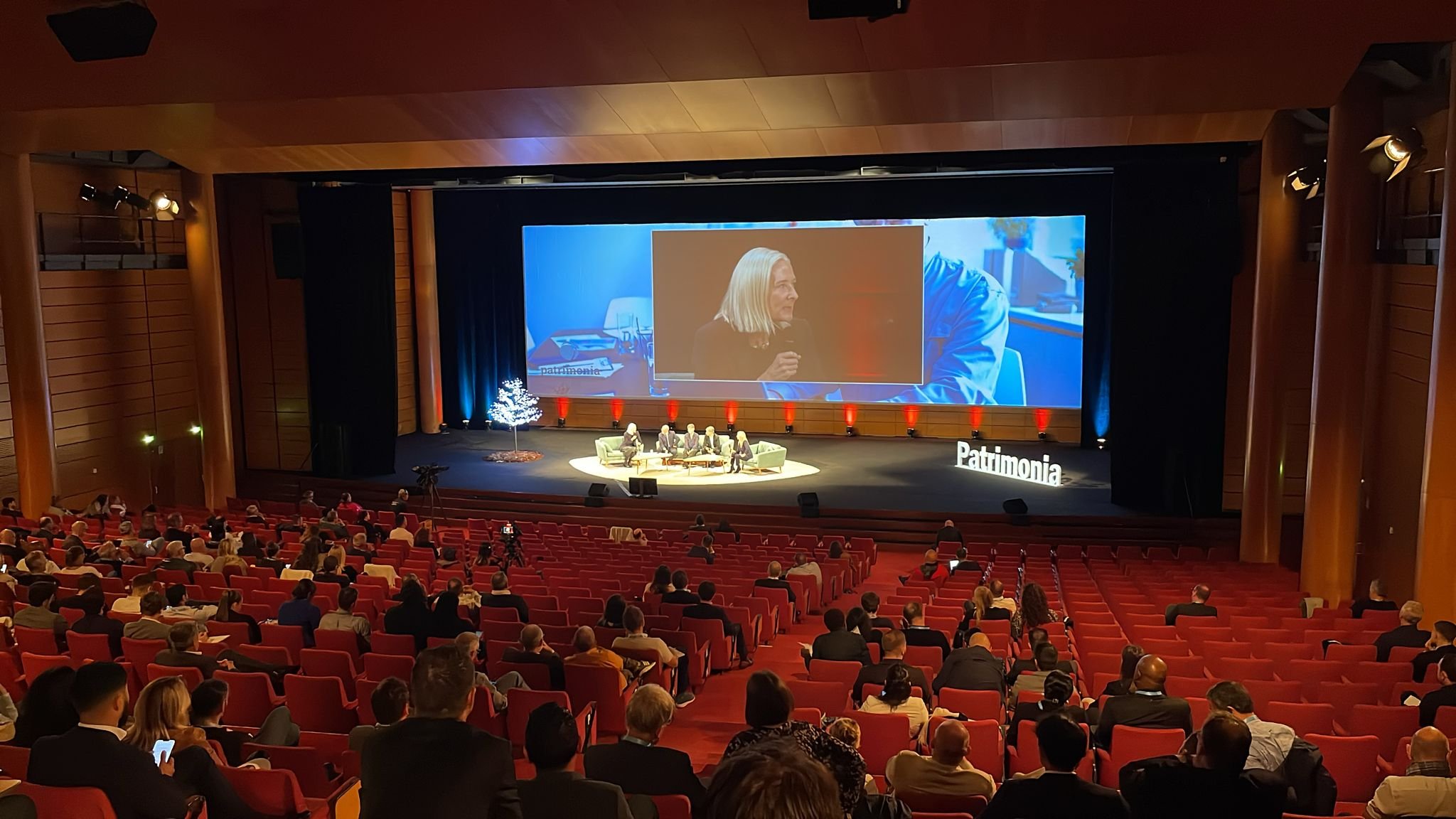
We Will Be Present at Patrimonia 2025 in Lyon alongside Pledger

Source : https://www.patrimonia.fr/

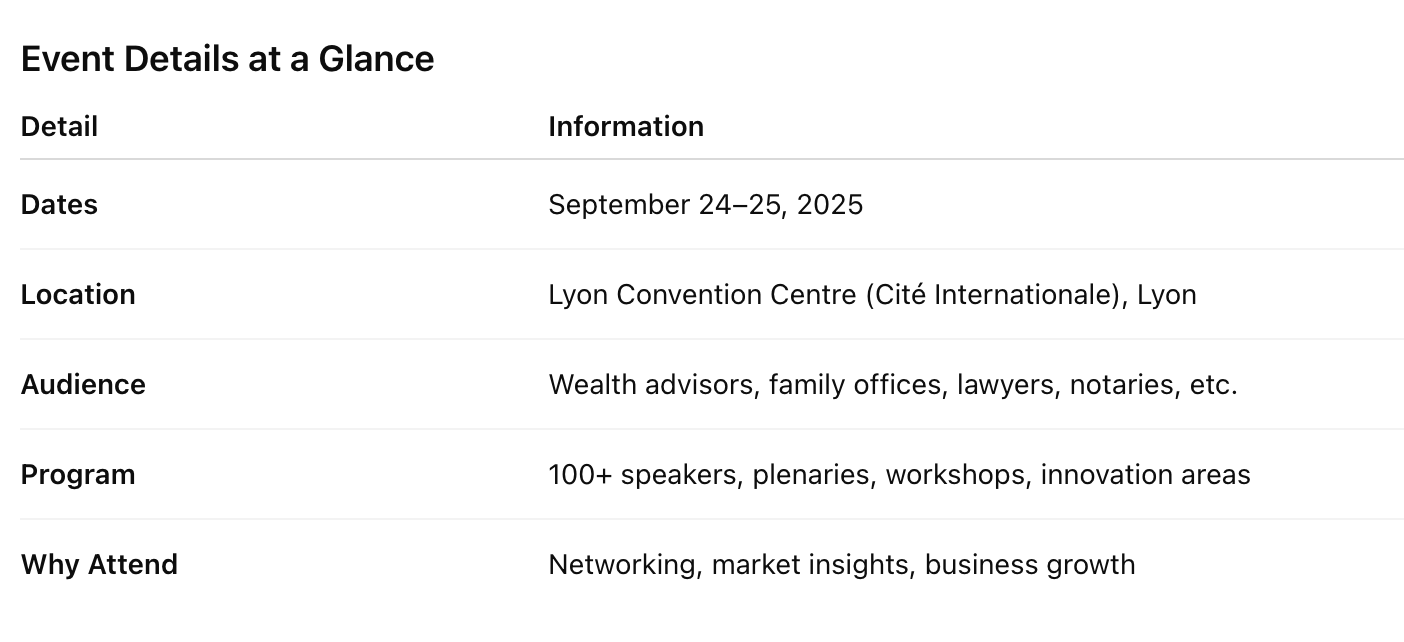
We are pleased to announce that we will be present at Patrimonia 2025, the largest and most influential convention for wealth management professionals in France. The 32nd edition will take place on September 24–25, 2025, at the Lyon Convention Centre (Cité Internationale).

Why We’re Attending

  • Unmatched Reach in Wealth Management
    Patrimonia serves as a premier platform for professionals, including wealth advisors (CGP), family offices, private bankers, lawyers, notaries, and asset managers.

  • High-Quality Audience & Engagement
    In 2024, the convention gathered over 9,000 professionals, more than 380 exhibitors, and 110 speaking sessions Patrimonia. The 2025 edition is expected to go even further, with more than 400 exhibitors and overflowing demand.

  • Rich Program & Learning Opportunities
    Patrimonia 2025 will feature over 100 expert talks, including plenary sessions, workshops, roundtables, and innovation zones focused on digital transformation, ESG, fintechs, and more.

  • Strategic Networking
    The event offers an exceptional environment for forging new business partnerships, sharing insights with top-tier players, and showcasing our solutions to a highly targeted and influential professional audience.

Join Us There

We look forward to meeting fellow professionals and sharing insights in the evolving landscape of wealth management. If you're planning to attend or would like to schedule a meeting, feel free to connect with us.

See you in Lyon this September!

Mandalore Partners to Join INSEAD’s 21st Private Equity & Venture Capital Conference

We’re excited to share that Mandalore Partners will be attending the upcoming 21st Annual INSEAD Private Equity & Venture Capital Conference, taking place on June 12–13, 2025, in Paris and Fontainebleau, France.

Hosted by the INSEAD Private Equity Club (IPEC), this annual conference brings together global leaders in private equity, venture capital, institutional investment, and innovation strategy for two days of impactful conversations, networking, and thought leadership.

Key Event Details

  • Event: 21st INSEAD Private Equity & Venture Capital Conference

  • Dates: June 12 - 13, 2025

  • Locations:

    Day 1: Renaissance La Défense Hotel,Paris

    Day 2: INSEAD Europe Campus, Fontainebleau

A Conference for Strategic Dialogue

This conference is a gathering of leading practitioners, academics and the INSEAD community to debate the forces shaping the private equity & venture capital industry. This year's topic will be: "Outlook of European Markets"

Why Mandalore Is Attending

As a forward-looking firm delivering Corporate Venture Capital-as-a-Service (VCaaS), Mandalore Partners is committed to shaping the future of venture-backed innovation. Our presence at this conference reflects our ongoing investment in:

  • Building stronger corporate-startup collaboration frameworks

  • Exploring new capital models for growth-stage innovation

  • Contributing to the dialogue on sustainable and inclusive investing

We look forward to engaging with peers and partners across the private equity and venture capital spectrum and exchanging insights on how we can rethink, rebuild, and reinvest for long-term value.

Let’s Connect at 21st Annual INSEAD Private Equity & Venture Capital Conference

If you plan to attend the conference and would like to connect with our team, reach out in advance. We welcome conversations with fund managers, corporates, and ecosystem builders looking to push the frontier of strategic innovation.

Mon Petit Placement : Mandalore Partners cède sa participation à Malakoff Humanis

Huit ans après l’idée fondatrice, cinq ans après avoir accompagné ses premiers clients, Mon Petit Placement franchit une nouvelle étape structurante de son histoire. Le groupe Malakoff Humanis, auquel appartient La France Mutualiste (déjà actionnaire depuis 2022), devient aujourd’hui actionnaire majoritaire de la fintech lyonnaise. Un moment charnière, fruit d’une conviction restée intacte : rendre l’investissement accessible à toutes et tous, sans exception.

Un rapprochement choisi, pas une fusion

Ce mouvement capitalistique n’est ni une fusion, ni une intégration, mais bien une prise de participation majoritaire assumée par la direction de Mon Petit Placement. Ce choix stratégique permet à l’entreprise de se doter de moyens supplémentaires pour accélérer, tout en préservant son indépendance culturelle, opérationnelle et stratégique.

Thomas Perret, fondateur de l’entreprise, reste président et actionnaire, avec un engagement fort à long terme (au moins six ans) :

« Ce rapprochement, je l’ai choisi. Parce qu’il nous permet de rester alignés avec nos convictions sans céder aux pressions du court terme. »

Une mission sociale devenue un modèle économique viable

Depuis ses débuts, Mon Petit Placement évolue à contre-courant des codes traditionnels de la gestion de patrimoine. En s’adressant en priorité à des primo-investisseurs disposant de quelques milliers d’euros, la fintech s’est imposée comme un acteur engagé de la démocratisation de l’investissement.

Avec près de 30 000 clients accompagnés, 200 millions d’euros sous gestion et une croissance portée par des solutions simples, pédagogiques et accessibles, l’entreprise a su prouver que son approche — parfois considérée comme atypique — avait du sens : économiquement, humainement, socialement.

Concrètement, rien ne change… sauf les perspectives

Avec cette opération, les fondamentaux de Mon Petit Placement restent inchangés :

  • Les équipes restent en place.

  • Le siège reste à Lyon.

  • Les clients conservent leurs outils et leur accompagnement.

  • L’indépendance dans le choix des supports d’investissement est maintenue.

En revanche, ce partenariat permet de voir plus grand. Parmi les axes d’accélération évoqués :

  • Flouze, l’application mobile d’éducation financière, pourra s’appuyer sur davantage de moyens pour toucher un public plus large.

  • Une approche B2B2C, pour aider d’autres acteurs à proposer une offre d’investissement simple à leurs communautés.

  • Une intensification du travail pédagogique, avec des outils accessibles, des contenus vulgarisés, et un accompagnement humain renforcé.

Un modèle plus que jamais d’actualité

Dans un contexte où les Français expriment de plus en plus le besoin de comprendre, maîtriser et anticiper leur avenir financier, l’offre de Mon Petit Placement répond à une attente sociétale forte. Et avec ce nouveau partenaire majoritaire, la promesse est claire : garder l’ADN entrepreneurial et militant, tout en structurant une croissance durable.

Conclusion : une nouvelle étape, mais toujours la même direction

Ce rapprochement marque le début d’un nouveau chapitre, sans rupture. Une étape pensée pour donner à Mon Petit Placement les moyens d’élargir son impact, tout en conservant ce qui fait sa singularité : une volonté profonde de mettre la finance au service du plus grand nombre.


À propos de Mandalore Partners

Mandalore Partners transforme le paysage traditionnel du capital-risque en introduisant une approche innovante : le VC-as-a-Service. Ce modèle va bien au-delà du simple apport en capital.

Il repose sur une offre de services stratégiques afin de les aider à naviguer dans des environnements complexes, accélérer leur croissance et anticiper les tendances émergentes. Ce modèle proactif et impliqué a permis de bâtir un solide track record en apportant aux startups les ressources, l’expertise et les connexions nécessaires à leur réussite.

L’ambition de Mandalore Partners est d’agir en véritable partenaire, aux côtés des entrepreneurs, pour transformer des visions ambitieuses en réalités concrètes. Grâce à des stratégies sur-mesure et un accompagnement continu, plusieurs startups Insurtech parmi les plus prometteuses ont été accompagnées à chaque étape de leur développement — du financement d’amorçage à la phase de scale-up et au-delà.

Retour en images : Les temps forts d’Investir Day 2024

La 6e édition d’Investir Day s’est tenue avec succès, réunissant des milliers de passionnés et d’experts du secteur de l’investissement. Cet événement incontournable a permis aux investisseurs individuels de découvrir les multiples opportunités d’investissement, d’échanger avec les acteurs clés du marché et de mieux comprendre comment donner du sens à leurs placements.

Un écosystème diversifié à portée de main

Durant cette journée, les participants ont eu l’occasion d’échanger directement avec :

  • Les dirigeants de sociétés cotées pour mieux comprendre les stratégies de leurs entreprises.

  • Des spécialistes de l’immobilier, des cryptomonnaies et du crowdfunding, offrant une vue d’ensemble des alternatives d’investissement.

  • Des économistes et fiscalistes, qui ont partagé leurs analyses sur l’économie et les meilleures pratiques en gestion de patrimoine.

Une journée riche en enseignements et en connexions

Le programme varié, incluant des conférences inspirantes et des ateliers interactifs, a permis aux participants de mieux appréhender les tendances du marché. Parmi les thématiques abordées :

  • Les perspectives économiques actuelles et leurs impacts sur les choix d’investissement.

  • Les opportunités dans le capital-investissement et le crowdfunding.

  • L’importance de l’investissement responsable et aligné avec ses valeurs.

Un succès partagé par tous

Avec une forte participation et des retours positifs, Investir Day a confirmé son rôle de plateforme privilégiée pour démocratiser l’investissement. Les visiteurs repartent enrichis d’idées nouvelles, de contacts précieux et d’une vision plus claire des possibilités offertes par le monde de l’investissement.

Retour en images sur l'évènement Private Equity Insights 2024

Le 8 novembre 2024, le Pavillon Dauphine à Paris a accueilli le prestigieux événement Private Equity Insights. Cette journée a rassemblé plus de 500 participants, des General Partners (GPs) et Limited Partners (LPs) venus échanger sur les dernières tendances et opportunités du private equity.

Des moments forts et des échanges de qualité

L’événement a réuni plus de 60 intervenants de renom, offrant aux participants des perspectives variées sur les quatre thématiques principales : Fundraising, Investing, Creating Value, et Exiting. Les experts ont partagé leurs expériences et les bonnes pratiques pour réussir dans un secteur en constante évolution, avec un focus particulier sur la transparence et la collaboration entre LPs et GPs.

Networking et nouvelles opportunités

L’événement a également permis aux participants de rencontrer des acteurs clés du private equity, d’établir de nouvelles connexions et de renforcer leurs relations. Des réunions individuelles aux discussions informelles, Private Equity Insights a une fois de plus démontré son rôle essentiel dans le développement du réseau et des partenariats pour les professionnels du secteur.

Patrimonia 2024 : Un Événement de Référence pour les Professionnels de la Gestion de Patrimoine

Chaque année, Patrimonia se positionne comme le rendez-vous incontournable pour les professionnels du patrimoine. Cet événement de grande envergure réunit à Lyon un large éventail d'acteurs du secteur financier, tels que les conseillers en gestion de patrimoine, les institutions financières, et les experts en investissement. C’est un moment clé pour échanger sur les dernières tendances, innovations, et réglementations qui façonnent l'avenir de la gestion financière.

Pledger : Un acteur clé de la Fintech à Patrimonia

Start-up prometteuse dans l'univers de la fintech, Pledger se concentre sur des solutions innovantes permettant d'améliorer la gestion des flux financiers et de faciliter l'intégration des principes ESG (environnementaux, sociaux et de gouvernance). Leur présence à Patrimonia témoigne de leur engagement à accompagner les investisseurs et les institutions vers des solutions plus durables et responsables.

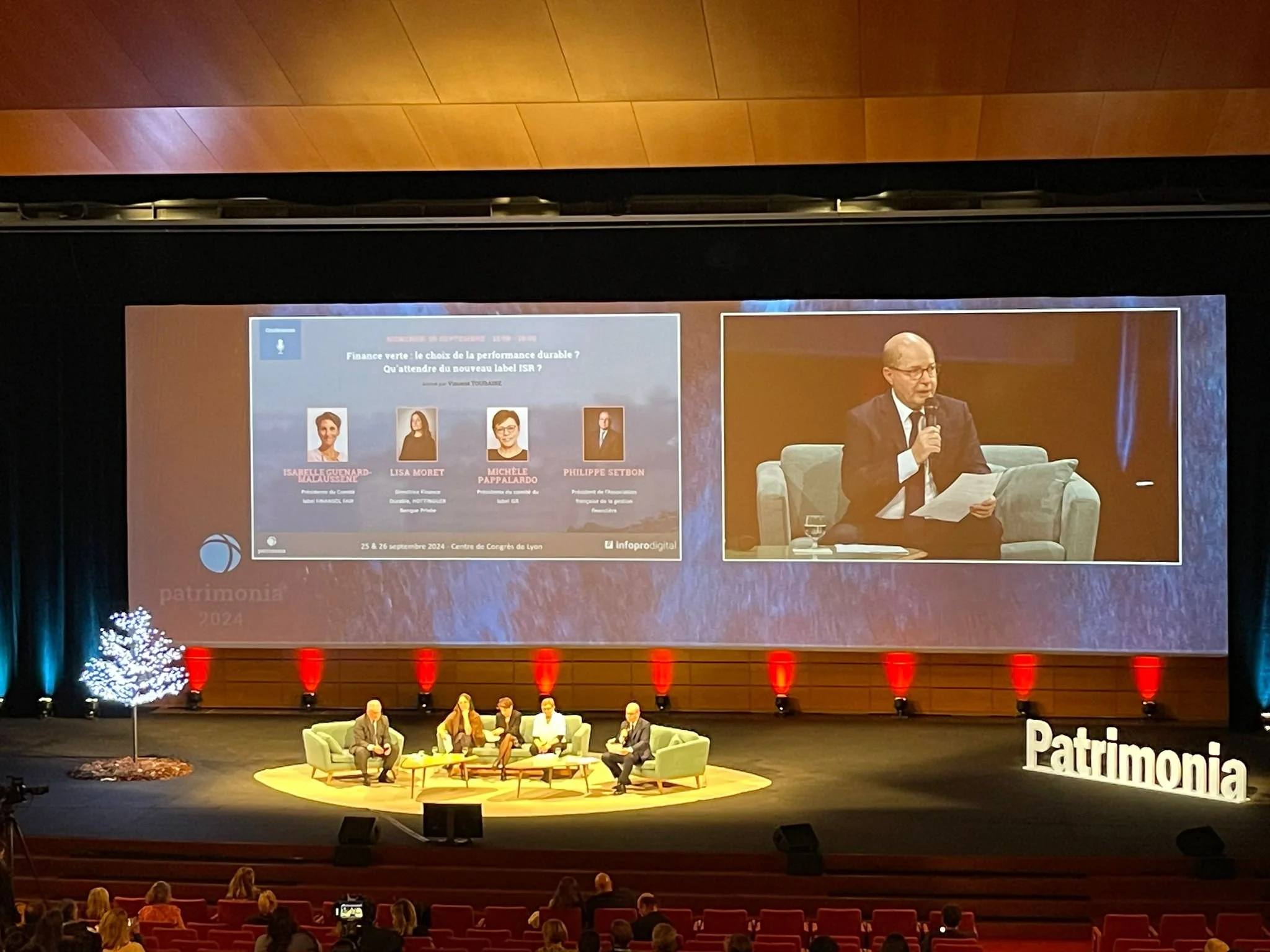
Des Conférences Inspirantes sur l’Impact et la Réglementation

Parmi les moments forts de Patrimonia, plusieurs conférences ont mis en lumière des enjeux cruciaux pour l’avenir du secteur financier, notamment l’importance de l’impact et de la réglementation :

  • Isabelle Guénard-Malaussène, présidente du comité du label Finansol chez FAIR, a souligné l’importance de mesurer l’impact : « On va intégrer la mesure de l’impact. » Ce message est essentiel à une époque où l’évaluation des retombées sociales et environnementales des investissements est primordiale.

  • Philippe Setbon, président de l’Association Française de Gestion Financière (AFG), a abordé la question du règlement SFDR (Sustainable Finance Disclosure Regulation) : « Le règlement SFDR sert à orienter la transition démographique, on a besoin d’information à partir de la data, y accéder à un coût faible. » Cette intervention a mis en avant le rôle des données et de la réglementation dans la transition durable.

  • Michèle Pappalardo, présidente du comité label ISR chez Stratégie Durable, a rappelé que « Un label ISR ne vise pas un fonds à impact. » Cette distinction a ouvert le débat sur l’importance des critères ESG et des labels dans l’investissement responsable.

En somme, Patrimonia 2024 a permis de confirmer l'importance croissante des pratiques durables et transparentes dans le secteur de la gestion de patrimoine, et nous sommes fiers d'avoir été présents pour échanger sur ces enjeux déterminants.

Retour sur le 130e Congrès national des sapeurs-pompiers de France

Hier, nous avons eu l’honneur d’être présent au 130e Congrès national des sapeurs-pompiers de France, un événement incontournable pour les acteurs de la sécurité civile. Ce congrès, qui se tient chaque année, rassemble des professionnels du secours, des sapeurs-pompiers de toute la France, ainsi que de nombreux exposants et partenaires techniques. Il permet à ces acteurs de se rencontrer, d'échanger sur les évolutions technologiques et les enjeux actuels dans la prévention et la gestion des urgences.

Au cœur de cet événement, nous étions présents aux côtés de AUM Biosync, un acteur innovant dans le domaine des solutions biomédicales et des technologies de pointe pour les interventions d’urgence. Leur stand a attiré une foule nombreuse, témoignant de l'intérêt croissant pour les solutions qu'ils proposent. AUM Biosync se distingue par son approche innovante, notamment à travers des dispositifs médicaux avancés destinés à améliorer l'efficacité des interventions d'urgence et à optimiser les soins aux patients.

En plus des échanges techniques, la présence d'AUM Biosync au congrès a permis de renforcer leur position dans ce secteur en pleine expansion, tout en mettant en avant leur engagement à soutenir les sapeurs-pompiers dans leurs missions vitales.

The World's Private Capital Hub

Join us at IPEM Paris, the must-attend event that brings together Private Equity decision-makers from around the globe. Launched in 2023, this dynamic gathering highlights innovation, fosters new connections, and propels exceptional opportunities. Over three days, more than 6,000 decision-makers, investors, and general partners will converge in the heart of Paris for high-level business meetings and thought leadership content.

You can find the program here : https://www.ipem-market.com/paris-2024/program/ 

And all the speakers here : https://www.ipem-market.com/paris-2024/speakers/ 

Ramify lève 11 millions d’euros pour digitaliser la gestion de patrimoine

La plateforme de gestion de patrimoine et de conseil financier vient de réaliser un nouveau tour de table pour se déployer sur le marché français. Les objectifs : continuer à étoffer son offre et ses services, en misant notamment sur l’IA, mais aussi améliorer sa notoriété.

Adresser les personnes qui investissent de 100 000 à 5 millions d’euros, en accompagnant également celles qui commencent par placer 1000 euros. C’est l’ambition de Ramify, qui se veut être une « alternative aux banques privées. » La startup née en 2021 offre une solution de gestion de patrimoine alliant digitalisation et conseil. « Nous proposons la gamme de produits la plus large possible, allant de l’assurance vie aux investissements dans l’art en passant par les produits plus classiques comme les livrets d’épargne, détaille Olivier Herbout, le cofondateur, qui peut également proposer des investissements en private equity et en immobilier ou d’autres placements alternatifs tels que le crowdfunding ou les produits structurés. « Nos conseillers sont experts en gestion de patrimoine, ils proposent des produits spécifiques à chacun de nos clients », poursuit le dirigeant qui emploie également des chercheurs en finance quantitative ou des développeurs et compte 11 salariés.

Digitaliser le plus de tâches possible

Car ce qui différencie vraiment Ramify des banques privées, c’est la tech. « Nous apportons beaucoup de plus value sur la digitalisation. Dans le système financier classique, les clients sont souvent contraints de se déplacer pour signer un bulletin de souscription. L’idée est de digitaliser le plus de tâches possible tout en conservant l’aspect humain pour le conseil. Quand on investit 500 000 euros, on ne veut pas avoir affaire uniquement à un ordinateur », souligne Olivier Herbout.

Pour la startup, l’autre avantage est de proposer différents produits et différents fonds d’investissement. « Nous ne détenons pas nos propres fonds, nous pouvons donc proposer à nos clients d’investir dans ce qui nous semble être le plus approprié », poursuit le dirigeant qui rémunère sa startup en percevant une partie des frais de gestion.

Des encours sous gestion multipliés par 20

Ramify, qui a connu ces derniers mois une croissance exponentielle avec des encours sous gestion multipliés par 20 en 18 mois, veut désormais poursuivre son développement. Après avoir levé 3,5 millions d’euros en seed, la startup vient d’annoncer une série A de 11 millions d’euros auprès d’un consortium d’investisseurs mené par 13books, qui comprend également Fidelity International Strategic Ventures (FISV) et ses investisseurs historiques.

« Le premier objectif de ce tour de table est de proposer davantage de produits et de les démocratiser. Certains investissements sont accessibles via des montants minimums. Nous souhaitons trouver des acteurs qui abaissent ces niveaux là et avoir davantage de véhicules d’investissements pour y accéder », précise Olivier Herbout, pour qui l’ambition est également de digitaliser les investissements qui ne le sont pas encore. Avec cette levée de fonds, Ramify veut aussi améliorer sa notoriété en investissant davantage dans le marketing.

Miser doublement sur la France

Pour atteindre ces ambitions, la startup envisage de recruter 8 à 10 personnes. « Nous voulons créer de nouveaux outils, des simulateurs simples pour les investisseurs par exemple, en continuant à miser sur l’IA. Et pour cela, nous avons besoin d’étoffer notre équipe tech », indique le dirigeant. Dans le même temps, Ramify envisage également d’augmenter son pôle de conseillers.

Aujourd’hui, la startup se concentre sur le marché français. « C’est un marché encore trop peu digitalisé, qui se consolide. Notre offre y est pertinente. L’objectif est donc de miser doublement sur la France. » La startup envisage à terme de se déployer à l’international. Mais cette expansion fera plutôt l’objet d’une série B et n’est pour le moment pas d’actualité.

Silver economy : les innovations sur lesquelles miser pour accompagner la transition démographique

Source : https://www.maddyness.com/2024/03/28/silver-economy-les-innovations-sur-lesquelles-miser-pour-accompagner-la-transition-demographique/

Les personnes âgées de plus de 65 ans représentent plus de 20 % de la population française. D’après les projections de l’Insee, cette proportion devrait progresser fortement jusqu’en 2040. Cette transition démographique, ou papy boom, crée de nouvelles opportunités économiques.

« Les acteurs généralistes commencent à s’intéresser aux problématiques de vieillissement », remarque Romain Ganneau, DG de Silver Valley. Ce pôle d’innovation dédié à la transition démographique compte 200 membres, des PME et startups jusqu’aux grands comptes. « Nous avons de plus en plus d’adhérents qui ne sont pas des pure players de la silver economy. Ce sont des banques, assureurs, bailleurs sociaux, mutuelles, grands comptes de la technologie qui se disent “25 à 30% de nos clients sont retraités, travaillons sur cette cible-là”. » Le besoin en services dédiés à cette tranche de la population va en effet grandissant. En s’appuyant sur les témoignages de plusieurs acteurs de l’écosystème, Maddyness a listé trois tendances sur lesquelles continuer de se pencher.

Le financement du maintien à domicile

Pour Coline Guénel, cofondatrice de la startup Colette, le maintien à domicile fait partie des plus gros défis pour bien vieillir. « Lorsqu’ils ne vont plus au travail, les seniors perdent un premier repère. Une partie d’entre eux n’ont plus leur conjoint. La maison ou l’appartement, dans lequel ils sont pour certains depuis des dizaines d’années, est souvent le dernier repère », observe la COO. Colette propose donc aux seniors de louer une chambre à des jeunes, ce qui leur redonne du pouvoir d’achat et, par la même occasion, leur permet d’être moins seuls.

Les crédits hypothécaire et patrimonial sont un autre moyen de financer son maintien à domicile.

« Ils permettent d’emprunter une certaine somme en mettant en gage sa maison pour le premier, son assurance-vie pour le second. Ces solutions peuvent être utilisées pour adapter son lieu de vie, rénover une salle de bain par exemple. »
— Minh Q. Tran, Managing Partner, Mandalore Partners

Les nouvelles formes de liquéfaction du patrimoine

« Aujourd’hui, les retraités sont de plus en plus conscients que leur retraite ne leur permettra pas, pour certains, de continuer à financer leur maintien à domicile », remarque Romain Ganneau. Ils peuvent alors se tourner vers des moyens de liquéfier leur patrimoine immobilier.

« Des solutions plus éthiques que le viager existent. Elles permettent par exemple de vendre un bien et de continuer à y habiter avec un contrat sur dix ans, pour préparer sa transition »
— Minh Q. Tran, Managing Partner, Mandalore Partners

Traiter les causes du “mal vieillir”

Avant de penser aux conséquences, il serait pertinent de traiter les causes. C’est ce pour quoi plaide Stanislas Veillet, auteur du livre "Vivre longtemps et en bonne santé" et PDG de la biotech Biophytis. « Avec davantage d’investissements, je pense qu’on pourrait traiter la plupart des maladies liées à l’âge, qui font qu’on perd son autonomie et tout lien social. Cela permettrait des économies monstrueuses en termes de sécurité sociale. Mais l’innovation dans les maladies thérapeutiques va plus lentement que la transition démographique », regrette Stanislas Veillet.

Le PDG évoque la possibilité de créer un statut de médicament senior, qui permettrait d’accélérer le processus de mise sur le marché. « On l’a vu dans le cadre de la crise Covid : quand les pouvoirs politiques veulent se saisir d’un problème de santé publique, on arrive à agir en quelques mois. Pourquoi ne le fait-on pas pour les maladies liées à l’âge ? », s’interroge-t-il. « Il faut que les agences réglementaires prennent conscience de l’urgence.»

Euroclear to invest in IZNES, a leading solution enabling an innovative funds distribution model

Brussels and Paris, 25 March 2024 - Euroclear and IZNES today announce that Euroclear will acquire a stake in IZNES, a pan-European funds marketplace based on blockchain technology. The transaction will be subject to customary closing conditions and regulatory approvals. Financial terms will not be disclosed.

Established in 2017, IZNES is a regulated company operating an international platform for subscriptions and redemptions of shares of European funds, compatible with various distribution channels. IZNES simplifies and harmonises the subscription processes, brings more transparency and provides an improved customer experience both for management companies and institutional investors.

Building on the acquisitions of MFEX in 2021 and Goji in 2023, Euroclear continues to enhance its Euroclear FundsPlace® offering, the end-to-end funds platform solution across mutual and money market funds, alternatives funds and ETFs. Through this strategic partnership with IZNES, Euroclear will complement its funds services on the French market and beyond and continue the delivery of its funds strategy by playing an active role in the development of innovative funds distribution models.

Philippe Laurensy, Head of Product, Strategy and Innovation at Euroclear, said: “Our partnership with IZNES fits with Euroclear’s ambition to innovate and bring efficiency to the financial markets. We are convinced that the mutualisation of data and further automation of processes, supported by digital technologies, have a real potential to reduce the overall cost of funds distribution. IZNES’ solution has already delivered benefits to its users and our partnership is a natural step to broaden its usage at a larger scale.”

Christophe Lepitre, Chief Executive Officer of IZNES: "This operation with Euroclear marks a key milestone in the development of IZNES. We are convinced that together we must continue to build innovative solutions that make the most of blockchain technology for the greater benefit of our customers. IZNES and its shareholders are delighted at this prospect.”

About Euroclear

Euroclear group is the financial industry’s trusted provider of post trade services. Guided by its purpose, Euroclear innovates to bring safety, efficiency and connections to financial markets for sustainable economic growth. Euroclear provides settlement and custody of domestic and cross-border securities for bonds, equities and derivatives, and investment funds. As a proven, resilient capital market infrastructure, Euroclear is committed to delivering risk-mitigation, automation and efficiency at scale for its global client franchise. The Euroclear group comprises Euroclear Bank, the International CSD, as well as Euroclear Belgium, Euroclear Finland, Euroclear France, Euroclear Nederland, Euroclear Sweden, Euroclear UK & International.

Press contacts:

  • Pascal Brabant: pascal.brabant@euroclear.com (+32 475 78 36 62)

  • Craig MacDonald: craig.macdonald@euroclear.com (+44 7471 148 319)

  • Jorgen Muylaert: jorgen.muylaert@euroclear.com (+32 479 77 14 80)

About IZNES

IZNES is the first European blockchain-based fund marketplace. IZNES offers a disruptive alternative to traditional fund distribution channels and allows asset owners to subscribe directly to all types of funds from asset managers. The use of IZNES's blockchain technology improves operational efficiency and offers to institutional investors and asset managers an optimal level of security and IT resilience. IZNES is a regulated investment firm authorized by the ACPR and supervised by the AMF. Its services are passported in Luxembourg, Ireland, Germany, Austria and Belgium.

Press contact:

  • Valérie Gilles: valerie.gilles@iznes.io

ZET Summit 2024 : Tour debrief

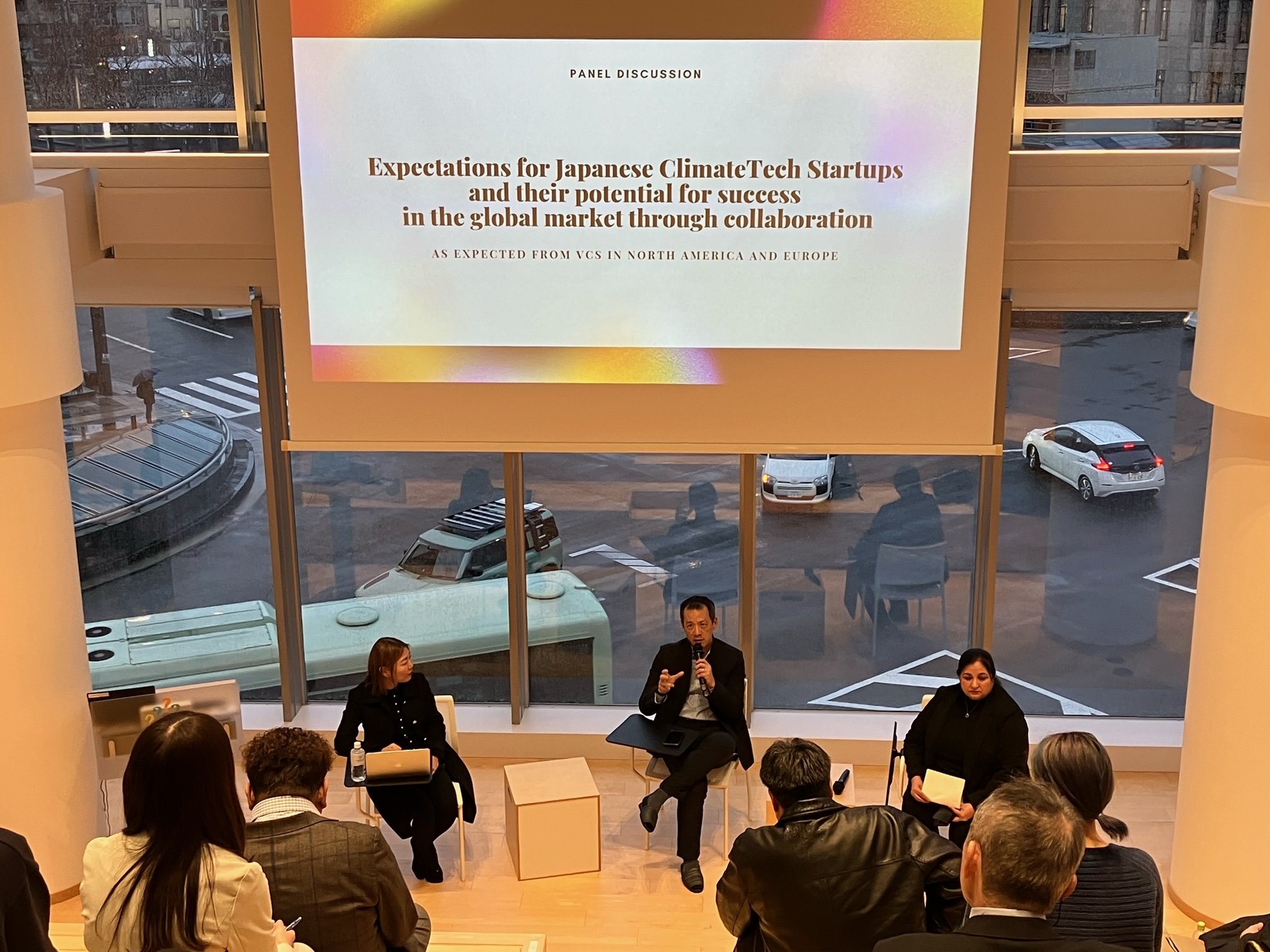
We visited the Prefecture of Kyoto at the Zero Emission Technologies Conference in Kyoto on Feb 4-8th.

Here are the main conclusions for next steps

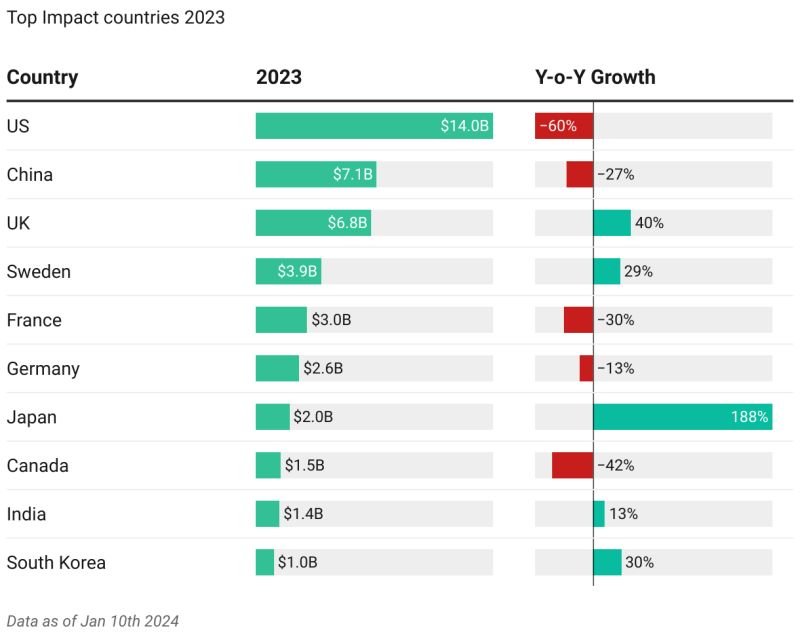
We were thrilled to participate in the "Decarbonization Startup Tour" in Kyoto, an exceptional initiative that brought together investors and businesses to delve into decarbonization opportunities in Japan. This event, organized in collaboration with key stakeholders such as the Kyoto Prefecture and JETRO Kyoto, showcased Japan's commitment to a sustainable future and its substantial efforts in carbon emission reduction.

Japan's impact sector is buzzing, with increasing interest in clean technologies, renewable energy, and decarbonization initiatives. Decarbonization, in particular, has emerged as a national priority, reflected by ambitious policies and support for startups and innovations aimed at reducing the country's carbon footprint.

Mandalore Partners met over 40 investors and startups sharing a vision for decarbonization and industry tech.

A special thanks to

We extend our heartfelt gratitude to the event organizers: the Kyoto Prefecture and Jetro Kyoto.

To all participants:

  • Ekta Dang,  Corporate Venture Capital as a Service (like Mandalore but in the US and multi industries)

  • Drew Reid, looking for a pilot factory in his Co2-to-Granite ventures 

  • Paco Conde Fernández, looking to digitalize all forests in Finland via Blockchain

  • Chika Yamamoto, my advisor in the industry fund based in Berlin

Aslo, thanks to:

Nobuya Hashizume, Yoshihito Takabu, Masayoshi Tsukikawa, Hiroshi Saito, Emi Kumagai, Junichi Furumoto, Koji Gonoi, and Alexandre Panau for their warm hospitality and dedication to advancing sustainability. These interactions and meetings have not only provided us with a deeper understanding of Japan's impact landscape but also opened avenues for future collaborations vital for achieving our shared decarbonization goals.

Join us at ZET Summit 2024 !

What is ZET-summit 2024?

Under the theme of collaboration with startups related to zero-emission technology (ZET) in Japan and overseas, and the introduction of technology to urban development and local industries, industry-academia-government officials will gather together to share case studies and develop new ideas. It will be held as a place where exchange and co-creation are born.

Learn about and connect with the latest decarbonization technologies

Leading companies, local governments, and key people in their respective fields will take the stage !

DAY 1

Keynote Speeches and Talk Sessions on the Latest Decarbonization Technologies

  • Keynote speeches by prominent figures in the EV, battery, and biotech manufacturing fields

  • Case studies of large companies' efforts to create decarbonizing innovations

  • Talk session on co-creation with startups and industry-academia-government collaboration.

DAY 2

Startup Collaboration to Connect with Decarbonization Technology Companies

  • Pitches by national and international decarbonization-related startups

  • Reverse pitches by large companies from ZET-valley onsite only

  • Business meeting booths with startups

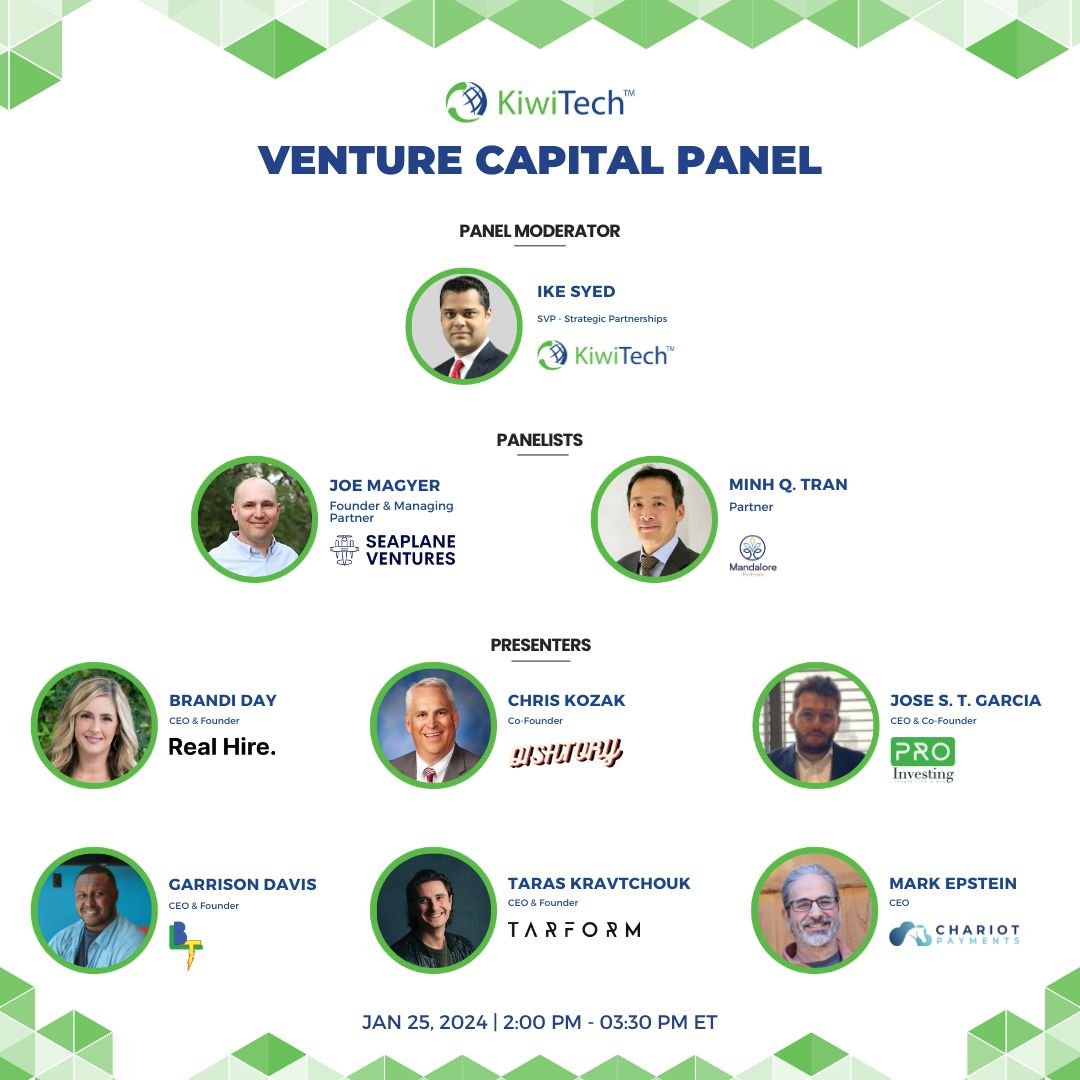
The KiwiTech's Venture Capital Panel in January 25, 2024

Venture Capital Panel

The Rise of Impact Investing: Navigating Socially Responsible Funding in 2024

Connect With Leading VCs

Leading experts, investors and innovators from the industry discussed together the technology’s impact, challenges facing the industry, and the growing significance and impact of investing in ventures.

👥 Meet the Panel Moderator
🔹 Ike Syed- Senior Vice President, Strategic Partnerships, KiwiTech

👥 Meet the Panelists
🔹 Joe Magyer- Founder & Managing Partner, Seaplane Ventures
🔹 Minh Q. Tran- Partner, Mandalore Partners

🎤 Exciting Presenters and Their Ventures
🔹Brandi Day, CEO & Founder, Real Hire, Inc.
🔹Chris Kozak, Co-Founder, Dishtory
🔹José Sebastián Torres García, CEO & Co-Founder, PRO Investing | PRO Capital Management
🔹Garrison Davis, CEO & Founder, Little Bob Technologies
🔹Taras Kravtchouk, CEO & Founder, TARFORM - Mobility of Tomorrow
🔹Mark Epstein, CEO, Chariot Payments

The panel delved into critical topics such as socially responsible investing, technological innovation, and specific challenges facing startups. A clear takeaway emerged: to catch the eyes of investors, startups must necessarily include the tracking of social impact in their key performance indicators (KPIs). Concurrently, it's crucial that financial investors are encouraged to incorporate social impact assessments into their investment decisions.

Explore the key moments of our session

  • 00:01: An in-depth discussion on impact investing and the evolution of the investment landscape.

  • 08:25: Exploring the impact of investment on startups and their sustainability.

  • 16:49: The importance of social impact within startups and responsible investing.

  • 25:12: Trends and education around socially responsible and impactful investing.

  • 33:35: The effect of investment on startups and artificial intelligence.

  • 41:58: How Real Hire is revolutionizing global recruitment.

  • 50:23: Company presentation and discussion on valuation.

  • 58:47: The revolution of real-time payments and digital wallets.

  • 1:07:11: The Disty platform: recording, sharing, and preserving family recipes and memories.

  • 1:15:33: Growth opportunities for an online cooking app.

  • 1:23:59: Business model, service fees, and growth plan.

  • 1:32:24: Introduction of Little Bob Technologies and the community solar model.

  • 1:40:49: Expansion of electric mobility and the introduction of luxury electric motorcycles.

  • 1:49:13: Business model, expansion, and investment outlook for an electric motorcycle company.

We believe these enriching exchanges offer a valuable overview of current and future trends in investment and technological innovation. Join us in this exciting journey to shape a more responsible and innovative future.


How to foster innovation in your organization? The challenges of venture building and the role of venture partners in supporting corporates.

Innovation is essential for corporate success, providing a competitive edge by introducing unique products, services, or processes. It drives growth by attracting customers, enhancing operational efficiency, and fostering adaptation to market changes. In a nutshell, innovation ensures long-term sustainability in a dynamic business landscape and is the key to growth for any organization. But fostering innovation can be a daunting task, especially for corporates that have been around for a while. This is where the venture building ecosystem comes in, with venture partners playing a crucial role in supporting corporates in their innovation journey. In this article, we will dive deep into the venture building ecosystem and understand its key components and the role of venture partners. We will also explore why innovation is important for corporates and how venture partners can support corporate innovation. 

Key points 

  • Corporates prioritizing innovation have different strategies to pursue it, including venturing and acquisitions. 

  • The choice between "make" or "buy" approaches depends on knowledge gain, speed of deployment, and financial returns. 

  • Corporates can decide to maintain innovation internally or spin it off as a new venture, depending on their goals. 

  • Corporate venture builders offer holistic support along the venture creation process and maintain strategic alignment with corporates. 

The different innovation strategies: how to pursue growth and sustainability? 

On the road to innovation, the biggest challenge for a company is to determine where to invest their efforts and assets. Key factors in this decision are the amount of risk they are willing to bear and the potential of the market they are operating in. Depending on these factors, the company can pursue different ways of innovation strategy such as market expansion or entry, product or business model innovation, and venturing. 

Market Expansion/Entry 

A company can decide to enter an adjacent market (dictated by the rules of the existing business) or a non-core activity presenting synergies (with new rules and players). This type of innovation does not disrupt the existing products or business model but expands the corporate’s business and expertise. 

Product or Business Model Innovation 

By deciding to create a new business with an innovative product or business model, the company can cause a (r)evolution within the market itself. This innovation strategy typically has a higher upside in case of success, as the company is placed in a dominant position (implementing the blue ocean strategy described by C. Kim and R. Mauborgne in their eponym book), but also a higher risk of failure if the operation is not well prepared. 

Venturing 

A venturing strategy, for its part, can prove less risky and more profitable. It involves creating a separate entity that operates in a non-core or adjacent business with an innovative product or business model. This approach eliminates constraints from the parent company's existing structure, business, and politics, but most importantly maximizes the potential magnitude of innovation by implementing the disruptive ideas in the most adapted conditions. 

Corporates have different degrees of experience in different types of innovation strategies but most of them are reluctant to experiment with the more radical and unsure types of venturing. This is why a venture partner can prove useful to exploit the biggest opportunities and generate the highest returns. 

Challenges in Fostering Innovation and Role of Venture Partners 

Corporates can either choose to innovate in-house, creating their own innovation lab and making their own research, or choose a trusted partner with more experience to help them navigate the market. Venture partners play a crucial role in driving innovation within corporates by bringing fresh ideas and perspectives to the table. They go beyond the conventional norms, encouraging experimentation and fostering a culture of innovation. By helping corporates embrace risk and overcome resistance to change, venture partners facilitate the adoption of an entrepreneurial mindset. Additionally, they provide access to startup networks, industry trends, and emerging technologies, inspiring corporate innovation. Venture partners also contribute to the development of new business models, products, and services, fueling corporate growth. With their expertise and support, corporates can leverage the venture building ecosystem to unleash their innovative potential and stay ahead in today's dynamic business landscape. 

Different types of venturing support are offered by various players, each with their own value propositions. They vary in terms of expertise, level of involvement, and strategic alignment with the agenda of the corporates.

Strategic Consulting, the thinkers 

Traditional strategic consulting firms have entered the Venture Building segment. They approach this new segment with deep involvement in strategic alignment and limited implementation capabilities. Their services are typically compensated through fee-based schemes. 

Accelerator/Incubator, the builders 

Firstly, these players offer access to a portfolio of start-ups that they have supported, which are aligned with the strategic fit previously defined by the corporates. Secondly, they may also offer ad-hoc acceleration or incubation programs sponsored by the corporates with the specific intent of creating ventures that could generate a strategic advantage. Their level of involvement is high in the daily operations, but they offer less strategic expertise. 

Corporate Venture Capital (CVC), the investors 

Traditional venture capital funds leverage their corporate finance knowledge to identify, invest in, or acquire existing start-ups at different stages. Their main objective is to pursue financial returns rather than the strategic intents of the parent company. However, CVCs may contribute to creating strategic advantage through focused acquisitions and partnerships. 

Corporate Venture Builder, the holistic approach 

Corporate Venture Builders, for their part, support corporates along the full value chain of venture creation, from the design phase to Serie A funding. They cover product development and other critical phases of venture creation. Corporate Venture Builders ensure high strategic alignment with the corporate's existing strategic agenda as they are involved in the discovery phase with the company. They may adopt different combinations of fees and equity as their remuneration schemes, but always maintain a good extent of "skin in the game" through equity participation, which ensure they are success-driven. 

Conclusion 

Corporates encounter common challenges when fostering innovation. These challenges necessitate a clear strategy and business model for successful corporate innovation. However, venture partners play a vital role in overcoming these obstacles. With their expertise and support, they enhance the chances of successfully navigating the innovation landscape. Collaboration with venture partners offers corporations a valuable opportunity to leverage external knowledge and resources, augmenting their ability to overcome innovation challenges.

In the innovation field, Corporate Venture building is a holistic approach maximizing synergies by interconnecting the strategic thinking, the go-to-market implementation, and the financing expertise. It maximizes the chances of success and minimizes the risks of missing a crucial element for the new venture’s performance on the market. This is why corporate venture building as-a-service, which in addition allows the corporates to externalize the process and rely on a trusted partner, can take a lot off the CEOs’ shoulders. Indeed, venture partners can guide and educate companies in their entrepreneurial journey thanks to their experience in venture founding, while securing the operations’ success.