Venture Building as a service

"Fortress Capital" – Investir dans la sécurité et la souveraineté à l'horizon 2035

En écho au Panel : "Fortress Capital: Investing in Security, Sovereignty & Survival Assets (2026–2035)"

L'ouverture des discussions au sommet de Luxembourg a donné le ton avec un panel consacré aux actifs de souveraineté et de survie. Animé par des experts de la finance et de la stratégie, ce débat a exploré comment les family offices réorientent leurs allocations vers des secteurs critiques : cybersécurité, infrastructures sensibles, technologies militaires et spatiales, et chaînes de valeur souveraines. Une question centrale a émergé : comment transformer ces postures défensives en opportunités d'investissement structurantes pour la décennie à venir ?

Cette quête de résilience et de souveraineté trouve un écho très concret dans le portfolio de Mandalore Partners, qui a identifié depuis plusieurs années le potentiel des technologies critiques. Plusieurs de leurs participations illustrent parfaitement cette tendance "Fortress Capital".

Dans le domaine de la sécurité numérique et de la souveraineté des données, Ledger est bien plus qu'une licorne française : c'est un acteur systémique. En sécurisant plus de 20% des actifs numériques mondiaux, l'entreprise est devenue une infrastructure critique pour l'économie digitale et un rempart contre la vulnérabilité des clés privées. Son adoption par des institutions financières et des entreprises démontre que la souveraineté sur ses actifs est désormais un impératif stratégique.

La dimension de survie et de résilience peut aussi s'appréhender à travers le prisme de la santé et de la prévention, un axe fort du fonds Impacttech. Huma, startup de santé digitale, développe des plateformes de soins à distance et de suivi de patients utilisant l'IA. Dans un monde confronté aux risques de pandémies (un scénario de contingence évoqué au panel), de telles technologies deviennent des actifs de souveraineté sanitaire, permettant aux systèmes de santé de gérer des crises tout en assurant la continuité des soins. C'est une forme d'infrastructure critique du futur.

Enfin, le volet technologies duales et résilience industrielle est incarné par Mob-Energy. Sa solution de recharge de véhicules électriques, basée sur des batteries de seconde vie, répond à un double enjeu de souveraineté : sécuriser les chaînes d'approvisionnement énergétique en réduisant la dépendance aux matières premières critiques (grâce au réemploi) et renforcer l'autonomie des infrastructures de mobilité. C'est une illustration parfaite de ce que les intervenants du panel appellent l'investissement dans les "survival assets", ces actifs qui assurent la continuité de nos sociétés face aux disruptions.

Alors que la notion de "forteresse" évolue d'un concept physique à une réalité technologique et systémique, le message du sommet est clair : la sécurité et la souveraineté sont devenues des classes d'actifs à part entière. Pour les family offices, y avoir une exposition ne relève plus de la précaution, mais d'une allocation stratégique aux piliers de notre résilience future.

Outlook 2026 – Pourquoi le crypto devient un actif stratégique

En écho à l'atelier de Hashdex

L'atelier animé par Benjamin Ittah de Hashdex, intitulé "Outlook 2026: why Crypto is becoming a strategic allocation", a capté toute l'attention lors du sommet de Luxembourg. Ce qui n'était hier qu'une classe d'actifs spéculative est en train de devenir, pour de nombreux family offices, une composante à part entière de l'allocation stratégique. Derrière cette tendance se cache un écosystème d'entreprises qui construisent les infrastructures de confiance indispensables à cette adoption.

Le portfolio de Mandalore Partners compte en la matière un ambassadeur de choix avec Ledger. Leader mondial incontesté de la sécurisation des actifs numériques, Ledger a joué un rôle clé dans la maturation du secteur. En rendant la conservation des crypto-actifs accessible et ultra-sécurisée (avec plus de 20% des actifs cryptos mondiaux sécurisés via ses dispositifs), l'entreprise a levé un frein majeur pour les investisseurs institutionnels. Le lancement de Ledger Enterprise répond précisément aux besoins de ces family offices en quête de solutions de conservation robustes et conformes.

Au-delà de la conservation, l'innovation financière permise par la blockchain est un autre moteur de cette allocation stratégique, comme l'illustre IZNES. Cette plateforme utilise la blockchain pour simplifier et sécuriser l'achat et la vente d'OPC (fonds d'investissement), un processus traditionnellement lourd et complexe. En tokenisant des parts de fonds, IZNES ouvre la voie à plus de liquidité, de transparence et d'efficacité opérationnelle, des arguments qui résonnent fortement auprès des gérants de patrimoine en quête de performance. L'adoption du crypto comme actif stratégique ne se limite donc pas au bitcoin ou à l'ether, mais englobe toute une nouvelle infrastructure financière où des sociétés comme Ledger et IZNES sont des piliers essentiels.

"Is your wealth strategy AI-ready ?" – L'IA au service de la nouvelle finance

En écho à la session d'AXA Wealth Europe et Sapians.

Lors du dernier Family Offices & Asset Management Summit à Luxembourg, Gaëlle Haag (AXA Wealth Europe) et Souleymane-Jean Galadima (Sapians) ont posé une question cruciale : "Is your wealth strategy AI-ready ?" Pour les family offices, l'heure n'est plus à se demander s'ils doivent adopter l'IA, mais comment l'intégrer de manière pragmatique pour gagner en efficacité et personnalisation.

Cette interrogation fait directement écho à la stratégie de Mandalore Partners, dont le portfolio regorge de pépites qui transforment l'administration de la finance et des données. Des startups comme Mipise ou INVYO illustrent parfaitement cette tendance de fond. Mipise, avec ses solutions "end-to-end" de digitalisation des flux complexes (onboarding, investissement en Private Equity), permet aux établissements financiers d'automatiser des processus critiques grâce à des plateformes SaaS, libérant ainsi leurs équipes pour des tâches à plus haute valeur ajoutée.

Dans le même esprit, l’expertise d’INVYO en tant que marketplace et intégrateur de solutions de data management est au cœur de la stratégie "AI-ready". Une gestion et une analyse avancées des données sont le prérequis indispensable à toute implémentation d'IA performante. Comme l'ont souligné les intervenants, l'IA n'est pas une fin en soi mais un outil pour exécuter la stratégie patrimoniale. Les solutions de ces startups offrent aux family offices les fondations technologiques pour y parvenir, en automatisant la collecte d'information, en sécurisant les flux et en permettant une vision consolidée et intelligible des actifs. Se préparer à l'IA, c'est d'abord se doter des bons outils de gestion et d'analyse – un conseil que les investisseurs avertis du sommet ont pu méditer.

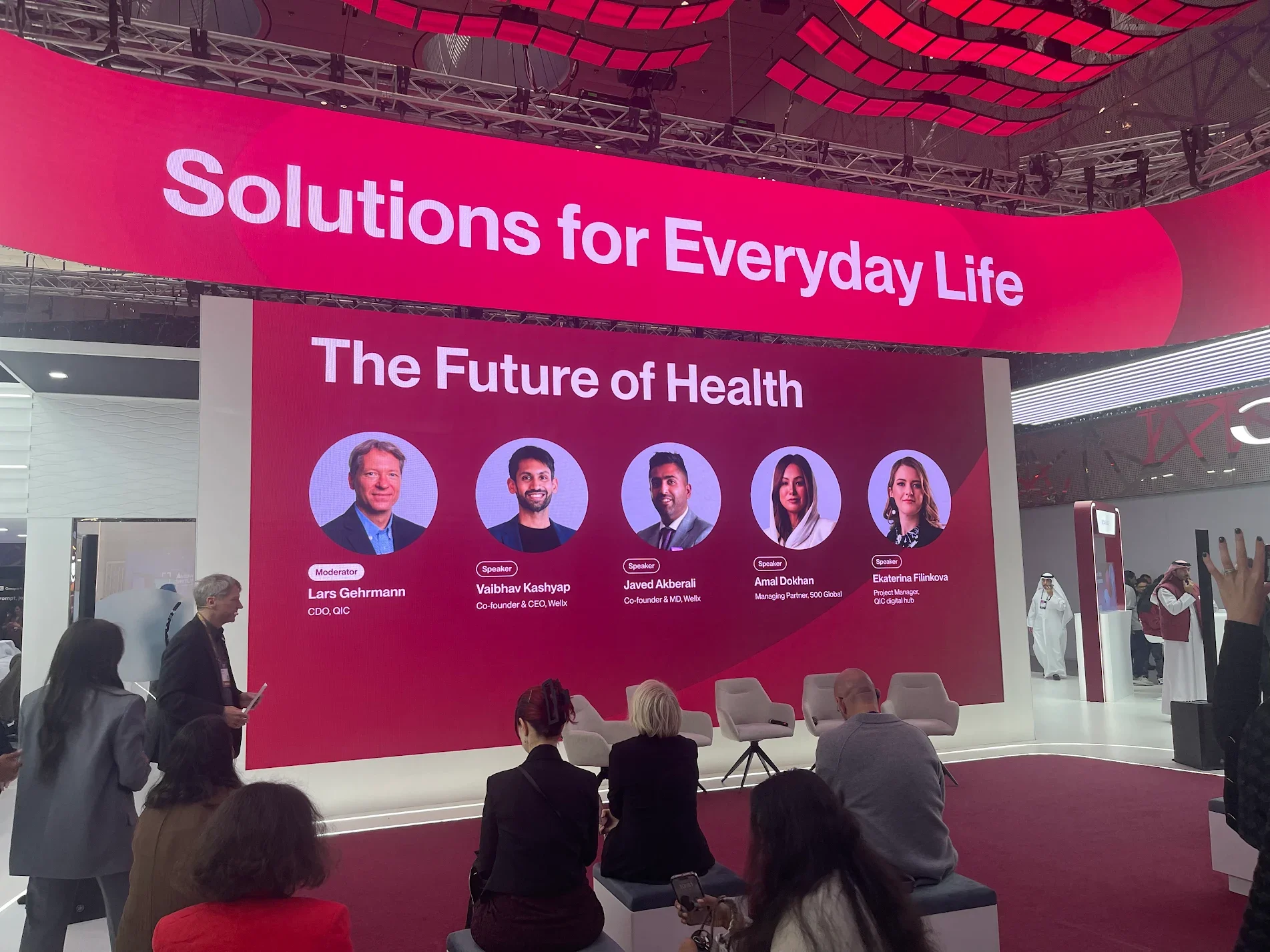
The Future of Healthcare: How AI, Investment and the QIC–Wellx PartnersIhip Are Redefining Wellbeing

Introduction

The future of healthcare is undergoing a fundamental shift. Long centered on reactive and curative models, the sector is now moving toward a proactive, personalized, and wellbeing-driven approach. During a strategic panel on the future of healthcare, industry leaders explored how artificial intelligence (AI), investment strategies, and insurer–startup partnerships are reshaping the health ecosystem.

At the heart of the discussion was the collaboration between QIC, a leading regional insurer, and Wellx, a healthtech startup. Their partnership illustrates how technological innovation can deliver both measurable human impact and sustainable economic value.

AI as a Catalyst for Proactive and Personalized Healthcare

From Reactive Care to Guided Wellbeing

Healthcare is no longer just about treating illness. The emerging paradigm focuses on prevention, continuous engagement, and long-term quality of life. The ultimate goal is not simply longevity, but living better today.

In this context, technology should not merely display data or dashboards. Instead, it must act as a guide, helping individuals adopt healthier behaviors without overwhelming them with information.

Generative AI vs. Specialized Healthcare AI

The panel clearly differentiated between two forms of artificial intelligence:

  • General-purpose AI (e.g., ChatGPT): powerful tools for aggregating information and democratizing access to health knowledge, but largely leaving decision-making and action to the user.

  • Specialized, healthcare-trained AI: where real value is created. These systems are designed to deliver secure, personalized, and actionable health journeys.

QIC, for instance, trains its AI engines on more than 61 years of reliable proprietary data, ensuring credibility, safety, and relevance. Wellx goes a step further by using AI not just to inform, but to positively influence user behavior, generating measurable health outcomes and reducing insurance-related costs.

Investing in Healthtech: A Highly Selective Approach

What Investors Truly Look For

According to insights shared by 500 Global, investing in healthtech goes far beyond evaluating cutting-edge technology. Investors prioritize:

  • Founders with a deep understanding of human psychology, particularly fear-driven behaviors related to health.

  • Hands-on experience with complex ecosystems, such as insurance, healthcare delivery, and regulation.

  • Strong resilience, given long adoption cycles, regulatory hurdles, and the need for strategic pivots.

Openness to mergers and acquisitions is also viewed as a realistic and often desirable exit path in a sector heading toward consolidation.

Health as a New Form of Economic Capital

One of the most compelling ideas discussed was the notion of personal health as economic capital. In the future, an individual’s health status could directly influence wealth, employability, and overall economic stability. This perspective reinforces the importance of investing in solutions that sustainably improve quality of life.

Case Study: The Strategic QIC–Wellx Partnership

A Trust-Based Collaboration Model

The QIC–Wellx partnership stands out as a strong example of insurer–startup collaboration in the region. Initiated four years ago after Wellx won an Insurtech event co-organized by QIC, the relationship was built on a clear principle: value creation before financial investment.

Instead of starting with equity funding, QIC provided commercial contracts and access to a real insurance portfolio, enabling Wellx to test and validate its model in real-world conditions.

Tangible Economic Outcomes

This approach delivered concrete results:

  • The creation of a health insurance portfolio valued between USD 30 and 40 million.

  • Significant improvements in claims management performance.

  • Enhanced overall portfolio profitability for QIC.

These outcomes demonstrate that prevention and wellbeing, when properly integrated, can become powerful economic levers for insurers.

Why the Partnership Works

The success of the QIC–Wellx collaboration is rooted in three core pillars:

  1. Credible, high-quality data used to train AI systems.

  2. Mutual trust, built over several years of close collaboration.

  3. A long-term, human-centric vision focused on ecosystem-wide impact.

Building a Human-Centered Healthcare Ecosystem

The Power of an Ecosystem Approach

The panel emphasized that standalone applications rarely deliver lasting impact. True effectiveness comes from a holistic ecosystem that brings together:

  • Insurers

  • Healthtech startups

  • Healthcare providers

  • Public institutions and regulators

This ecosystem approach surrounds users with aligned incentives, reliable guidance, and continuous support.

Turning Technology into Motivation

The key challenge is not technological, but behavioral. The most effective health solutions are those that can subtly motivate users, encourage healthier habits, and transform knowledge into action.

Future Outlook for Healthtech

Geographic Expansion

Following its success in the United Arab Emirates, the QIC–Wellx model is now scaling to new markets. Upcoming launches are planned in:

  • Saudi Arabia

  • Doha, Qatar

Toward a Deeper Strategic Alliance

What began as a traditional client–vendor relationship has evolved into a strategic alliance. Over time, partnerships of this nature may pave the way for merger and acquisition opportunities, setting a new standard for collaboration in the region.

Continuous Innovation and Trusted AI

Innovation remains ongoing. By leveraging increasingly specialized AI and trusted data, QIC and Wellx aim to further enhance the health and wellbeing journey, with a clear objective: combining human impact, trust, and economic performance.

Conclusion

This strategic panel made one thing clear: the future of healthcare lies at the intersection of AI, investment, and trust-based partnerships. When designed with credibility and a human-first mindset, AI becomes a powerful lever to improve quality of life while creating sustainable economic value.

The QIC–Wellx partnership exemplifies this shift—showing how prevention, wellbeing, and ecosystem thinking can redefine healthcare into a model that is not only innovative, but durable, scalable, and deeply human.


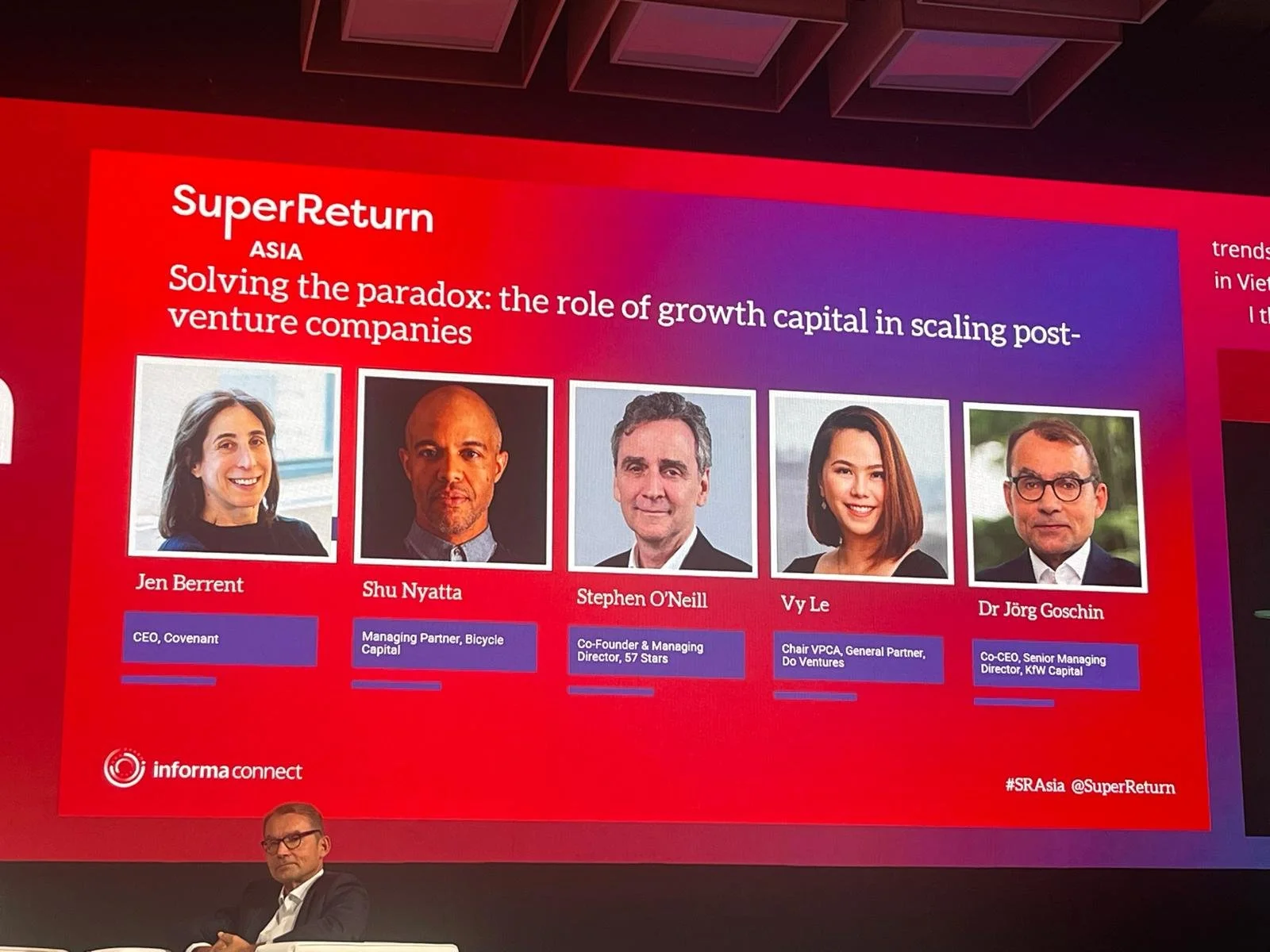
SuperReturn Asia – Singapore: Key Highlights

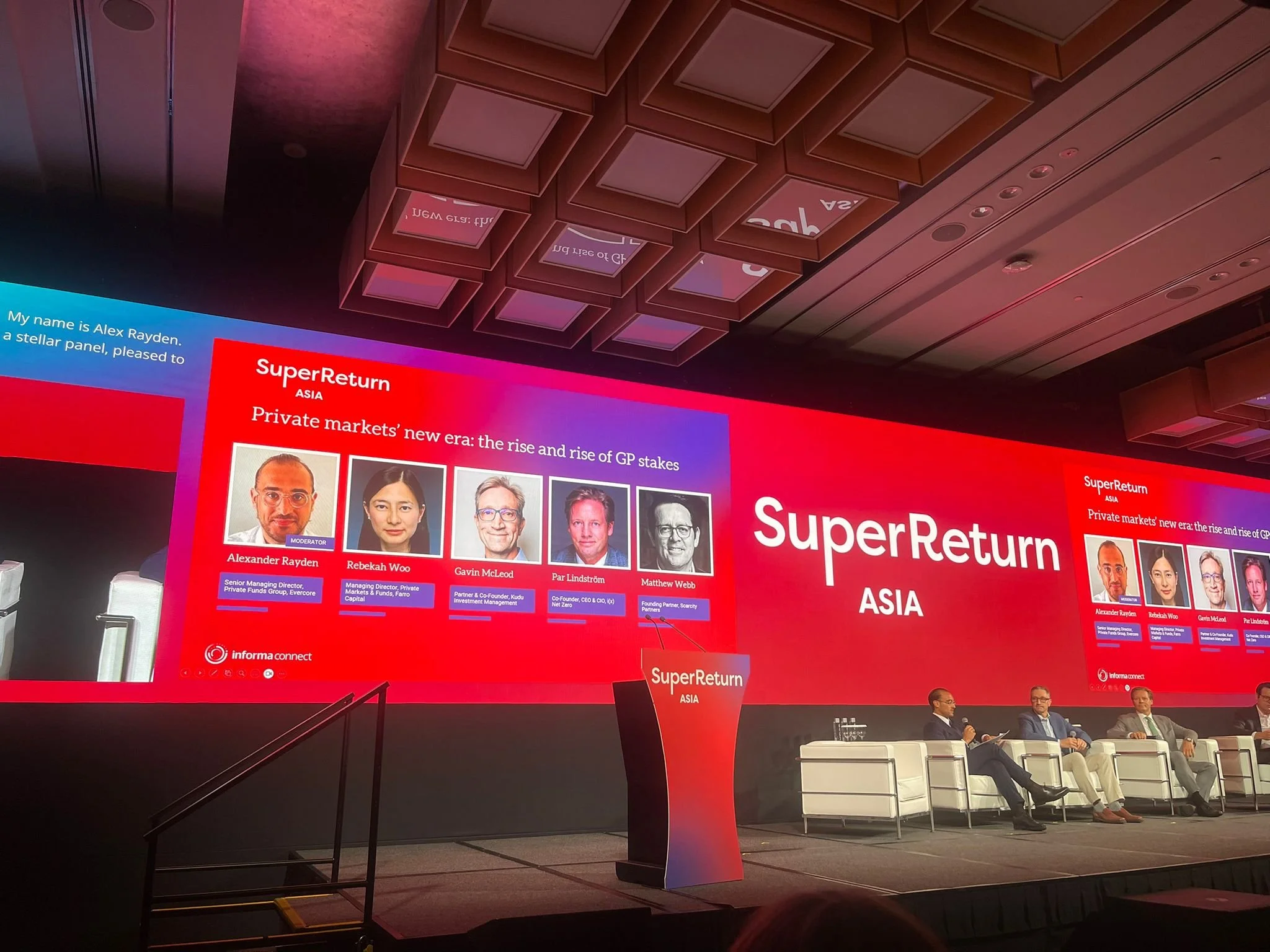
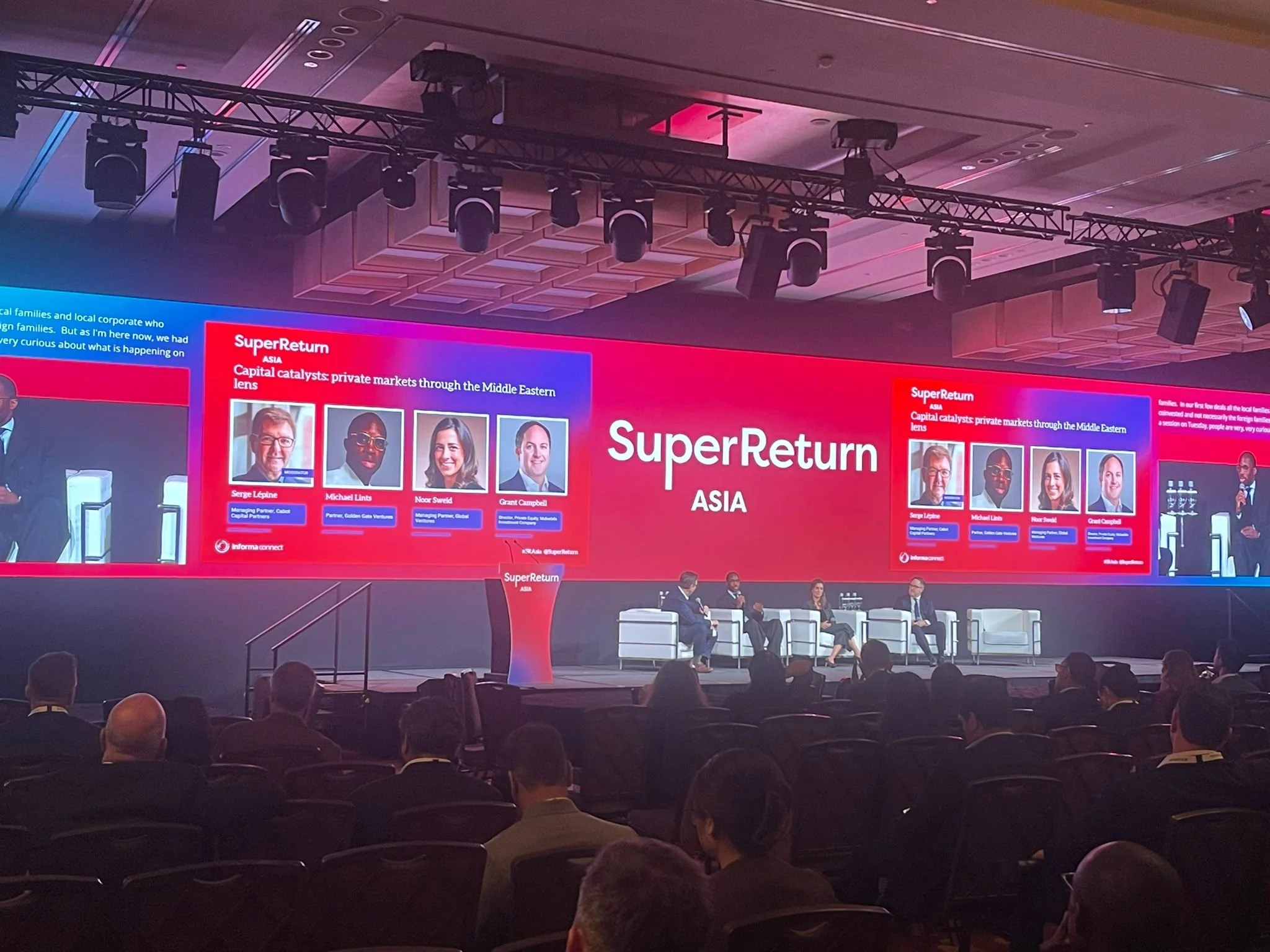
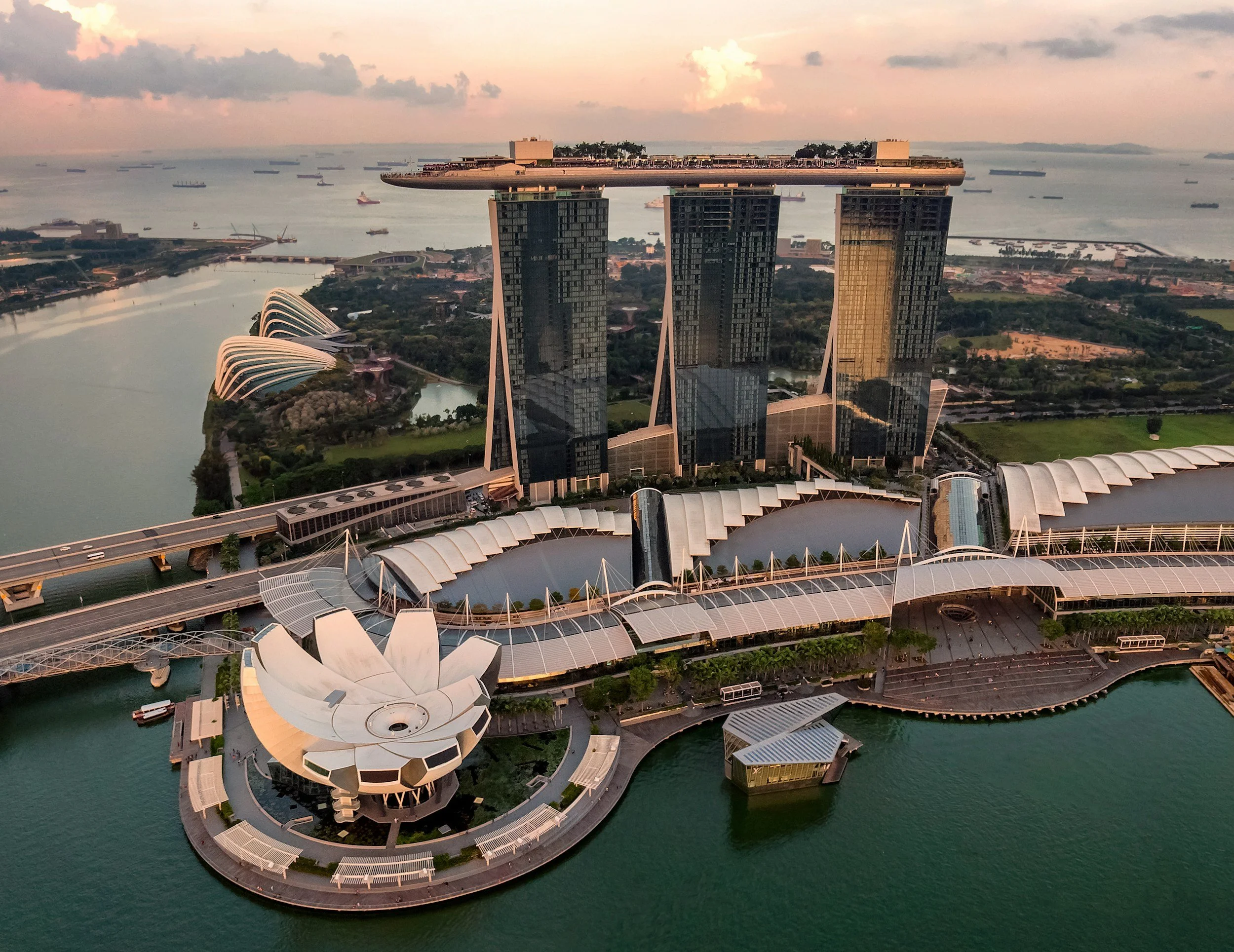
From 16-19 September 2025, the Marina Bay Sands Convention Centre lit up in Singapore for SuperReturn Asia, Asia’s flagship private capital / private markets event.

What It Was About

A gathering of LPs (Limited Partners), GPs (General Partners), fund managers, institutional investors, sovereign wealth funds, family offices — people shaping the direction of private equity, venture capital, private credit, secondaries, thematic investing, deep tech & AI, etc. 

New / highlighted features at the 2025 edition included:

  • AI & Deep Tech Investing Summit — a track focused on what’s coming next in AI, deep tech.

  • SuperReturn Allocate — a data-driven LP/GP meetings programme with fast 1:1 meetings (8 minutes each), guaranteeing a number of meetings, optimized via the event app.

  • Awards Ceremony (“Acknowledgements Ceremony”) to recognise excellence, leadership & innovation among the region’s private capital players.

  • Family Office Asia Summit — bringing together senior decision makers from family offices.

Who Was There

  • Over 2,500+ industry giants from 50+ countries.

  • LPs with $20 trillion+ in assets under management attended. 

  • Names include: BlackRock, Temasek, Goldman Sachs, AllianceBernstein, Asian Development Bank, IFC, Investcorp, PIMCO, Mubadala, Ontario Teachers’ Pension Plan, etc.

What You Could Experience

  • Networking was central: 80,000+ meetings expected through the AI-powered meetings platform. 

  • Scheduled sessions / specialist tracks spanning: private credit, venture capital, AI & deep tech, thematic & country-focused investing, secondaries & liquidity, fundraising & LP/GP relations.

  • Exclusive access for LPs: closed-door sessions; hosted breakfasts / lunches; emerging managers showcase; ability to host AGMs.

  • Social / community dimension: nightly receptions, guided walks around the city, the 20th anniversary party at CÉ LA VI (rooftop of Marina Bay Sands). 

Why It Matters

  • It’s a one-stop, high-density convergence of the “who’s who” in Asia’s private markets.

  • There’s substantial cross-border visibility: global GPs + LPs meet, exchange perspectives, explore opportunities & deal flow across Asia.

  • The growing focus on tech, AI/deep tech, private credit, thematic & country-focused investing signals the shifting priorities & risk/return considerations in the region.

We Will Be Present at Patrimonia 2025 in Lyon alongside Pledger

Source : https://www.patrimonia.fr/

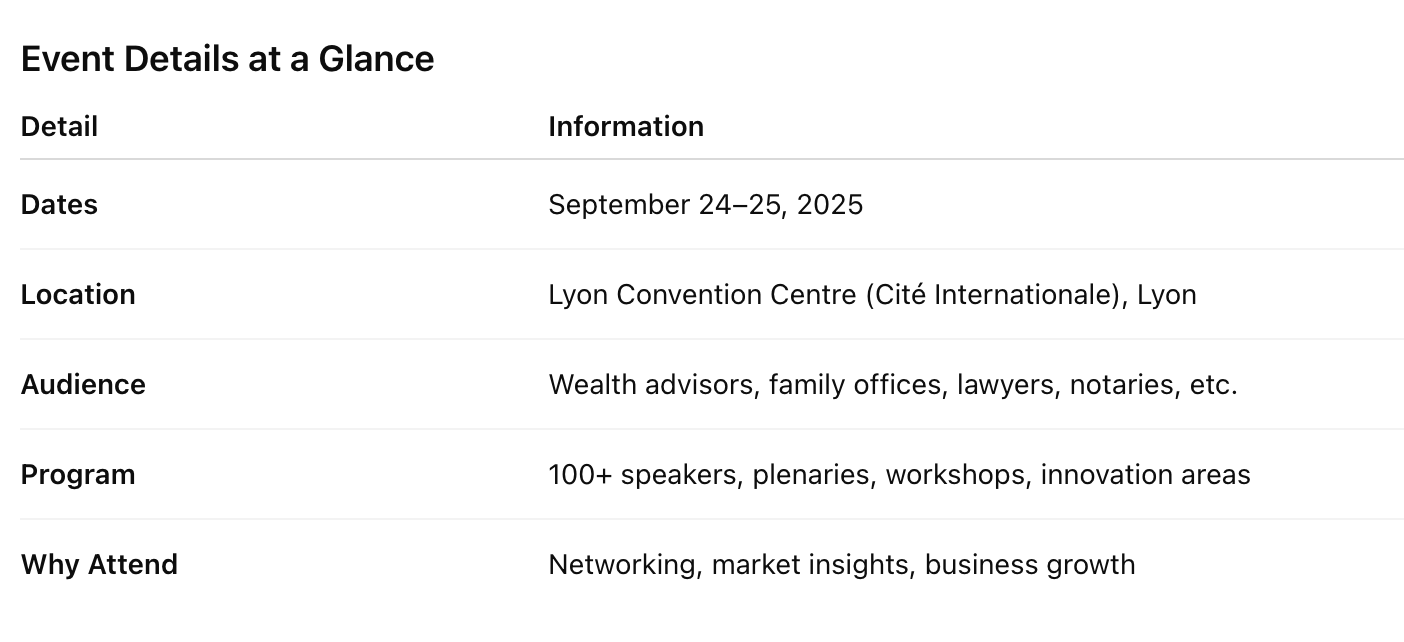
We are pleased to announce that we will be present at Patrimonia 2025, the largest and most influential convention for wealth management professionals in France. The 32nd edition will take place on September 24–25, 2025, at the Lyon Convention Centre (Cité Internationale).

Why We’re Attending

  • Unmatched Reach in Wealth Management
    Patrimonia serves as a premier platform for professionals, including wealth advisors (CGP), family offices, private bankers, lawyers, notaries, and asset managers.

  • High-Quality Audience & Engagement
    In 2024, the convention gathered over 9,000 professionals, more than 380 exhibitors, and 110 speaking sessions Patrimonia. The 2025 edition is expected to go even further, with more than 400 exhibitors and overflowing demand.

  • Rich Program & Learning Opportunities
    Patrimonia 2025 will feature over 100 expert talks, including plenary sessions, workshops, roundtables, and innovation zones focused on digital transformation, ESG, fintechs, and more.

  • Strategic Networking
    The event offers an exceptional environment for forging new business partnerships, sharing insights with top-tier players, and showcasing our solutions to a highly targeted and influential professional audience.

Join Us There

We look forward to meeting fellow professionals and sharing insights in the evolving landscape of wealth management. If you're planning to attend or would like to schedule a meeting, feel free to connect with us.

See you in Lyon this September!

We Will Be Attending SuperReturn Asia 2025 in Singapore

We’re excited to announce that we will be present at SuperReturn Asia 2025, Asia’s premier gathering for private capital professionals. The event will be held from September 16 to 19, 2025, at the Marina Bay Sands Convention Centre in Singapore.

Why We're Attending

  • Expand Our Network: We’ll have the opportunity to connect with over 2,500 industry leaders, including more than 1,000 limited partners (LPs) and 1,000 general partners (GPs), representing 50+ countries.

  • Gain Insights: SuperReturn Asia offers in-depth sessions covering:

    • Private markets trends and fundraising outlook

    • Secondaries and liquidity solutions

    • Venture capital and private credit

    • AI & Deep Tech investing, as well as other emerging strategies.

  • Meaningful Engagements: The conference features unique networking elements such as the AI-powered SuperReturn Allocate LP/GP meeting program, awards, guided city tours, and evening receptions, including a 20th-anniversary party atop Marina Bay Sands.

What to Expect

Attend exclusive gatherings such as:

  • Specialist Summits, including the AI & Deep Tech Investing Summit, Country-Focused Summit, Private Credit Summit, and Venture Capital Summit.

  • High-impact networking through planned speed meetings, closed-door sessions, and social events, all enhanced by a dedicated app for pre-event matchmaking.

  • Inspirational content led by top-tier speakers and institutions across the spectrum of private capital, from the Asian Development Bank to Goldman Sachs, IFC, Temasek, and many more.

Join Us in Singapore!

We look forward to exploring investment trends, meeting new partners, and immersing ourselves in the dynamic dialogue shaping the future of private markets in Asia. If you're planning to attend or would like to schedule a meeting, don’t hesitate to reach out!

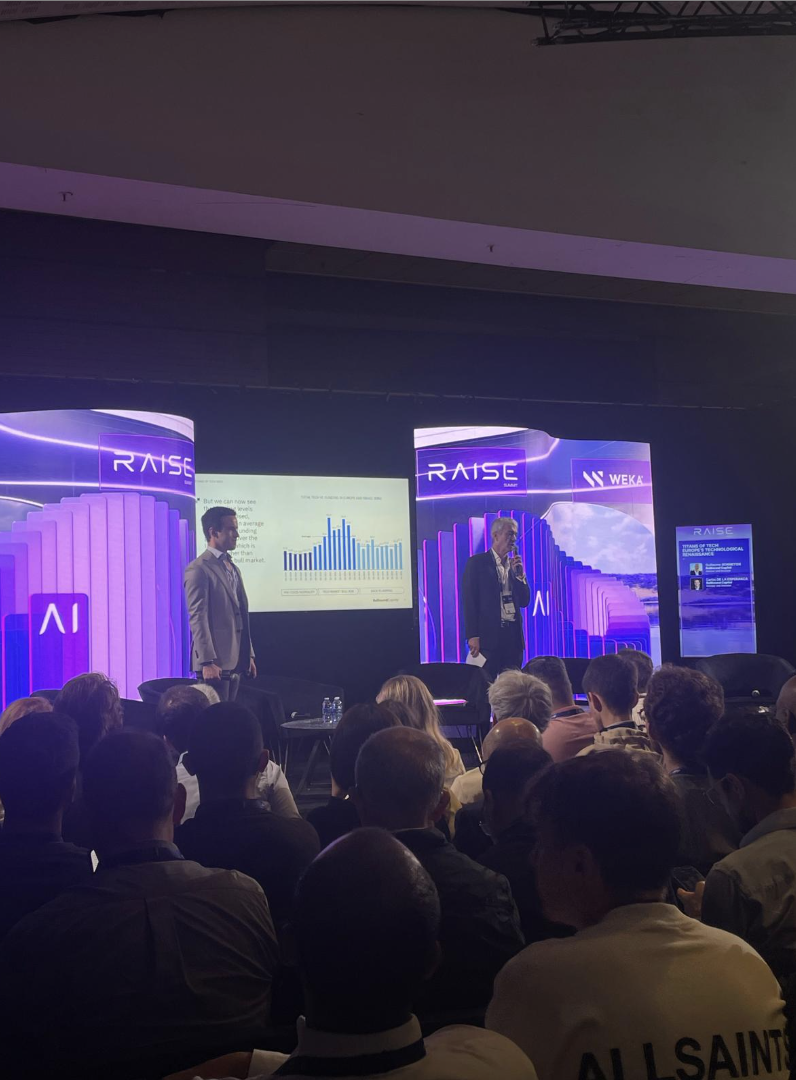
At Paris' AI RAISE Summit, Europe’s Place in Global Tech Took Center Stage

A dominant theme echoed throughout the AI RAISE Summit in Paris:
Europe’s evolving role in artificial intelligence and the broader technology ecosystem.

Some of the most anticipated sessions came from global tech investment firm GP Bullhound, and the panel "Investment in AI: Who Gets Funded and Why"

Together, they tackled pressing questions shaping Europe’s position in the global tech race: Where does the continent stand? What trends are accelerating its innovation? And which European startups are on track to become the next unicorns?

Let’s take a closer look at the findings: 

1. European Tech Shows Signs of Resilience

Even amid global uncertainty and a post-bull-market cooldown, Europe’s tech sector remains robust.

  • €15 billion per quarter: That’s the average level of funding Europe’s tech ecosystem has attracted consistently over the last two years.

  • This marks a +50% increase compared to pre-2020 levels, a sign that investor confidence remains strong and that innovation continues to attract capital

  • Crucially, this funding isn’t just sustaining existing operations. Companies are actively raising capital to fuel new growth, particularly in AI and cybersecurity.

Across both the GP Bullhound session and the broader summit, there was a shared sentiment: Europe’s AI and tech ecosystem still has significant room to grow — and the foundations are already being laid.

2. A Maturing Ecosystem with Unicorn Momentum

Perhaps the most striking data point: Europe is still minting unicorns at pace.

  • 17 new unicorns have emerged in the past year alone, across 10 different countries.

  • The hot sectors? Primarily AI and cybersecurity, two of the most strategically relevant verticals in today’s innovation economy.

  • Total collective value: €1.4 trillion, representing a 3x increase in the past five years.

  • And since 2015, the number of unicorns has grown 11-fold.

These numbers signal a clear shift: Europe’s startup ecosystem isn’t just growing, it’s maturing, with global-scale ambitions and long-term staying power.