Artifical Intelligence

BUILD Conférence 2025 : Les grandes orientations de l'IA pour la prochaine décennie

Le 4 novembre 2025, on a eu l’occasion d’assister à la conférence BUILD, sponsorisée par Snowflake et intitulée « Une conversation lumineuse : le plan directeur de l’IA pour la prochaine décennie ». 

Les intervenants Andrew Ng (fondateur de DeepLearning.AI), Sridhar Ramaswamy (PDG de Snowflake) et Swami Sivasubramanian (vice-président en charge de l’IA agentique chez Amazon Web Services) ont partagé leurs points de vue sur les tendances à venir concernant l’adoption de l’IA par les entreprises, l’évolution que cette technologie pourrait provoquer dans les modèles organisationnels, et la manière dont les professionnels du secteur devront s’adapter à ces transformations.

Un secteur qui avance à grande vitesse 

Ils ont commencé par évoquer le paysage actuel de l’IA et le rythme rapide du développement dans l’ensemble de l’industrie, les grandes entreprises présentant de nouvelles capacités chaque trimestre. 

Malgré la spécialisation croissante des modèles (assistants de programmation, générateurs d’images, etc.), ils ont souligné que ChatGPT devrait rester le principal point de référence pour une large partie des utilisateurs, non seulement en raison de ses performances techniques, mais aussi de la forte association de sa marque avec le concept même d’intelligence artificielle.

L’API comme pierre angulaire des modèles économiques de l’IA

En abordant ce qui fait la réussite d’un modèle économique lié à l’IA, les intervenants ont convenu que le modèle le plus efficace à ce jour est celui qui propose la meilleure API, c’est-à-dire celle qui permet aux entreprises de réduire leurs coûts (notamment en matière de développement produit) tout en améliorant leurs marges et en générant de nouveaux revenus. Ils ont toutefois insisté sur le fait qu’un modèle techniquement supérieur ne crée pas de valeur sans une base commerciale solide. 

Swami Sivasubramanian a résumé cela en une phrase : « Le meilleur modèle, c’est votre modèle économique. » En d’autres termes, une excellente architecture compte peu sans un produit ou un service soit capable d’attirer et de fidéliser réellement les clients.

L’essor de l’IA agentique et la transition vers la tarification à la consommation

Lors de la conférence, il a été également souligné l’importance croissante de modèles économiques robustes alors que l’industrie évolue vers des systèmes d’IA plus agentiques. 

Ces systèmes, qui fonctionnent avec moins d’intervention humaine directe, pourraient entraîner une baisse des coûts de mise en œuvre. Cette évolution devrait probablement favoriser un passage d’une tarification par abonnement (par utilisateur) à une tarification davantage fondée sur la consommation, plus proche des modèles cloud, où les utilisateurs paient pour le travail réellement effectué plutôt que pour une licence.

À ce sujet, les intervenants se sont montrés optimistes quant à la montée de l’IA agentique, notant que ces outils sont nés du besoin des développeurs eux-mêmes de disposer de flux de travail plus efficaces. 

Le principal défi réside cependant dans la gestion des coûts de calcul. Chaque avancée des modèles d’IA tend à accroître la demande en puissance de traitement. Pour y faire face, des entreprises comme OpenAI développent des systèmes d’acheminement intelligents qui attribuent chaque tâche au modèle le plus adapté, réduisant ainsi les coûts et optimisant les performances.

Product-market fit : la priorité absolue

Le consensus était que l’avenir de l’IA reste ouvert, mais que l’objectif principal doit demeurer la recherche d’un véritable product-market fit. Les entreprises adoptant ou développant l’IA doivent privilégier la valeur utilisateur plutôt que la nouveauté, car les clients n’adopteront ces produits que s’ils fournissent des avantages tangibles surpassant leurs coûts. Comprendre le consommateur reste donc essentiel.

Ce que cela implique pour les développeurs

Pour les développeurs, les intervenants ont rappelé que, même si tout le monde devrait apprendre à coder, la demande pour des connaissances fondamentales en informatique n’a pas diminué. On aura toujours besoin de personnes maîtrisant les compilateurs, l’optimisation de la mémoire et l’efficacité algorithmique. L’IA a automatisé une grande partie de la programmation de haut niveau, mais une solide compréhension des bases, ainsi qu’une aptitude pour les mathématiques et les sciences, reste indispensable.

Et pour les équipes business ?

D’un point de vue commercial, bien que les modèles deviennent des outils précieux pour évaluer et concevoir des produits, la capacité humaine à interpréter les marchés — notamment les facteurs émotionnels et contextuels qui influencent les décisions — restera cruciale. Les professionnels passeront probablement moins de temps à coder et davantage à résoudre des problèmes concrets et à collaborer étroitement avec les utilisateurs.

Conclusion

En conclusion, la conférence BUILD a offert une perspective précieuse sur l’évolution du paysage de l’IA à l’intersection de la technologie, de la stratégie commerciale et de la créativité humaine. Les intervenants ont clairement affirmé que la réussite de la prochaine décennie dépendra non seulement de la création de modèles avancés, mais aussi de l’élaboration de modèles économiques résilients apportant une réelle valeur aux clients. 

À mesure que l’IA deviendra plus agentique, les professionnels devront se concentrer sur une mise en œuvre responsable, l’optimisation des coûts et la compréhension des besoins des utilisateurs. En fin de compte, les organisations qui prospéreront seront celles qui conjugueront innovation, connaissance approfondie du marché et sensibilité humaine.

We Will Be Attending GITEX GLOBAL 2025 in Dubaï

We’re pleased to announce that Mandalore Partners will be attending GITEX GLOBAL 2025, one of the largest and most influential technology events in the world.

📅 Dates: October 13 – 17, 2025
📍 Location: Dubai World Trade Centre, Dubai, United Arab Emirates

Now entering its 45th edition, GITEX GLOBAL brings together thousands of technology leaders, investors, startups, and innovators from over 170 countries. The event serves as a major global platform to explore emerging technologies — from artificial intelligence, fintech, and cloud computing, to cybersecurity, digital transformation, and sustainability.

For Mandalore Partners, GITEX is a unique opportunity to connect with visionary founders, investors, and corporate innovators who are driving the next wave of technological disruption. As an active venture builder and investor in deep tech and digital innovation, we look forward to exploring new ideas, meeting our partners, and discovering future opportunities in the global tech ecosystem.

If you are also attending GITEX GLOBAL this year, we’d be delighted to connect.

Learn more

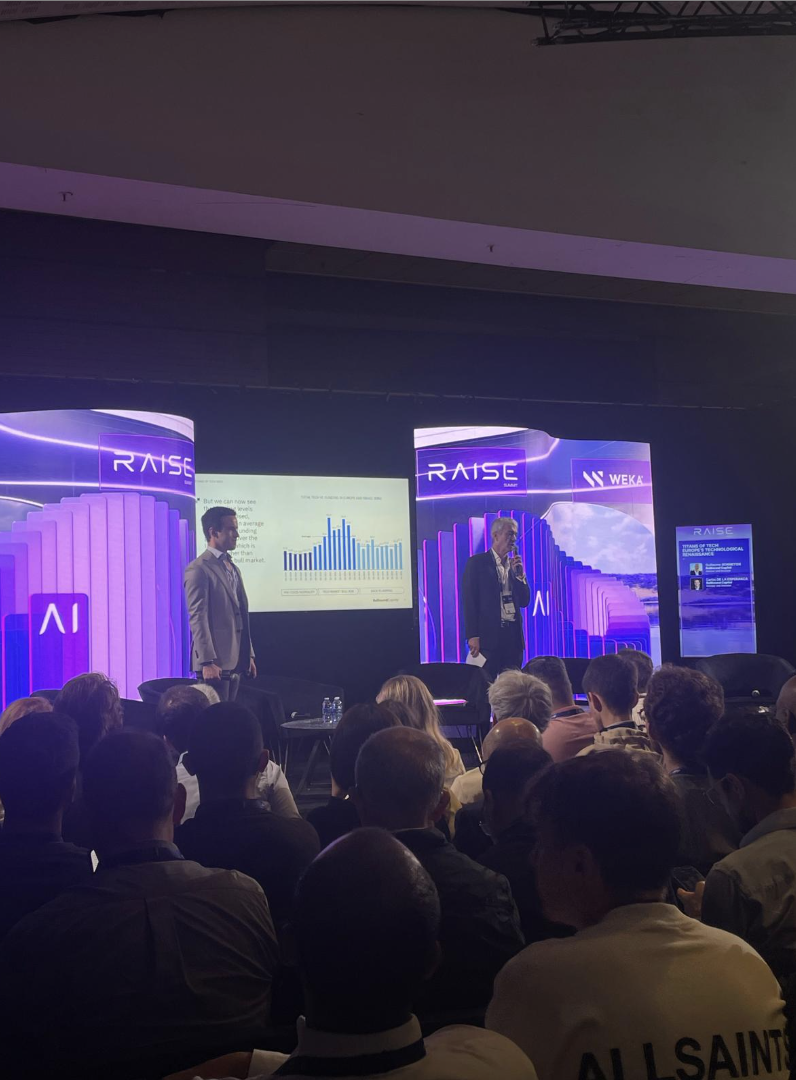
At Paris' AI RAISE Summit, Europe’s Place in Global Tech Took Center Stage

A dominant theme echoed throughout the AI RAISE Summit in Paris:
Europe’s evolving role in artificial intelligence and the broader technology ecosystem.

Some of the most anticipated sessions came from global tech investment firm GP Bullhound, and the panel "Investment in AI: Who Gets Funded and Why"

Together, they tackled pressing questions shaping Europe’s position in the global tech race: Where does the continent stand? What trends are accelerating its innovation? And which European startups are on track to become the next unicorns?

Let’s take a closer look at the findings: 

1. European Tech Shows Signs of Resilience

Even amid global uncertainty and a post-bull-market cooldown, Europe’s tech sector remains robust.

  • €15 billion per quarter: That’s the average level of funding Europe’s tech ecosystem has attracted consistently over the last two years.

  • This marks a +50% increase compared to pre-2020 levels, a sign that investor confidence remains strong and that innovation continues to attract capital

  • Crucially, this funding isn’t just sustaining existing operations. Companies are actively raising capital to fuel new growth, particularly in AI and cybersecurity.

Across both the GP Bullhound session and the broader summit, there was a shared sentiment: Europe’s AI and tech ecosystem still has significant room to grow — and the foundations are already being laid.

2. A Maturing Ecosystem with Unicorn Momentum

Perhaps the most striking data point: Europe is still minting unicorns at pace.

  • 17 new unicorns have emerged in the past year alone, across 10 different countries.

  • The hot sectors? Primarily AI and cybersecurity, two of the most strategically relevant verticals in today’s innovation economy.

  • Total collective value: €1.4 trillion, representing a 3x increase in the past five years.

  • And since 2015, the number of unicorns has grown 11-fold.

These numbers signal a clear shift: Europe’s startup ecosystem isn’t just growing, it’s maturing, with global-scale ambitions and long-term staying power.

AI Action Summit 2025: Paris, the Global Capital of Artificial Intelligence

Introduction

On February 10-11, 2025, Paris once again proved its mettle as a global hub for innovation by hosting the highly anticipated AI Action Summit 2025. This international event brought together a diverse array of participants, including heads of state, government officials, leading researchers, industry titans, and civil society representatives. The summit was designed not only to showcase technological advancements in artificial intelligence (AI) but also to foster rigorous discussions on the ethical, social, and economic implications of this transformative technology.

As AI continues to reshape the way we work, live, and interact, the summit provided a critical platform for stakeholders to outline strategies that ensure AI development remains aligned with universal values, promotes sustainability, and benefits society as a whole.

France as a Pioneer in AI

France has emerged as one of the world's leading nations in AI innovation, thanks to a robust national strategy that was set in motion in 2018. This strategy, underpinned by significant public and private investments, has seen the country develop a vibrant ecosystem of over 600 AI-focused startups, cutting-edge research facilities, and state-of-the-art computational infrastructure including the Jean Zay and Alice Recoque supercomputers.

In addition, France’s proactive diplomatic engagement in international AI initiatives has further solidified its position on the global stage. By hosting the AI Action Summit, France not only showcased its technological prowess but also emphasized its commitment to creating a balanced global framework for AI governance.

Strategic Pillars of the Summit

The AI Action Summit 2025 was structured around five key strategic pillars, each addressing vital aspects of AI development and deployment:

1. AI in Public Services

One of the most significant topics discussed was the application of AI in public services. Delegates explored how AI can streamline administrative processes, enhance healthcare delivery, and transform educational systems. Case studies were presented demonstrating successful AI integrations in public infrastructure that resulted in improved efficiency, reduced costs, and better citizen engagement.

For instance, several European cities are now utilizing AI-driven analytics to optimize traffic flow and manage public transportation systems, leading to reduced congestion and a lower environmental footprint. Furthermore, AI is being used to personalize healthcare services, enabling earlier diagnosis and more tailored treatments for patients.

2. The Future of Work with AI

The advent of AI technologies has prompted deep reflections on the future of work. Participants debated how automation and AI-driven processes could reshape labor markets. While some experts celebrated the potential for AI to create new job opportunities in tech-driven sectors, others warned of the risks of job displacement in traditional industries.

Key discussion points included:

  • The necessity for robust reskilling and upskilling programs to prepare workers for a digitally transformed economy.

  • Strategies for mitigating workforce displacement and ensuring that technological benefits are shared equitably.

  • The importance of fostering an inclusive work environment where AI augments human capabilities rather than replaces them.

3. Innovation and Culture

AI is not solely a tool for economic growth; it also has profound implications for culture and creativity. The summit showcased initiatives where AI intersects with art, music, and literature, sparking innovative collaborations between technology and the creative industries.

Sessions delved into topics such as:

  • The emergence of AI-generated art and its challenge to traditional creative paradigms.

  • How machine learning algorithms are being employed to restore, preserve, and reimagine cultural heritage.

  • The potential for AI to create new forms of interactive media that enhance cultural expression and community engagement.

4. Trust and Security in AI

Building trust in AI systems is essential for their widespread adoption. A significant portion of the summit was devoted to discussing how to ensure that AI technologies are transparent, secure, and ethical. Delegates examined regulatory frameworks and industry standards with the goal of establishing guidelines that both protect citizens and promote innovation.

Important issues included:

  • The ethical dimensions of algorithmic decision-making and the need for transparency in AI processes.

  • Data privacy concerns in an era of mass data collection and analysis.

  • Cybersecurity measures necessary to protect AI systems from external threats and malicious interference.

5. Global AI Governance

Perhaps one of the most challenging topics was the need for a unified approach to AI governance on a global scale. The summit underscored the importance of international cooperation in setting standards that govern AI development. Participants agreed that a multilateral approach is essential to address cross-border challenges, such as security risks, economic disparities, and the protection of individual rights.

Critical questions addressed included:

  • How to balance regulation with the need for continued innovation.

  • The mechanisms for harmonizing diverse national policies on AI.

  • Strategies to prevent an AI arms race while ensuring that technological advancements benefit humanity.

International Debates and Diverging Perspectives

While the majority of participating nations endorsed the Paris Declaration on Inclusive and Sustainable AI, some significant powers voiced reservations. The United States and the United Kingdom chose not to sign the declaration, arguing that its provisions could lead to overregulation and hinder innovation. U.S. Vice President JD Vance, in particular, warned that stringent controls might impede the competitive edge of American AI, stressing that freedom from ideological bias was essential for progress.

This divergence highlights a broader global debate between nations prioritizing rapid technological advancement and those advocating for tighter regulatory oversight. Meanwhile, countries like China and India demonstrated a willingness to engage with a multilateral framework, with India even set to host the next summit, signaling its rising influence in global AI governance.

Economic Implications and the Role of Foreign Investment

Economic strategies were a central theme at the summit. French President Emmanuel Macron unveiled plans for a substantial investment initiative, proposing a €109 billion infusion into the AI sector. This ambitious plan is designed to bolster AI research and development while fostering public-private partnerships. However, it also sparked debate over the implications of relying heavily on foreign capital, with investments coming from sources in the UAE, Canada, and China.

Critics argue that while such investments can accelerate technological progress, they also raise concerns about national sovereignty and control over critical AI infrastructure. This issue was contrasted with similar initiatives in other countries, such as the U.S. “Stargate” program, which aims to concentrate investment within national borders. The discussion underscored a fundamental tension: how to balance global financial support with the need to maintain strategic autonomy.

Environmental Considerations in AI Development

The environmental impact of burgeoning AI technologies was another focal point. As AI systems require significant computational power, energy consumption and its associated carbon footprint have become pressing issues. Delegates explored innovative solutions to reduce the environmental impact of data centers and high-performance computing facilities.

French President Macron stressed the importance of integrating “low-carbon energy” solutions into AI infrastructure. France’s emphasis on nuclear power as a stable, clean energy source serves as a model for sustainable technological advancement. This commitment to environmental stewardship is crucial for ensuring that the rapid expansion of AI does not come at the expense of our planet.

The Societal Impact of AI

Beyond its technological and economic dimensions, AI has profound societal implications. The summit provided a forum to explore how AI can address global challenges, from improving healthcare systems to combating climate change. Panel discussions highlighted the potential for AI-driven solutions to revolutionize public health by enabling more accurate diagnostics and personalized treatments. Similarly, in education, AI tools are being leveraged to create more engaging and accessible learning experiences, particularly for underserved communities.

These discussions reiterated that the true value of AI lies not just in its ability to drive economic growth but also in its capacity to improve quality of life on a global scale.

In-Depth Analysis of Key Sessions and Workshops

Throughout the two-day summit, various sessions offered deep dives into specific areas of AI development:

  • Workshops on Algorithmic Transparency and Data Ethics: These sessions provided hands-on opportunities for participants to engage with experts, discussing the technical and moral challenges of ensuring unbiased and ethical AI systems.

  • Panel Discussions on the Future of Work: Industry leaders, policymakers, and labor representatives debated the transformative effects of AI on employment. The consensus underscored the necessity of continuous education and proactive policy measures to ensure that the workforce can adapt to changing technological landscapes.

  • Interactive Demonstrations and Case Studies: Live demonstrations of AI applications in public services, healthcare, and urban management showcased the practical benefits of AI, reinforcing its potential to transform everyday life.

Conclusion

The AI Action Summit 2025 in Paris was far more than a mere conference—it was a convergence of ideas, aspirations, and pragmatic solutions aimed at shaping the future of artificial intelligence. The summit underscored the necessity of a balanced approach that harmonizes technological innovation with ethical oversight, economic development with environmental sustainability, and national interests with global cooperation.

As the world continues to grapple with the rapid pace of AI advancement, the insights and commitments forged in Paris will serve as a crucial roadmap for policymakers, industry leaders, and researchers alike. The forthcoming edition in India promises to further expand this dialogue, ensuring that the journey towards a more inclusive, responsible, and sustainable AI future remains a truly global endeavor.

In a rapidly evolving digital era, the AI Action Summit stands as a testament to our collective capacity to innovate responsibly and to build a future where technology serves the greater good.