

Phytomining Is Revolutionising Nickel Extraction: When Agroecology Becomes an Industrial Resource
Picture a mine with no underground galleries, no explosives, no large-scale deforestation. A mine where rows of small plants, grown according to the principles of agroecology…
10 min read
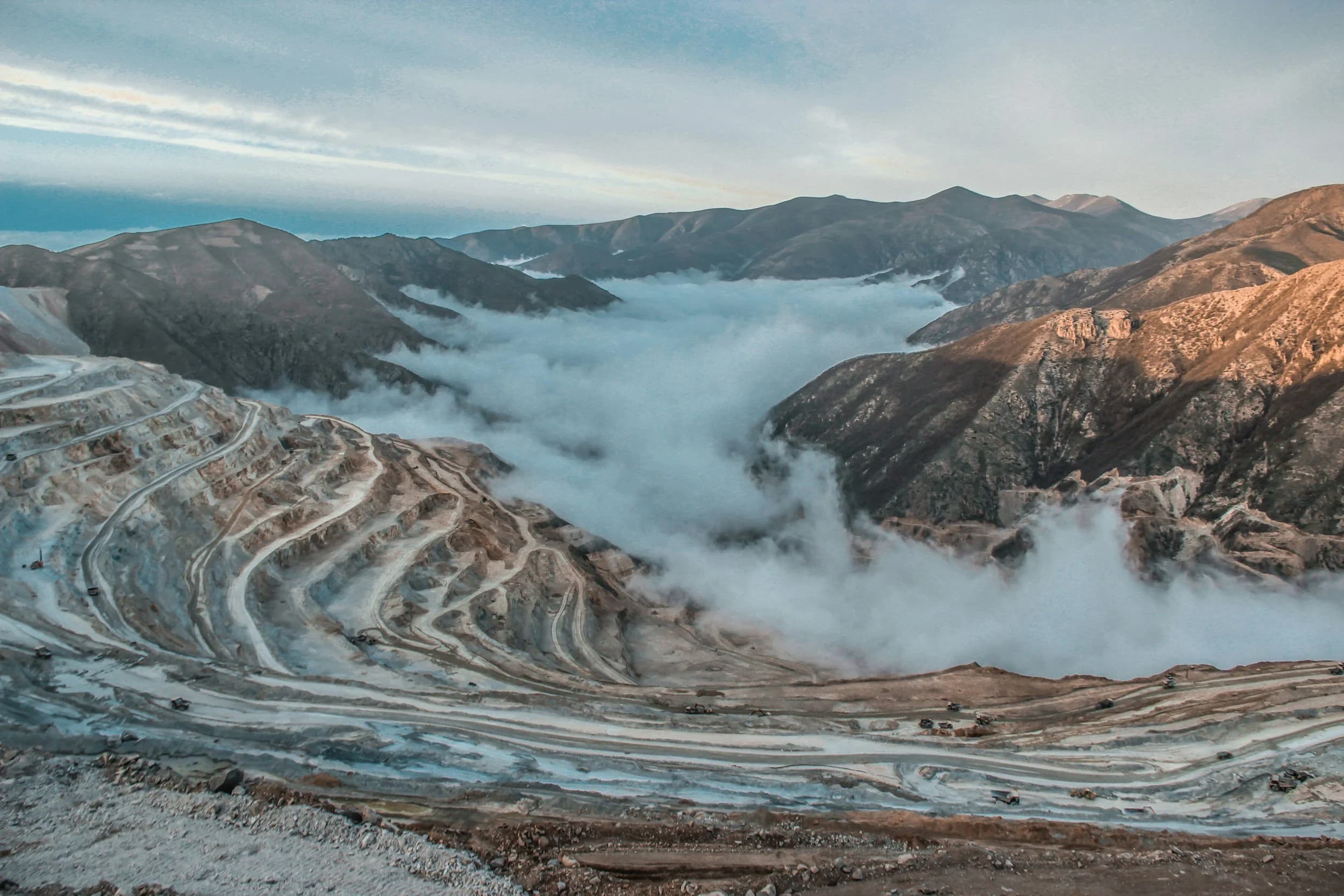
Introduction: what if tomorrow's mine were a field?
Picture a mine with no underground galleries, no explosives, no large-scale deforestation. A mine where rows of small plants, grown according to the principles of agroecology, quietly draw metals out of the soil and channel them towards the blast furnaces of industry. Long confined to research laboratories, this vision is now reaching a decisive turning point: industrial phytomining is becoming a commercial reality, carried by several pioneering initiatives around the world.
Phytomining — or metal phytoextraction — refers to the cultivation of so-called hyperaccumulator plants, capable of absorbing high concentrations of metals directly into their tissues. Long treated as a curiosity by the industrial world, this technology is now emerging as one of the most promising disruptions in the global nickel industry, at a time when demand is soaring under the impetus of electric mobility and the stainless steel industry.
This article offers an in-depth look at the scientific mechanisms of phytomining, its industrial potential, the technical challenges still to be overcome, and the market prospects this innovation opens up for the global nickel industry.
1. The scientific basis: how do plants extract metals?
1.1 Hyperaccumulators: a remarkable evolutionary phenomenon
Metal hyperaccumulation is a fascinating biological phenomenon. Over millions of years of evolution on soils naturally rich in metals — the soils known as ultramafic or ophiolitic, formed by the outcropping of rocks from the Earth's mantle — certain plants have developed the extraordinary ability to absorb concentrations of heavy metals 100 to 1,000 times higher than those observed in ordinary species.
For nickel alone, more than 450 hyperaccumulator species have been recorded worldwide, according to work by researchers at the University of Queensland, the University of Lorraine and several institutions in South-East Asia. These plants accumulate nickel in their leaves and stems — not in their roots — which makes harvesting and extraction particularly efficient from an agronomic standpoint.
1.2 The molecular mechanisms of hyperaccumulation
At the molecular level, hyperaccumulation involves several complementary and coordinated mechanisms:
- Overexpression of specific membrane transporters (proteins of the HMA, MTP and ZIP families) which actively capture the nickel dissolved in the soil solution and pump it towards the aerial parts of the plant via the xylem
- Intracellular chelation: nickel is complexed with organic acids (malic, citric and tartaric acid) and with amino acids such as histidine, making it soluble, non-toxic and efficiently transportable in the sap
- Vacuolar sequestration: in the leaf epidermal cells, nickel is stored in the vacuoles as stable complexes, shielded from the enzymatic mechanisms that are sensitive to metal toxicity
- Tolerance to oxidative stress: hyperaccumulators overexpress antioxidant enzymes (superoxide dismutase, catalase, peroxidases) that allow them to survive metal concentrations lethal to any other plant
These evolutionary adaptations allow species such as Alyssum murale (Brassicaceae, endemic to the Balkans) or Noccaea caerulescens (found in Western Europe and Central Asia) to reach nickel contents in their foliage of 1 to 4% of dry matter — concentrations comparable to some commercially exploited mining ores.
1.3 From the laboratory to the field: the conditions for industrialisation
For several decades, phytomining remained confined to laboratories and small-scale pilot trials. The obstacles to its industrialisation were numerous: insufficient yields per hectare, a lack of agronomic knowledge about hyperaccumulator species, the absence of processing methods suited to metal-bearing biomass, and above all a lack of interest from a mining industry that favoured the economies of scale of conventional mines.
The convergence of several trends has changed the picture: mounting ESG and regulatory constraints on conventional mines, rising prices for critical metals, advances in plant genomics that make it possible to accelerate varietal selection, and the emergence of explicit industrial demand for traceable raw materials with a low carbon footprint.
2. From biological phenomenon to industrial process
2.1 The phytomining value chain in five stages
The industrial phytomining process is built around five main stages, each the subject of active research aimed at optimising performance and reducing costs:
- Varietal selection and propagation: identifying the best-performing accessions among the known hyperaccumulator species, mass selection or inter-varietal hybridisation programmes, propagation by cuttings or by seed, optimisation of nursery and acclimatisation protocols
- Open-field cultivation on nickel-bearing soils: the plants are grown on plots selected for their content of bioavailable nickel. Preliminary soil studies map the distribution of the metal through the soil profile. A growing cycle lasts from 3 to 6 months depending on the species and the climatic conditions
- Mechanised harvesting of the biomass: at maximum physiological maturity, the aerial parts are harvested. Currently documented yields range between 5 and 20 tonnes of dry matter per hectare, depending on agronomic conditions and the species used
- Thermochemical treatment (bio-ore processing): the dried biomass undergoes controlled combustion or pyrolysis. Nickel, which is not volatile at these temperatures, concentrates in the ash and the solid residues — known as bio-ore. The nickel contents obtained can reach 10 to 20%, comparable to commercial mining concentrates
- Metallurgical valorisation of the bio-ore: the bio-ore is fed into conventional metallurgical production flows as a partial substitute for ferronickel or primary ores. Its compatibility with existing processes is one of the central technical issues for the sector
2.2 The key parameters of economic performance
The economic viability of phytomining at scale rests on the simultaneous optimisation of several parameters: the metal content of the soil (bioavailability), the biomass produced per hectare, the nickel content of the dry matter, the yield of the thermochemical treatment process and, of course, the market price of nickel. The available techno-economic models suggest that a break-even point can be reached with soil contents above 0.1-0.2% of bioavailable nickel and biomass yields of the order of 10-15 t DM/ha, at nickel prices close to current LME levels.
Phytomining does not replace the conventional mining industry — it complements it by targeting scattered deposits, marginal soils or sensitive areas that traditional extraction methods cannot reach.
3. The global state of the art: where does the sector stand?
3.1 The academic pioneers and the first proofs of concept
Research on nickel phytomining has made major strides over the past twenty years. Teams at the University of Lorraine (France), the University of Queensland (Australia), the University of Montpellier (France) and several institutions in South-East Asia have published results demonstrating the technical feasibility of producing bio-ore at industrially relevant concentrations.
The experiments conducted in Albania, Greece and the Philippines — countries with vast ophiolitic areas — have confirmed the feasibility of large-scale cultivation of hyperaccumulator species under controlled agronomic conditions. These results constituted the first solid proofs of concept at field scale.
3.2 The remaining technical bottlenecks
Despite these advances, several technical and economic bottlenecks still hold back the large-scale deployment of industrial phytomining:
- Insufficient varietal yields: the wild species currently available still perform below what optimal profitability requires. Genetic selection and high-throughput phenotyping programmes are under way to identify superior lines
- Standardisation of treatment processes: the optimal combustion or pyrolysis conditions for nickel-bearing biomass vary according to the species and to the mineral composition of the soil. Work on standardising protocols is needed
- Metallurgical integration: the compatibility of bio-ore with the production flows of steelmakers and refiners has to be validated at industrial scale, in particular as regards the impurities that may affect furnace refractories
- Certification and traceability: the absence of recognised standards for certifying bio-based nickel is a commercial obstacle. Standardisation initiatives are under way within industrial consortia and European programmes
3.3 European support programmes
The European Union has identified phytomining as a technology of strategic interest. The Horizon Europe programme supports several collaborative research projects on agromining and the phytoextraction of critical metals. The European Raw Materials Alliance has included phytomining in its technology roadmap for sovereignty in critical metals. This public support helps accelerate the development of the sector and reduce technological risk for private investors.
4. Technical challenges and levers for improvement
4.1 Genetic improvement and plant biotechnology
One of the main avenues for improvement lies in the genetic optimisation of the species used. Beyond conventional breeding, modern genomic tools — full genome sequencing of hyperaccumulators, identification of the genes involved in transport and chelation mechanisms, CRISPR-Cas9 genome editing — open up prospects for radical gains in performance. Transgenic approaches, transferring the key hyperaccumulation genes into high-biomass species such as oilseed rape, have also been explored in the laboratory with promising results.
4.2 Sustainable soil management
The long-term sustainability of phytomining rests on rigorous soil management. After several cycles of intensive cultivation, bioavailable nickel contents gradually decline. Management strategies include: crop rotations incorporating organic soil-improving plants, fallow periods allowing natural remineralisation, and gentle acidification techniques that favour the mobilisation of nickel from non-bioavailable mineral fractions into the soil solution.
4.3 Energy optimisation of the treatment process
The thermochemical treatment process is the main item of energy consumption. Several avenues are being explored to reduce this footprint: integrating renewable energy sources into the treatment units, heat recovery and cogeneration, developing alternative hydrometallurgical processes at lower temperatures, and recovering energy from the residual biomass through anaerobic digestion or biochar production.
5. Market and context: why phytomining is arriving at the right moment
5.1 Structurally growing demand for nickel
Global nickel demand exceeded 3 million tonnes in 2023 and the projections of the International Nickel Study Group anticipate a market of more than 4.5 million tonnes by 2030. This growth is carried by two lasting engines: the manufacture of NMC-type lithium-ion batteries for electric vehicles, and the continued expansion of stainless steel, particularly in South-East Asia and Africa.
The current supply structure is heavily concentrated — Indonesia alone accounts for more than 50% of world production — exposing European industrial players to growing geopolitical, logistical and regulatory risks. This concentration creates a structural need for diversification that phytomining can help to meet.
5.2 ESG and regulatory pressure as a market accelerator
The CBAM mechanism raises the cost of imports of carbon-intensive metals. The CSRD requires exhaustive disclosure of Scope 3 emissions. The Critical Raw Materials Act sets strategic autonomy targets. Bio-based nickel that is produced locally, traceable and low-carbon answers precisely this triple regulatory constraint — and is acquiring a growing premium of strategic value among industrial players under compliance pressure.
5.3 Comparison with the alternatives
Conventional mines: large-scale production, but CAPEX above one billion euros, permitting timelines of 5 to 10 years, major environmental impact and a heavy carbon footprint. Secondary recycling: an indispensable channel, but structurally limited by the availability of end-of-life waste — it cannot on its own cover the growth in primary demand. Phytomining: reduced CAPEX, rapid start-up, low carbon footprint, high social acceptability, more limited unit volumes per hectare but optimal positioning on scattered deposits or protected areas.
6. Outlook: towards a mature phytomining sector
Developing a mature industrial phytomining sector requires several more years of work — but the trajectory is set. The milestones to reach are: demonstrating profitability at industrial scale; creating certification standards for bio-based nickel that are recognised by market participants; integrating bio-ore into long-term supply contracts; and developing dedicated financing mechanisms (green bonds, blended finance) that make it possible to raise the capital needed for geographical expansion.
If these milestones are met, phytomining could contribute several tens of thousands of tonnes of bio-based nickel a year by 2035-2040 — that is, 1 to 3% of projected global demand. Still a minority share, but a strategically significant one for European industrial sovereignty and decarbonisation.
Conclusion
Phytomining embodies a rare and promising convergence between precision agronomy, materials chemistry and the metallurgical industry. What was until recently no more than a laboratory biological phenomenon is now asserting itself as a breakthrough technology at the intersection of several megatrends: growing demand for critical metals, regulatory pressure to decarbonise supply chains, and the search for European industrial sovereignty. For players in industrial deeptech, the bioeconomy and green finance, the windows to enter this kind of innovation at the pre-industrialisation stage are by nature limited in time.