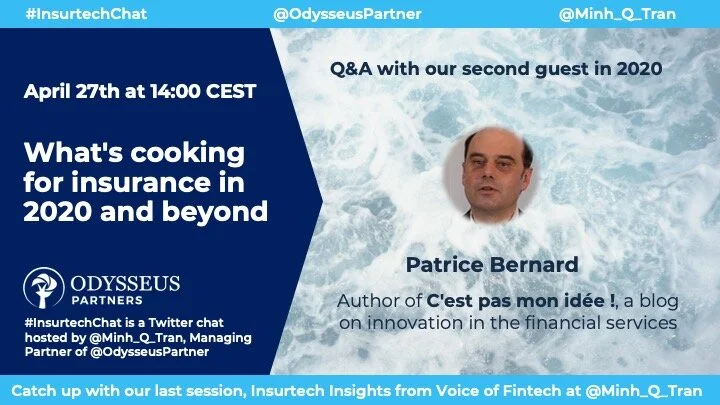
#InsurtechChat – What's cooking for insurance in 2020 and beyond

Insurtech Chat is a Twitter chat hosted by Minh Q. Tran, Managing Partner of Odysseus Partners. For more information, please contact minh@odysseuspartners.com.
Q1: What makes you think that insurance is in a deep transformation phase?

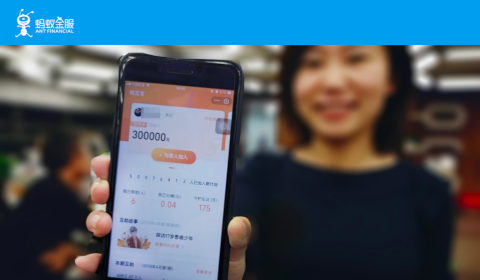
A1: A series of factors are converging to make insurance change: technology and how it affects behaviors as well as the way insurance is processed, the evolution of societies (new economic models, new ways of working…), the global warming problem…
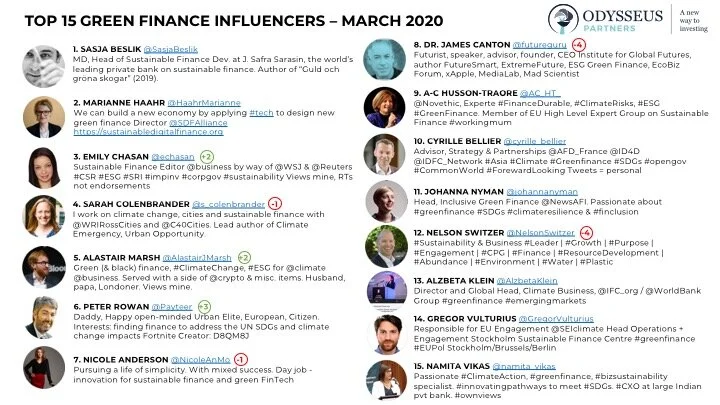
Picture 1.png

Q2: What are the major changes to expect in insurance?

A2: There are 2 main categories of innovation: one addresses the relationship between the insurer and the insured and the other tackles new ways of managing and processing the products and services. They are equally important.

Q3: Starting with customer relationship, where should it be going?

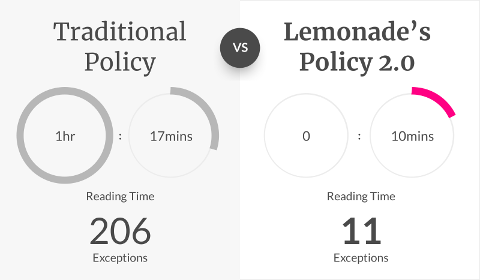
A3: In today's world, customer expectations have been redefined (I summarize them as TIPS, for Transparency, Immediacy, Personnalization and Simplicity) and insurer yet to meet them. This is where InsurTech is definitely taking the lead (Luko for simplicity and immediacy, Lemonade's Policy 2.0 for transparency), although some insurers are also doing well (eSurance during the Harvey hurricane).
Q4: What about the products and services?

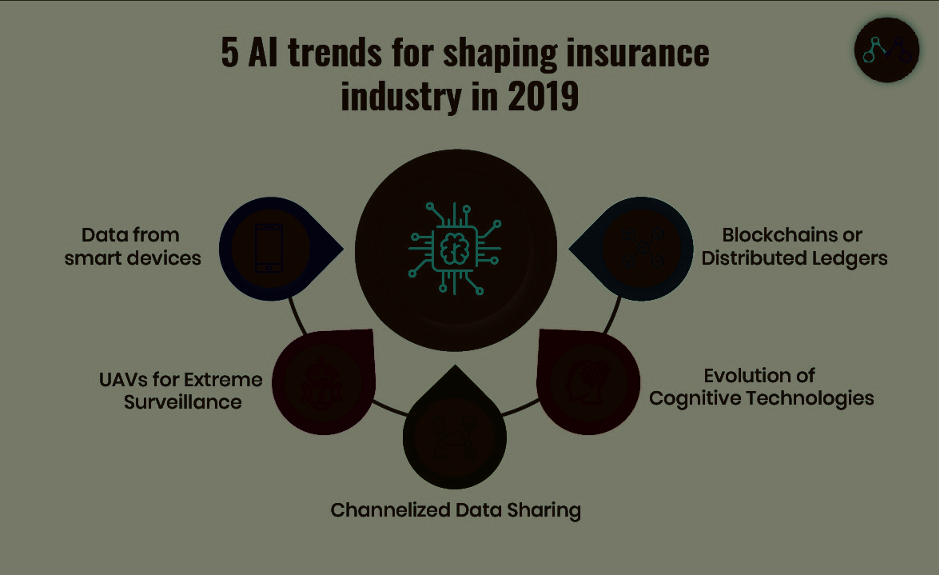
A4: There are a few important trends: automation is one, especially with the aid of data science or AI (and it also helps with the TIPS), the focus on prevention, new products for new behaviors (the increase of frelancing, ridesharing, autonomous driving…) are other examples. They touch every part of the business: marketing, sales, risk modelling, underwriting, fraud management, claims, indemnification.
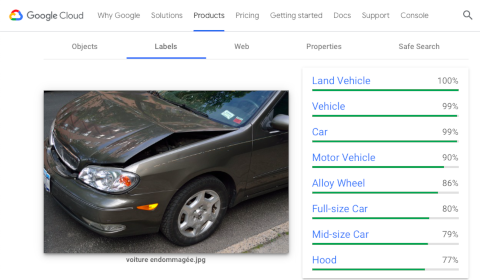
USAA (with Google) for analyzing damages

USAA (with Google) for analyzing damages

Q5: In the long term, where could this double evolution lead?

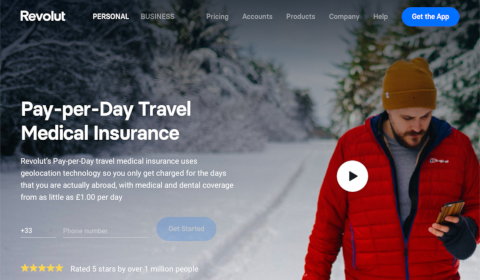
A5: I deeply believe that insurance, as a supporting service, will reach a point where, thanks to the technology available, will be embedded in our everyday actions, always present when needed but (almost) invisible. Look, for example, at the "automatic" travel insurance offered by Revolut or how Tesla sells its cars with an all-inclusive financing option.
5.png

Q6: You mentioned global warming before, what is your take on that?

A6: It is now taken seriously and it is obviously a critical challenge for insurers, since it will increase the frequency of unpredictable events. It has been said (Ernst Rauch, Munich Re) that not everyone will be able to afford insurance in such a future. At least, it will require to completely reinvent the existing models, for example putting the emphasis on prevention, with a direct link to protection and compensation. 

Q7: We are now in a very peculiar period, what do you make of the COVID-19 pandemic for insurance?

A7: I think this is a perfect opportunity to learn about what it means to be an insurance company during completely unpredictable times, which, as I said before, will happen more and more frequently. What we can see so far is a lack of imagination in front of the pandemic: companies are providing financial relief but they are very slow to design and deploy actual helpful innovations.

Q8: Everyone seems to think the future is about collaboration between startups and incumbents, do you agree?

A8: I think there are 2 different issues there. On one hand, insurers have to rely on technology partners, even early stage companies, this is not new and it is working quite well. However, the "real" insurtechs, those addressing the new customer expectations with an optimized user experience, are another story: most incumbents are just not ready for this kind of shift and these kinds of partnerships are often doomed.
Implications of COVID-19 on alternative workforce and remote work

 
Odysseus-Partners-logo-landscape-(web).jpg

In this article, we explore trends in the field of human capital. It focuses on concepts of “alternative workforce” and remote work which are now frequently debated due to the current pandemic event, despite these being recurring themes over the years for companies looking to boost their operational efficiency. We also explore how organizations can measure the impact of such an event in terms of ESG and human capital.

What is the alternative workforce?

Alternative workforce is commonly divided into three groups: freelancers and independent workers (individuals who extend the core employee workforce and are paid by a unit of time, such as per hour or day), gig workers (individuals who are paid by the task to complete a specific piece of work), and crowd workers (individuals who compete to participate in a project and are paid only if they are among the top participants in a competition)[1]. These types of workers were initially applicable mostly to the IT sector but can be nowadays seen across a variety of industries, including financial services. Over the past years, there has been a significant growth in the alternative workforce. In 2016, the global market size of outsourced services, which is a proxy for the alternative workforce market, was USD 76.9 billion and in 2019 it reached USD 92.5 billion, which represents a CAGR of 6.4%. Moving forward, we expect the alternative workforce to continue to remain important as the majority of businesses, including those focused on financial services, feel positive about their outsourcing partners and financial services executives outsource a part of their services[2].

Increasingly, companies are starting to rely on outsourcing services that require more technical knowledge and a higher level of skills, which in turn create a greater impact on their performance metrics. Consequently, the global knowledge process outsourcing market size, which is a subset of the broader outsourcing market for more specialized and analytical type of work, is projected to grow from USD 28.94 billion in 2016 to USD 124.29 billion by 2025[3], which represents a CAGR of 17.6%.

Remote work trend – here to stay?

Working remotely has been a trend that COVID-19 has largely accelerated, leaving no choice and forcing digitalisation. It is too early to say what are the exact impacts on businesses, but it is clear that the trend is here to stay. According to Matt Mullenweg[4], Chief Executive Officer of WordPress and Tumblr and owner of Automattic, the culture that allows work flexibility is long overdue and “this might be a chance for a great reset in terms of how we work”. 

Remote work trend has been growing steadily before COVID-19 outbreak

Remote work trend has been growing steadily before COVID-19 outbreak

Measuring the impact of COVID-19 on organisations

There is no doubt that the COVID-19 is having a huge effect on businesses and the workforce. Organisations are already counting innumerable losses not only in terms of profits, but also in terms of human capital, and many are forced to lay-off employees and pause their expansion plans. While it is easy to quantify the financial losses incurred, it is more complicated to track the social impact of the pandemic on organisations. Even if it cannot protect the workforce, it can help better understand the situation and prepare for future critical situations. While overall impact or ESG (Environmental, Social and Governance criteria) measurement in companies is still in its development phase, there are various solutions and free tools proposed by impact measurement platform in the context of global solidarity specifically for tracking and understand the implications of COVID-19.

Socialsuite, an Australia-based impact measurement company, has made their surveying tool available for companies to measure the social impact of COVID-19, whereas Truvalue Labs, US-based ESG Data provider, has made their ESG dataset available for free.

Such data can later serve as a basis for a better crisis preparation, re-examination of business needs and the evaluation of employee wellbeing.  

Sample Dashbord of the free COVID-19 Social Impact Assessment by Socialsuite

Sample Dashbord of the free COVID-19 Social Impact Assessment by Socialsuite

Final Thoughts

The dissemination of technology experienced in the past two decades has allowed individuals to effortlessly access enormous amounts of information, and to share it almost instantly. This has rendered physical distance a non-problem in a professional context and, in turn, allowed companies to have access to the best resources, whether these are in the office next door, or a thousand miles away.

Many enterprises, previously sceptical of the alternative workforce concept, were now forced to adopt new ways of conducting their business and creative ways have been conceived to mitigate the previously perceived issues of working remotely.

LGG Advisors and Odysseus Partners, with operational teams based in Portugal and France, respectively, support effective remote-based work solutions. For close to 3 years, both have been offering remotely a variety of services in finance and risk management to several companies in the financial services industry globally.

[1] Leading the social enterprise: Reinvent with a human focus, Deloitte, 2019

[2] https://fortunly.com/statistics/outsourcing-statistics#gref

[3] https://www.grandviewresearch.com/press-release/global-knowledge-process-outsourcing-kpo-market

[4] https://ma.tt/2020/03/coronavirus-remote-work/

[5] Veza Digital

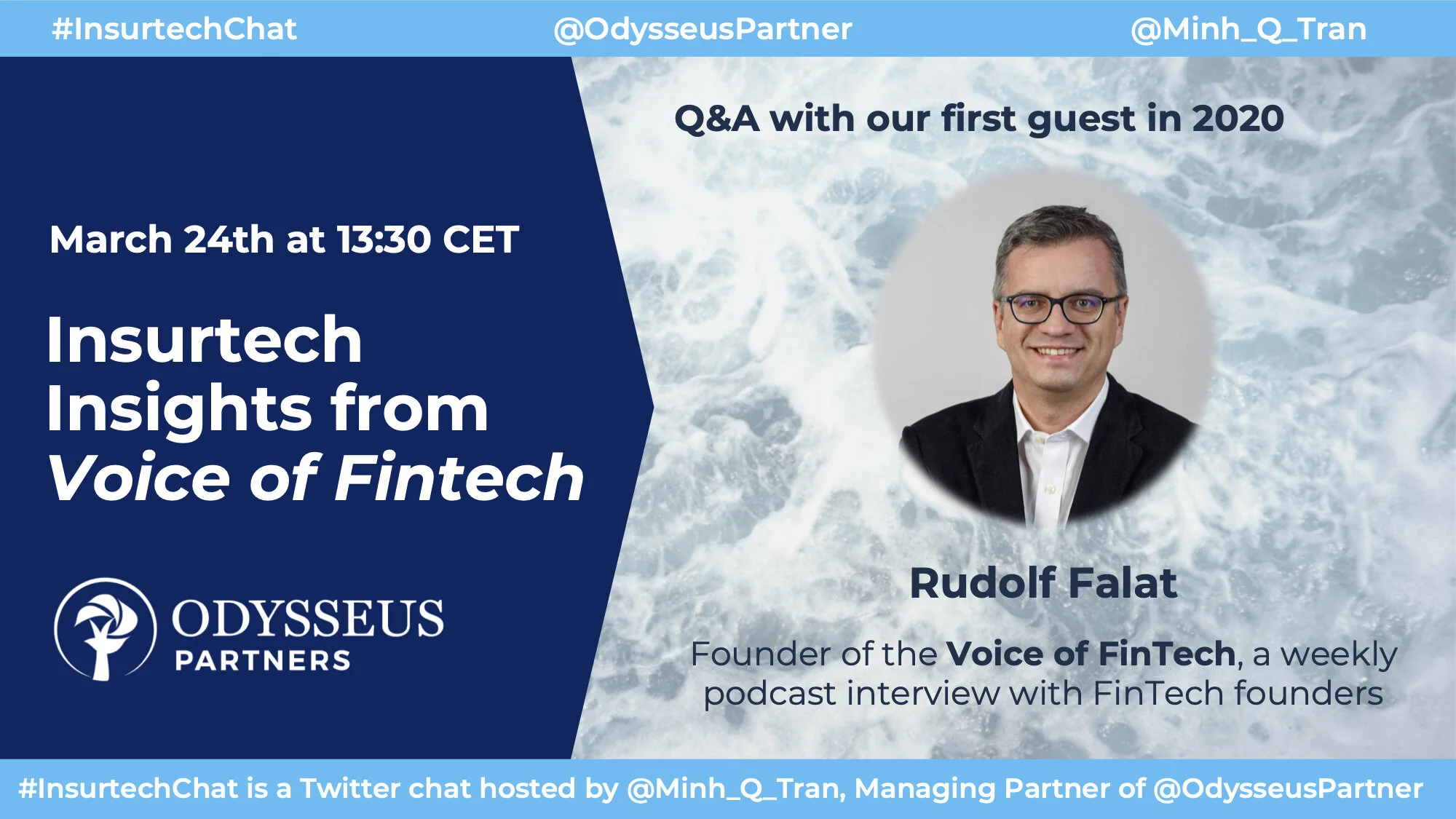
#InsurtechChat – Insurtech Insights from Voice of Fintech, Q&A with Rudolf Falat

Insurtech Chat is a Twitter chat hosted by Minh Q. Tran, Managing Partner of Odysseus Partners. For more information, please contact minh@odysseuspartners.com.

InsurtechChat_March_YZ_v2.jpg

Q1: What are the current trends in insurance regarding customer experience?

A1: In the podcast with Generali, we talked about the increased use of technology by insurers, with the underlying goal of improving customer experience and being a partner to the customer, helping with their insurance needs. An example could be the use of AI for risk assessment, predictive underwriting techniques and telematics to offer usage-based insurance model. Another focus is on ecosystems where insurers participate as a protection provider.

Q2: Why would large, incumbent insurers cooperate with start-ups?

A2: Start-ups are much bolder and much faster. However, an incumbent can benefit from working with them, and start-ups can benefit from working with an incumbent. Open innovation is the right way to do innovation nowadays.


Q3: How can the cooperation between incumbent insurers and start-ups be successful? What are the prerequisites?

A3: For incumbents, it’s crucial that when start-ups approach them, they know what they’re doing. In other words, they have the first product in the market and already have the first clients. Incumbents are happy to see how it might fit into its business and how it might solve a problem that their clients have. The team fit is essential: start-ups have to be able to work with corporates, which is not easy! For more info check https://www.viima.com/blog/innovation-stats.


Q4:  Why just investing money by the VC is not enough?

A4: We talked about with you and a few other VC investors on the podcast. Also, this is a common thesis among sophisticated early-stage investors. As the allocations of pension funds and other institutional investors to VC and PE have relaxed over the years, VC’s dry powder has exploded. Let’s see what happens now with the coronavirus impact. In general, the money has become a commodity, and high-quality start-ups choose whose money to accept also based on the ability of the VC to add value as an advisor, coach, a backup exec and someone who can open the doors.


Q5: What does it mean, asset builder? 

A5: As you explained in our podcast, Odysseus looks for start-ups with reasonable strong growth and intends to help these businesses to build their markets. It’s like investing in Uber, on the one hand, and on the other hand, buying a taxi company to bring customers to Uber. 


Q6: Based on your podcast with Generali, how close or how far do start-up ideas have to be for Generali to make sense to partner with them?

A6: Billte digitizes & automates the entire invoicing process built with Generali together to simplify the invoice process for Generali customers. Imburse Transaction Platform provides hassle-free integration into global payments ecosystem. 


Q7: Examples of start-ups that cooperate with Generali?

A7: 24credit is a P2P loan platform that connects borrowers with investors with insurance in case the borrower dies, and the debt doesn’t pass onto heir. Klara is a digital assistant for SMEs, managing payments and bookkeeping.


Q8: Are insurers active in the outreach within the start-up ecosystem?

A8: In the podcast, we talk about how Generali participates in ActionJam in Bern, SwissFintechLadies, regular InsurTech meetup at F10 accelerator and more. Also,  AXA is very active in the Swiss start-up ecosystem, no doubt!


Q9: We like your podcast with Enterprise Bot. But customer focus and chatbots? Really?

A9: Insurers want to be partners with the customers. At the same time, everyone is trying to automate low value add, repetitive tasks – like answering similar customer queries all over again. This is where chatbots come in. Often, people find interacting with them very frustrating. Enterprise Bot is one start-up that participated in Generali Garage and has been profitable since Day 1? How? Natural language processing (NLP).

Q10: How does NLP make a chatbot better?

In my podcast interview with Enterprise Bot, who took part in then Generali Innovation Garage, the co-founders explained that they had to use NLP as in CH, their bot has to work in multiple languages and has to learn on its own!


Q11: How does it improve customer experience when dealing with an insurer?

I would say when customers reach out to their insurer, it’s not a happy occasion. However, the insurers are under pressure to cut costs so they have been outsourcing call centers, sometimes struggling with training their staff. Enter bots – but, if not done smartly, it can backfire! If you have an opportunity to make bots smarter, go for it! This will pay off when you are balancing the cost of customer care and customer satisfaction.

Managing Partner Minh Q. Tran Spoke at the Global Insurtech Summit

Q&A - Driving Insurtech Growth through Partnership & Investment

Event

Minh Q. Tran shared his views on the partnerships between Insurtech startups and insurance comapnies in a panel discussion at Global Insurtech Summit in London, on March 3, 2020.  

Q1 - Is partnering/working with startups a productive and efficient way to innovate? 

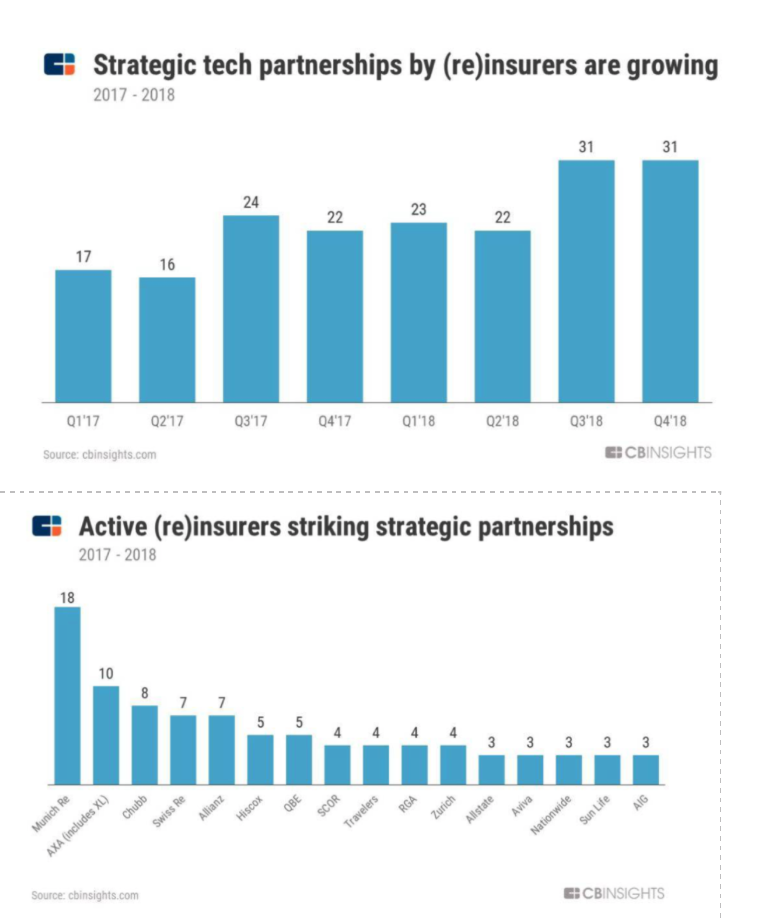
A1 - Yes, CB Insights’ research shows that from 2017 to early 2019, there have been more than 180 partnerships struck between insurers and tech companies.  

Q2 - What are some of the successful and not so successful ways that organizations are partnering with new technology players? 

A2 – The most successful partnerships are around distribution in the past few years because the insurance B2B model has shifted to a B2B2C. Not successful with technology is so advanced that there is no internal capability inside the insurance company. For example, AI startup with no data scientist in insurance company.  

Q3 - What's the value of partnerships with new/innovative tech players? How do you measure this? 

A3 – Return of Strategy is the right measure on top of RoI. The merge of asset management with new insurtech technology as an example in Odysseus Partners.

Q4 - How can the industry evolve to be more effective partners?  

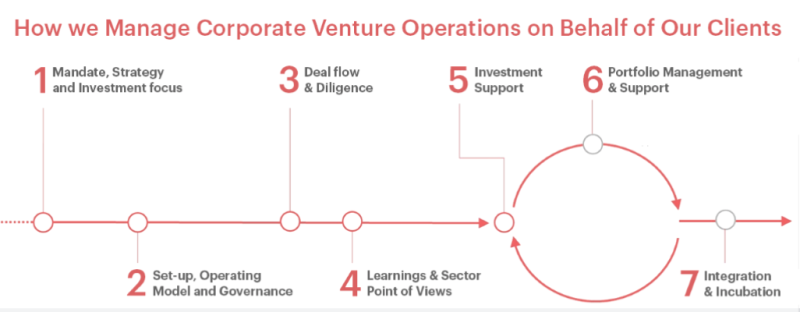
A4 – VCaaS which means VC-as-a-service is a new service for insurers. Techmind, Bain Capital, Redstone, and Seed Founders are players.  

Impact Investing: Why it is a growing asset class and how to scale it forward

Picture: Mark Koch

Picture: Mark Koch

KEY POINTS 

  1. Impact investing landscape in Europe is still difficult to size due to limited consensus on the definition, lack of statistical data and absent impact measurement system 

  2. Welfare policy and economic development state - main factors determining the heterogeneity of European impact investing markets  

  3. Key market building driver: collaboration between public and private sectors 

  4. Next steps for scaling the impact investing market in Europe  


The impact investing landscape in Europe is still difficult to size...  

Defined as an efficient blend of strong, positive, environmental and social impact alongside financial returns in an investment, Impact Investing is still considered to be a new trend in the investment world.   

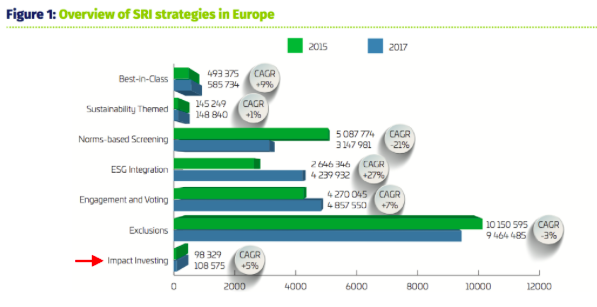
Investing in opportunities in both developed and developing markets to support the economic and social development of disadvantaged communities, in areas such as health, education, housing, and financial and economic inclusion, or supporting worthwhile social objectives or environmental objectives such as encouraging diversity, developing sustainable agriculture or clean technologies with an intention to measure and manage social and environmental impact, remains a peripheral sustainable and responsible investment (SRI) strategy to most investors in Europe.   

Source: Eurosif

Source: Eurosif

However, it’s importance is rapidly increasing: according to Eurosif, impact investing continues to grow registering a 6-year CAGR of 52% in period of 2011-2017.  

Source: Eurosif

Source: Eurosif

For 2019, market size estimates vary from as low as 11,8 billion Euros (Global Impact Investor Network, GIIN) to as high as 108,6 billion Euros (Eurosif), which shows that defining European impact investing market size unilaterally is challenging...

…due to three key factors   

Limited consensus on the definition. One of the reasons for such radical difference between estimations is limited consensus among mainstream investors and specialized niche players on the definition of impact investing. The lines between different forms of Sustainable and Responsible Investing (SRI), ESG Investing and Impact Investing are still quite blurry, definitions and calculations vary, which demonstrates that the market is yet to mature.  

Lack of reliable aggregated statistical data. That is a known weakness of the on the impact investing market in Europe. GIIN might seem to be one of the most reliable sources for Impact Investing market data, however, it only conducts annual surveys amongst its member list, which does not include all impact investors and not all those on that list might be dedicated to only impact investing. Other sources, such as Eurosif, do report on a broader SRI market, however, recent comprehensive studies on impact investing in Europe in particular are difficult to find.  

Absent unified impact measurement system. Since there are no internationally standardized regulations for impact measurement in investments, it is quite easy to self-proclaim as an impact investor, or not categorise yourself as one, which makes it difficult to keep track of all impact investors.  

Welfare policy and economic development - main factors determining heterogeneity of European markets   

Western Europe dominance. In Europe, impact investing markets vary greatly from country to country. Impact investors have more established presence in Western Europe compared to Eastern Europe due to older traditions of institutional investing, presence of well-established financial actors such as pension funds and insurance companies as well as more engaged action against social and environmental issues.  

According to Eurosif, impact investing is notably increasing in Spain and Italy, with positive signs observed in Sweden, Belgium and the UK. In case of the Netherlands, the sharp fall in Eurosif study is “largely explained with a respondent gap rather than a shift in trends”. The country remains one of the most important hubs for developing and implementing the way forward for impact investing.  

Source: Eurosif

Source: Eurosif

UK’s leading position. In Anglo-Saxon countries with liberal welfare states such as United Kingdom, impact investing market has been developing much quicker and took a leading position with players such as Big Society Capital. In market since 2012, it manifested as an effort of the UK government to efficiently provide capital for the existing intermediaries and build the market; it remains one of the key British players in the field.   

New impact investing hub - Paris. However, due to Brexit taking place, more impact investors are seeking to establish their presence in the continental Europe. Paris, for example, has become an important hub for Impact Investing, with many impact related events taking place in the French capital. Paris Impact Investing Association has taken efforts to create an ever-evolving ecosystem map encompassing at least 30 active impact funds in Paris and beyond further fortifying its position as new impact hub.   

Largely unexplored Eastern and Central Europe. While the iron curtain is long gone, the difference between stages of development in impact investing market between Western and Eastern Europe are showing that its effects are still felt. According to the last GIIN Annual Impact Investor Survey (2019), we observe that the number of headquarters of impact investing funds in Eastern Europe combined with Russia and Central Asia reach only 1%. While that is not an indicator of a market size, it does demonstrate that local impact investing market has hardly started to form, as the main investor focusin this region has been economic growth in the past decades.  

Eastern Europe, Russia & Central Asia combined: 1%Source:https://thegiin.org/assets/Sizing%20the%20Impact%20Investing%20Market_webfile.pdf

Eastern Europe, Russia & Central Asia combined: 1%

Source:https://thegiin.org/assets/Sizing%20the%20Impact%20Investing%20Market_webfile.pdf

That does not mean, however, that the market is non-existent. Deloitte has taken on an effort to measure market readiness in Eastern and Central Europe by introducing its Social Investment Leveraging Index. It has indicated that “the highest score was calculated for the Baltic States (50.3), compared with 40.7 in the Balkans and 50.1 in the group in which Bulgaria, Moldova, Romania, and Ukraine were included.” (Deloitte). Such scores show, according to Deloitte,that venture philanthropy and social investments would be worthwhile.  


Collaboration between public and private sectors as a key market building driver   

While it seems that public sectors are often lagging behind andinnovation is largely driven by the private sector, there is great interest for public sector to engage in facilitating impact investing market growth as it contributes not only to the economic development and drives metrics such as GDP up, but also solves social and environmental issues. Increasing public sector efforts have been observed across Europe not only on the national level, but also EU-wide.  

France. One way to explain the boom of impact investors in Paris, for example, is the push from the French government.Article 173 of the Loi n°2015-992 of August 17, 2015 related to the energy transition for green growth imposes impact measurement for bigger institutional investors. This law has indeed driven more investors to report on their impact, however, gaps are still noticeable: since no official methodology has been proposed, the quality of impact reports varies greatly, according to Novethic.  

Germany. Development of impact investing market has been slower in countries with strong welfare state tradition such as Germany due to “the fact that mutual adaptation between SII (Social Impact Investing) and existing state-sponsored social welfare ideals has yet to take place.” (Bertelsmannstiftung). Nevertheless, we can observe recent market-building initiatives resulting out of the cooperation between public and private sectors. According to GSG research, Germany’s nascent impact market is gaining momentum: “existing funds have raised more capital, foundations have become active impact investors, existing intermediaries are developing new investment products, impact-driven organizations are increasingly securing investment and the market has stabilized.”   

Germany’s challenges such as a small investor base, few intermediaries and little diversification, a limited number of investment products, few investment-ready impact-driven organisations are being actively tackled by a growing network of supporters and advisors, positioning it as an opportunistic growing market to be watched in 2020.  

Europe. New EU regulatory efforts such as EU taxonomy for sustainable activities will undoubtedly stimulate EU markets,including the very youngest ones like Eastern Europe. But it will take more than EU’s efforts for these markets to fully mature: stakeholder coalitions and ecosystem building efforts by local entrepreneurs, investors and supporters are necessary for these markets to become investable. 


Next steps for impact investing market in Europe   

There is no doubt that impact investing is becoming a very important part of the traditional investing landscape. With increasing amounts of proof that purpose-driven projects have increased financial value (Forbes), more and more institutional investors are turning towards investing in such enterprises. However, for impact investing market to flourish, few key market building milestones must be passed.   

According to PlusValue research, key priorities for impact investing agenda are, unsurprisingly, establishing common framework for impact measurement, increasing public engagement in impact investing and defining of impact investing itself. This can be achieved by a closer dialog between private and public sectors, awareness raising and active participation of all stakeholders. This would lead not only to accelerated market development in the under-tapped areas of Europe, but also scale it further all over the continent.  

Source: PlusValue

Source: PlusValue

Research by @OdysseusPartner / @MortaKaz / @Minh_Q_Tran

For more information, contact: minh@odysseuspartners.com  / @Minh_Q_Tran